Author Archive
Thursday, June 30th, 2011
This book by Richard Arum and Josipa Roksa draws on their extensive research. It shows that many undergraduates learn little or nothing when it comes to critical thinking, complex reasoning, and writing ability. The main reasons are generally poor academic preparation prior to college, and low expectations and demands in college. Rather than close the gap between high and low performing students, a case can be made that colleges increase the disparity.
Academically Adrift
- Limited Learning on College Campuses
- by Richard Arum and Josipa Roksa
- ©2011, University of Chicago Press: Chicago, Illinois
- Summary by Douglas W. Green, EdD
- DGreen@STNY.RR.Com
- If you like this summary, buy the book.
Arum and Roksa
- Richard Arum is a professor in the Department of Sociology with a joint appointment in the Steinhardt School of Education at New York University. He is also director of the Education Research Program of the Social Science Research Council and the author of Judging School Discipline: The Crisis of Moral Authority in American Schools. Josipa Roksa is assistant professor of sociology at the University of Virginia.
- The book addresses the question of how much undergraduates learn once they get to college. The answer here is not much. Richard and Josipa draw on their own research and many other sources to make their point. They find that a significant proportion of students do not improve when it comes to critical thinking, complex reasoning, or writing ability. This comes as no surprise to many who see students distracted by socializing and employment. They also see an institutional culture that puts undergraduate learning near the bottom of the priority list.
1. College Cultures and Student Learning
- Arum and Roksa cite the worry of middle-class parents over return on investment and concerns about quality by businesses as they look at college cultures that today feature more social activity and less time studying. Too many enter college with high ambitions and no clear plans for reaching them. They know little of their chosen occupations in terms of requirements of demands. They are essentially academically adrift. While study time is down to less than what they spent in high school, grades and progress toward degrees have seen little impact. Students preferentially enroll in classes where instructors grade leniently. For their part, faculty members allow students to get by with less effort. This brings better student evaluations and opens more time for research. Such evaluations are not good indicators of learning. Faculty are also rewarded for seeking external funding of which there is never enough at the expense of undergraduate attention. Administrators must also share the blame. An increase in student service positions has driven faculty percentage of professional staff down to 53%. At the same time, salaries of presidents, provosts, and deans has gone way up in spit of the fact that they are much less able to influence institutional climate than top executives in businesses.
Tags: Academically Adrift, Josipa Roksa, Richard Arum
Posted in Book Summaries, Education Books, Leadership Books | Comments Off on Academically Adrift: Limited Learning on College Campuses
Tuesday, June 21st, 2011
The Standards Movement: Success or Failure? Two articles from Critical Education by Lawrence C. Stedman
- How Well Does the Standards Movement Measure Up? An Analysis of Achievement Trends and Student Learning, Changes in Curriculum and School Culture, and the Impact of No Child Left Behind – V1 No.10 Dec. 20, 2010. http://bit.ly/muBrDO
- Why the Standards Movement Failed: An Educational and Political Diagnosis of Its Failure and the Implications for School Reform – V2 No.1 Jan. 20, 2011 http://bit.ly/mN6vMe
Tags: Critical Education, Lawrence C. Stedman, Standards Movement
Posted in Book Summaries, Education Books | Comments Off on Failure of the Standards Movement – Research and Opinion by Larry Stedman
Tuesday, May 31st, 2011
Leading School Change: 9 Strategies to Bring Everybody on Board by Todd Whitaker provides excellent general advice for education leaders who need to guide their cultures through meaningful changes with the goal of improving the quality of instruction. Todd draws on his wealth of experience as a leader and as an author to provide a book that every school principal and superintendent should add to their shelves.
Tags: Change, Leadership, Todd Whitaker
Posted in Book Summaries, Education Books, Leadership Books | Comments Off on Leading School Change: 9 Strategies to Bring Everybody on Board
Wednesday, April 27th, 2011
In this book by Douglas Thomas and John Seely Brown, we find that the kind of learning that will define the 21st century will not take place in a classroom. It is happening all around us and it is powerful The growing digital network gives us nearly unlimited resources, while is connects us with others. Learning often takes place without books, teachers, or classrooms. Classrooms and teachers may not be obsolete, but the authors make a case that they must change.
© 2011 by Thomas and Brown ISBN-13: 978-1456458881
Tags: 21st Century Learning, A New Culture of Learning, Douglas Thomas, John Seely Brown
Posted in Book Summaries, Education Books | Comments Off on A New Culture Of Learning: What will define the 21st Century
Thursday, April 14th, 2011
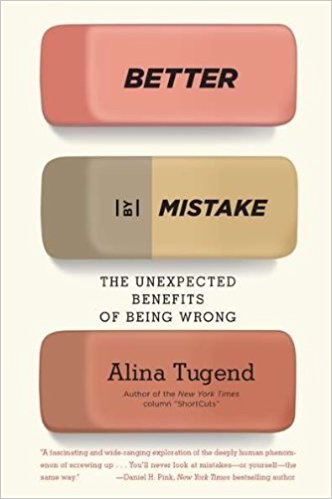
This eye-opening book features the big idea that embracing mistakes can make us happier and more productive in every facet of our lives. It examines the tension between the idea that we must make mistakes to learn, and the fact that we often get punished for them. © 2011, Riverside Books: New York, New York
Another Way of Learning
- My teacher said I learn by making mistakes. Since I didn’t make any today, I guess I didn’t learn anything. This story is followed by the notion that when people think they must do everything perfectly, they can spend energy blaming each other rather than finding a solution. It results in defensiveness and accusations rather than apologies and forgiveness. Mistake prevention gets in the way of daring and innovation. Most of us think that mistakes make us look stupid.
(Re)Defining Mistakes
- My teacher said I learn by making mistakes. Since I didn’t make any today, I guess I didn’t learn anything. This story is followed by the notion that when people think they must do everything perfectly, they can spend energy blaming each other rather than finding a solution. It results in defensiveness and accusations rather than apologies and forgiveness. Mistake prevention gets in the way of daring and innovation. Most of us think that mistakes make us look stupid.
Tags: Alina Tugend, Better By Mistake, Book Summary
Posted in Book Summaries, Business Books, Education Books, Leadership Books | Comments Off on Better By Mistake – Improve your life and performance by Alina Tugend