Author Archive

New Math – New Technology = Failure by Elizabeth Green

Friday, September 5th, 2014

New Math – New Technology = Failure by Elizabeth Green (no relation) deals with the Common Core’s approach to teaching math and how few schools seem to have shown teachers how to teach it. This is from the July 27, 2014 edition of The New York Times Magazine. Read the entire article here.

Be sure to check out her new book Building a Better Teacher: How Teaching Works (And How to Teach It to Everyone). Also see Behind the Cover Story: Elizabeth Green on America’s Math Crisis. This is an interview by Rachel Nolan @rachelbnolan @nytmag.

Elizabeth Green

  • Elizabeth is co-founder, CEO, and editor-in-chief of Chalkbeat, a nonprofit news organization that covers educational change efforts across the country. She has written for The New York Times Magazine, The New York Sun, and U.S. News & World Report. She was an Abe Journalism Fellow studying education in Japan and a Spencer Fellow in education journalism at Columbia University. She serves on the board of the Education Writers Association. To consider asking her to speak click here. On Twitter she is @elizwgreen
Share this:
Share this page via Email Share this page via Stumble Upon Share this page via Digg this Share this page via Facebook Share this page via Twitter Share this page via Google Plus

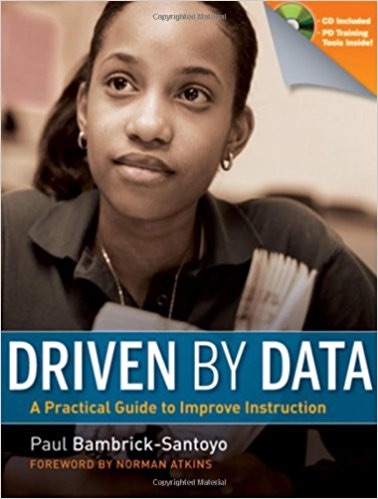
Driven by Data: A Practical Guide to Improve Instruction by Paul Bambrick-Santoyo

Thursday, August 21st, 2014
Data

Driven by Data: A Practical Guide to Improve Instruction by Paul Bambrick-Santoyo offers a step by step approach to preparing your students for high-stakes tests while students work to master standards. While you may be hoping for the current testing madness to end, Paul offers a practical way for your school to out perform other schools with similar demographics while the current tests are still with us. Part two includes specific workshop activities for data leaders.

Paul Bambrick-Santoyo

  • Paul is managing director of Uncommon Schools, leading six schools in the North Star Academy network that have achieved some of the highest results in the country. He has trained over 2,000 school leaders nationwide, and is the Data-Driven Instruction faculty member for New Leaders for New Schools, an urban school leadership training program.

Physicals or Autopsies?

  • Paul likens the analysis of end-of-year and high-stakes state testing to an autopsy where the purpose is to find out why the patient died. He prefers that educators spend their time looking at the results of interim tests and use them to inform instruction. This is similar to how a physician would use the results of a physical to determine treatment and recommend lifestyle changes. Paul also warns that data-driven instruction is not an elaborate stratagem for promoting “test prep.” While he sees many faults in the NCLB testing culture, he is happy to see educators focusing more on accountability for student achievement, and interim assessments hold them accountable throughout the year.

Excellent Interim Assessments

  • In order to be effective, interim assessments must be of high quality, which is seldom what you get when individual teachers slap something together at the end of a unit. The tests need to be in place prior to the start of the school year and be available to the teachers. Every teacher at the same grade level or subject should be using the same tests at the same time. This allows teachers to analyze the results together. Paul recommends assessments every six to eight weeks. Too seldom allows weaknesses to go unrecognized. Too often and teachers may not have time for satisfactory analysis. It is also important that teachers be involved in test creation or selection. Paul is ok with purchased tests as long a teachers get to see them. Some vendors don’t allow this in order to maintain test validity.
  • The tests are not seen as an end, but as a beginning. This is because they let the teachers know what needs to be taught and the desired level of rigor. When they are given, the results need to be available soon. (Doug: When I taught I always graded assessments the day they were given, and the students got the results as part of the next class. With some kinds of computerized testing, students can see their results immediately.)
Share this:
Share this page via Email Share this page via Stumble Upon Share this page via Digg this Share this page via Facebook Share this page via Twitter Share this page via Google Plus

I’m Off the Grid Until Monday. Time to Review My Archives.

Friday, August 8th, 2014

Hello from the Adirondack Mountains where Internet access is spotty at best. I’ll be back with my daily Net Nuggets on Monday. Until then I’m referring you to my Net Nugget archives on the left side of my home page, and my 100+ book summaries available under the BOOK SUMMARIES tab near the top of my home page. The summaries contain the key concepts from the books, but lack the detailed evidence and interesting stories that support the author’s claims.

If you are reading this, I would like to thank you for your support. If you click a book item at the bottom of any page, it will take you to Amazon where you can purchase the book. I encourage you to do this to support the authors who often give me their books. I will also get a small payment. I hope you find my work valuable and please consider sharing it with your network. Thanks so much.

Share this:
Share this page via Email Share this page via Stumble Upon Share this page via Digg this Share this page via Facebook Share this page via Twitter Share this page via Google Plus

London Calling – Tips from Dr. Doug’s travels in England

Sunday, July 13th, 2014

After nine days in London I have recommendations for your bucket list. It’s a great trip for educators, parents, and children of any age. Museums are amazing and free, but some special exhibits have entrance fees. Below are links to pictures from those I visited. All cater to school groups as every museum should.

I also recommend Golden Tour’s day trips from London. I took two and each stopped at three sites. I was dropped off on my own so I didn’t have to walk about with a crowd. Prices were right and tour guides were excellent. Check my Facebook album for pictures from my trip. I stayed with my niece and her family, but if you don’t have relatives in London, see if some of your Twitter followers are up for a visit. For my regular readers there are some of my Net Nuggets at the bottom.

London Museum of Natural History – This is much bigger than it’s counterpart in New York City with lots more dinosaurs.
Science Museum of London – The best science museum I have been to and I have been to many.
V & A Museum of London – This is more like a smaller version of the Metropolitan Museum of Art in New York City but it’s by no means small.
Tate Modern Museum of London – If you like modern and abstract art this is the place for you. Even if you don’t it is a pretty cool space.
Tate British Museum of London – This place is chuck full of great paintings. I liked it better than the Tate Modern. You can go from the Tate Modern by boat.

Share this:
Share this page via Email Share this page via Stumble Upon Share this page via Digg this Share this page via Facebook Share this page via Twitter Share this page via Google Plus

How Education Abroad Can Improve Your Career Prospects by Ebin Mathew

Tuesday, June 10th, 2014

How Education Abroad Can Improve Your Career Prospects by Ebin Mathew makes a compelling case for spending sometime in another country as part of one’s formal education. Please share with any students you know. Also check out the writing service that Ebin works for.

The Big Question

  • In this demanding culture and era, new tactics and experiences are required in order to raise the one’s prospects and chances of employment in one’s industry of choice. A major demand of this era is not just education, but diverse experiences as well. Many people wish to study abroad, since it is believed that it places an individual in a better position for getting employment and experiences than one can get studying solely from home. So just how does studying abroad improve one’s prospects?

What To Expect

  • This question would better be answered by people who have already had this experience. They can tell us exactly what they saw, learned, and experienced that added to their education and experiences at home. More and more people are doing their best to earn a chance to study abroad, although not every person who goes abroad becomes a successful person upon returning. Researches indicate that many people travel abroad annually for higher education. So what should one expect while studying abroad, and how does studying there make you better?
Share this:
Share this page via Email Share this page via Stumble Upon Share this page via Digg this Share this page via Facebook Share this page via Twitter Share this page via Google Plus