Archive for the ‘Book Summaries’ Category
Sunday, October 4th, 2026
Revenge of the Tipping Point: Overstories, Superspreaders, and the Rise of Social Engineering by Malcolm Gladwell
In his latest book, Gladwell tells a number of seemingly unconnected stories that all have some unexpected outcomes. I find Malcolm to be an out standing story teller, which makes this summary less comprehensive than others you will find on the blog. I hope this quick read encourages you to purchase that fine book and that you enjoy it as much as I did.
1. The Tipping Point for Bank Robberies
- There are three mysteries here. The first is why were bank robberies so prevalent in Los Angeles in the 1990s but far less so in New York City? The second is why doctors perform abundant forms of a given surgery at one hospital but not at another hospital. Third is why are children in most schools at or near 100% vaccinated while students at Waldorf Schools are closer to 25%?
2. What Made Miami Change
- This is the story of medicare fraud in South Florida (Miami). The main character runs a chain of nursing homes that defrauds Medicare for billions. The story also deals with drug money laundering with the cooperation of banks. Thanks to the inflow of drugs and 125,000 people dumped there by Castro in 1980, the nature of Miami changes greatly.
- Gladwell more or less provides a how-to for setting up a fraudulent medical practice here. The application is easy, but you do need a location of some sort and access to a doctor with a “loose pen.” In the end, the main character gets off with a multi-million dollar fine because he has an “ace up his sleeve.” That ace is a government connection, and it results in a sentence commutation from Donald Trump. Democrat presidents are also noted for this kind of behavior.
3. The Epidemic in Poplar Grove
- This is not the name of the town composed mostly of wealthy people with high expectations for their children. For many kids the expectations turned out to be too much and a string of teen suicides followed. It seemed like one suicide caused other kids to think about it and it some cases, they followed through. Here is where a small number can become a tipping point of sorts.
4. When Does Tipping Happen?
- A tipping point is a threshold where something that had been one way for generations seems to change overnight. In the case of company Boards, it seems to take three women before a woman can become comfortable in that position. This magic third also shows up for other tipping points. Once a black population reaches about one third in a school, the black students start performing as well as the white students.
5. Rugby at Harvard
- Here Gladwell points out why elite schools like Harvard had so many teams for Olympic sports. In order to give a child training in these sports, it takes a lot of money. If you help your kid develop in a sport like squash, sailing, or rugby, they have a better chance of getting into an elite school than if they relied on their grades and test scores alone.
Posted in Book Summaries, Education Books | Comments Off on Revenge of the Tipping Point: Overstories, Superspreaders, and the Rise of Social Engineering by Malcolm Gladwell
Monday, October 9th, 2023
School-Linked Services: Promoting Equity for Children, Families, and Communities by Laura Bronstein and Susan Mason contains extensive advice for anyone interested in linking a school with one or more other service providers in their community. It offers summaries of successful programs and demonstrates how schools with linkages out perform schools with similar demographics that lack linkages in many ways. This is a must-read for leaders of any organization that serves schools.
Introduction
- This book consolidates the available literature on this topic along with a wide range of conversations with diverse key informants. In doing so it illustrates how partnerships between schools and communities support educational success. It covers a wide range of types of school-linked services and how they can break the cycle of poverty.
- They aim to provide enrichment activities that are often only available at schools serving wealthier populations. The services include after-school and summer programs, early childhood education, health and mental health services, family engagement, youth leadership programs, and others.
1. Making the Case for School-Linked Services
- A teacher’s ability to teach can clearly be hampered by issues outside their control. We must not view a student’s academic struggles in isolation from external factors. Low academic achievement is highly correlated with poverty. Distracted, hungry, worried, and ill children have a more difficult time learning. Absenteeism and mobility add to these problems. Partnerships must be fruitful, as schools cannot afford to spend resources just to have a partner.
- The Center for Disease Control has a model called Coordinated School Health (CSH) that integrates health promotion efforts across: health education, physical education, health and nutrition services, counseling, psychological and social services, safe school environments, staff wellness, and family and community involvement. These partnerships are progressive as they aim to do more for students who need more.
2. The School
- Although state aid to schools serves to reduce unequal funding, the decentralized system in the US results in kids in poor school districts having fewer resources, less experienced teachers, and greater teacher turnover. While teachers and other school personnel are trained to teach and do other jobs, they are not trained to deal with issues that children face beyond school. This needs to be part of their professional development. Administrator vision is vital.
- Since students are the ones with the most to gain or lose, their voices should be heard when it comes to decisions that will reform what schools do. If you are a school leader, you need to do what you can to create trust with poor and minority families. (Doug: I did this by hiring as many Black people as I could, especially for support staff positions.) Make sure that all of your families know that their input is welcome. Kids only spend about 10% of their time from birth to age 18 in school.
3. School-Linked Services Today
- The authors start by discussing the nature of school-based health centers, family resource centers, partnerships with businesses, expanded school mental health services, and finally, full-service community schools, which offer all of the other services. Such full-service schools can grow out of nonprofit organizations, school/city districts, or counties. In all cases, it is necessary to rethink how a school is managed, funded, and staffed. It’s important to see community members as customers and to involve students in community projects. Businesses are usually involved as well.
- The rest of the chapter (64 pages) contains details of three nonprofit initiatives, three school district/city-lead initiatives, and one county-wide initiative. Anyone thinking of starting or expanding a full-service school can draw on this information for ideas and guidance. As each of these exemplars are different from each other, so you should expect yours to be different as well as you strive to meet the unique needs of your community. Flexibility should also act as a guidepost. I suggest you start by reading each of the brief overviews and funding sources for ideas.
Posted in Book Summaries, Education Books, Leadership Books | Comments Off on School-Linked Services: Promoting Equity for Children, Families, and Communities by Laura Bronstein and Susan Mason
Wednesday, May 18th, 2016
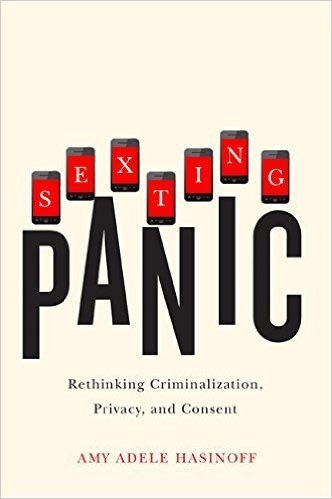
Sexting Panic: Rethinking Criminalization, Privacy, and Consent by Amy Adele Hasinoff takes on common wisdom and shows how it is harmful to many girls as is lets privacy violators off the hook. It sees sexing as a natural part of the process of developing a normal and healthy sex life and promotes the idea of explicit consent when if comes to distributing private media images. This book belongs in every school and in the hands of every teen parent and policy maker.
Introduction
- This is a very well researched a cited scholarly book. Amy looks at how sexting is commonly viewed as child porn and a factor in cyberbullying rather than a normal part of sexual foreplay. She believes that teaching abstinence when it comes to physical sex is as ineffective as teaching abstinence when it comes to sexting. Rather than acknowledge girls’ sexual agency, many see them as weak minded youth who are suffering from raging hormones and blindly following social trends. In fact, sexing is a modern form of foreplay and only becomes problematic when the receiver violates the sender’s privacy. Not only does the media often blame the victim, so do the courts and society at large. It’s about time somebody started this conversation. As you read this book prepare to change your thinking on the subject.
1. The Criminalization Consensus and the Right to Sext
- The main argument here is that granting young people the right to consensually see, create, and distribute sexual media may be the most effective way to protect them from harm. It is currently criminal with variations in all states. Here Amy discusses a number of specific cases and how laws are designed to punish the person sending sexts. The question arrises as to whether sexting is free speech or not. Also, is it an expression of normal adolescent sexual expression? In some states, sexting has been reduced from felony status to that of a misdemeanor. This makes no sense as depending on your state or country, a variety of consensual sexual behaviors are legal for minors depending on their respective ages. Ironically, it is generally illegal for minors to view many sex acts that they can legally engage in such as Internet porn. Amy also believes that criminalization of sexting will have a disproportionate impact on gays, minorities, poor kids, and girls.
Tags: Amy Adele Hasinoff, sexting, Sexting Panic
Posted in Book Summaries, Education Books, Leadership Books | Comments Off on Sexting Panic: Rethinking Criminalization, Privacy, and Consent by Amy Adele Hasinoff
Monday, March 16th, 2020
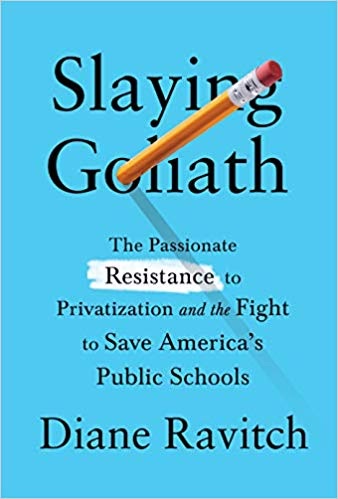
Slaying Goliath: The Passionate Resistance to Privatization and the Fight to Save America’s Public Schools by Diane Ravitch tells the story of how wealthy people like Bill Gates and the Koch brothers aided by politicians and the media have disrupted public schools in an effort to privatize K-12 education. She does an excellent job of showing how their efforts have been seriously misguided and how they have damaged public schools, teachers, and students. She also shows how the underfunded opposition has had a number of victories in their efforts to fight back. If you want ammunition for the fight against charter schools, vouchers, and standardized tests, look no further.
1. Disruption Is Not Reform!
- In this book Diane documents the failures of what she calls “Corporate Disruption.” This refers to the reforms backed by conservative and liberal wealthy people and adopted by conservative and liberal politicians. At the heart of the programs are high-stakes standardized tests that have been used to evaluate schools and teachers. They have served to demoralize students and teachers, and have resulted in teacher shortages as many teachers leave and fewer desire to enter the profession.
- Ravitch and many others are convinced that the real problems are poverty and racial segregation rather than failing schools and teachers. Teacher autonomy and creativity have been reduced as they spend abundant time engaging in test preparation. Since the tests only deal with ELA and math, other subjects including recess have been reduced in many schools.
2. The Odious Status Quo
- It seems that a lot of wealthy people want to reinvent education in spite of their lack of expertise. As such they use their philanthropy to control others under the guise of helping. That’s how we get things like kids too young to read in front of computer screens. Meanwhile, things like the cultivation of character are often ignored. When one looks at the data one can see that the crisis in education was a manufactured one. Here Diane summarizes the history of the reform movement. This includes NCLB with it’s patently absurd goal of having all students be proficient.
- The NCLB reform brought the fear of punishment, failure, and losing one’s job into our nation’s classrooms. The so-called remedies had no prior evidence of success. The law was insanely punitive and without a global president. Schools cut back on civics, science, the arts, PE, and recess. Obama’s Race to the Top basically bribed states to adopt the untested Common Core, add more charter schools, and use test scores to evaluate teachers. This was essentially an unconstitutional take over by the federal government. Unfortunately, this mess was also bipartisan.
3. What Do the Disrupters Want?
- They like mayoral control of schools as there is only one person to manipulate. They don’t like teachers’ pensions, which encourage longevity. They like to demonize public schools as failing. They admire disruptive innovations because that is what happens in business. Why would you want to disrupt the lives of our children? They like machine teaching, which they call blended or personalized learning. What they don’t want is any disruption of their private clubs or the exclusive schools that their kids attend.
- Who are they? They are governmental officials like the Secretary of Education regardless of the party. Governors are also included. They are philanthropists with their foundations like Bill Gates, the Walton family, Michael Bloomberg, and the Koch brothers among others. They are hedge fund managers who believe in competition and the free market. They like start-ups (i.e. charter schools) and they don’t like government regulations. There are organizations that sound like they should pro-student, but are largely funded by rich folks. Journalists are also part of the problem as they often carry water for this crowd. (e.g. editorial writers for The New York Times and The Washington Post.)
4. Meet the Resistance
- Resisters have some genuine connection to education such as teachers, administrators, students, and their families. They believe that public schools are a foundation stone or a democratic society. They oppose the privatization of public schools and the misuse of standardized tests. They respect teachers and want public schools to have the resources they need. They want to cultivate a joy of learning. They understand that students’ lives are heavily impacted by conditions they face outside of school. The few foundations that support the resistance are lead by the Schott Foundation for Public Education.
- They are winning because everything the Disruptors have imposed has failed. They are highly motivated and not powered by money. They understand that competition produces few winners and many losers. They are supported by a number of prominent scholars who are listed along with their works. Many resisters like myself have blogs that constantly fight back.
Posted in Book Summaries, Education Books, Leadership Books | Comments Off on Slaying Goliath: The Passionate Resistance to Privatization and the Fight to Save America’s Public Schools by Diane Ravitch
Tuesday, April 3rd, 2012
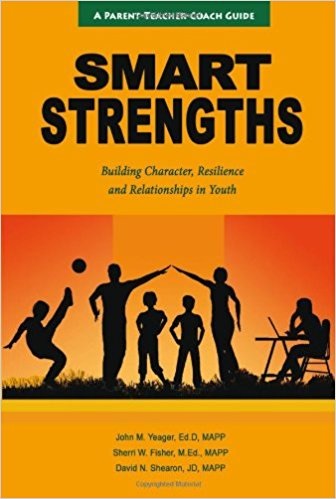
Smart Strengths: Building Character, Resilience, and Relationships in Youth by John M. Yeager, Sherri W. Fisher, and David Shearon (©2011, Kravis Publishing: Putnam Valley, NY) introduces the SMART model for changing a school one person at a time. It’s about bringing positive education to students and maximizing the students’ inherent strengths to foster character and achievement. It is research-supported and loaded with activities, resources, and real-life examples. Any school looking to improve should seriously consider the advice in this important book. Click the icon below to purchase one or more copies from Amazon.
The Authors
- John M. Yeager, EdD is a nationally known consultant on strengths in schools. He is the Director of the Center for Character Excellence at the Culver Academies where he launched a model program on the integration of character strengths among the entire school community.
- Sherri W. Fisher, MEd is an education management consultant, worksop facilitator, and coach specializing in creating learning, productivity, and change solutions for students of all ages, their families, and their schools. She is a founder of Flourishing Schools and her Student Flourishing education management practice.
- David N. Shearon, JD is an expert in public education policy and leadership. For more than two decades he has lead Tennessee’s mandatory professional development program for lawyers. He works with Flourishing Schools on behalf of K-12 education and trains teachers in how to teach resilience to students in programs around the world.
The Big Idea
- The key idea is that adults and youth need to shift from concentrating on improving weaknesses to focusing on assets. This needs to start with the adults learning about their own strengths, which makes it easier to identify strengths in others. Strengths are natural abilities or assets. They are all good, although they can be used badly as the explanation of strength buttons demonstrates. Strengths are measurable, subject to numerous influences, and some are more malleable than others. Research shows that people who use their strengths are more engaged in their life and work, are happier, and are more productive. You should start by taking the free 20-25 minute Values in Action (VIA) Signature Strengths Test. There is also a version for children 10-17 that you can access with your free adult account.
- SMART stands for Spotting, Managing, Advocating, Relating, and Training. These are the five steps the authors include along with worksheets in each chapter to help you nurture your strengths and the strengths of those you work with.
Just What are the 24 Strengths in the VIA?
- When I took the VIA, I found that my five top strengths were: curiosity and interest in the world; love of learning; judgment, critical thinking, and open-mindedness; self-control and self-regulation; and creativity, ingenuity, and originality. I hope this sounds like the right strengths for the work I do on this blog.
- Here is a list of the other 19 strengths. When you take the VIA you will get this list sorted from top to bottom according to your strengths. Remember all strengths are good and that everyone has a list sorted from 1 to 24. All lists are equally good.
- Forgiveness and mercy; Industry, diligence, and perseverance; perspective (wisdom); gratitude; hope, optimism, and future-mindedness; humor and playfulness; leadership; caution, prudence, and desecration; honesty, authenticity, and genuineness; fairness, equity, and justice; zest, enthusiasm, and energy; bravery and valor; kindness and generosity; social intelligence; citizenship, teamwork, and loyalty; appreciation of beauty and excellence; capacity to love and be loved; modesty and humility; spirituality, sense of purpose; and faith.
Tags: David Shearon, John Yeager, Sherri Fisher, SMART Strengths
Posted in Book Summaries, Education Books, Leadership Books | Comments Off on SMART Strengths: Building Character, Resilience, and Relationships in Youth
Friday, August 20th, 2010
Monica O’Brien’s book gives the big picture along with abundant detail on how to manage the social media feed for an organization or an individual. While it is written with businesses in mind, it certainly applies to educators and schools as well. My summary focusses on the concepts. If you want the detail, buy the book. Someone in your organization should have it.
Click here to see my summary Social Pollination.
Tags: Monica O'Brien, Social Media, Social Pollination
Posted in Book Summaries, Business Books, Leadership Books | Comments Off on Social Pollination – Manage your social media effort – Monica O’Brien
Monday, May 8th, 2017
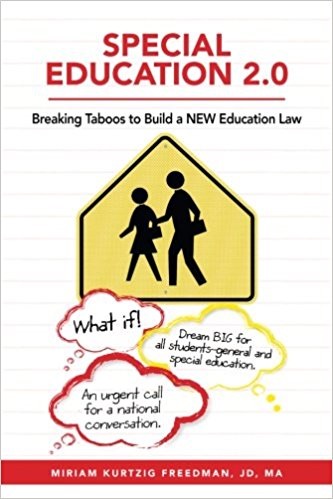
Special Education 2.0: Breaking Taboos to Build a NEW Education Law by Miriam Kurtzig Freedman points out the successes and flaws of the 1975 law that established federal control of public school special education programs. It argues against labeling students and for giving all students what they need without wasting money on bureaucracy and litigation. Share this with policy makers you know.
Preamble and Guiding Principles
- The main idea is that public education needs to meet the needs of all students and that there should be no individual entitlement. Strangling paperwork and compliance requirements need to be streamlined. There is a focus on home-based, parent engagement learning environments along with preschools to close language and other gaps. Adaptations should be aimed at improving learning, not just getting kids through. We should learn from other countries like Finland and fund research-based programs. Early interventions for struggling students is key. Least intervention needed should replace least restrictive environment and strengths should be highlighted along with weaknesses. Teacher preparation should be strengthened. There should be a focus on student engagement and student responsibility to be motivated and present. Due process rights should be the same for all.
Why a NEW Law
- The current special education law (IDEA) was first passed in 1975 and tweaked several times since. Prior to that, many children with special needs were barred from public schools or served poorly. While the law has had some positive impact, it has also had a number of unintended consequences. They include the rampant fear of litigation, too much bureaucratic regulation paperwork, excessive cost, and input-driven requirements far removed from improving outcomes for students. While Congress is expected to reauthorize the law again, all we can expect is that they will change discipline policies, add and/or subtract assessments, reemphasize inclusion, and perhaps reallocate more resources. What Miriam sees is a 20th-century law that isn’t working well in the 21st century. This is the foundation for her belief that lawmakers should start from scratch.
Posted in Book Summaries, Education Books, Leadership Books | Comments Off on Special Education 2.0: Breaking Taboos to Build a NEW Education Law by Miriam Kurtzig Freedman
Wednesday, January 12th, 2011
Standing and Delivering: What the Movie Didn’t Tell by Henry Gradillas and Jerry Jesness, is the story of Garfield High School in East Los Angeles, which was featured in the film Stand and Deliver (1988). Gradillas was Garfield’s principal from 1980 to 1987. During this time the school gained fame for Jaime Escalante and his AP calculus students. This book tells how Gradillas lead a failing school that made amazing progress. Escalante is quick to credit Henry’s leadership. Every school leader and future leader should read this book.
Click here for my summary of Standing and Delivering.
Tags: Henry Gradillas, Jamie Escalante, Stand and Deliver, Standing and Delivering
Posted in Book Summaries, Education Books, Leadership Books | Comments Off on Standing and Delivering – The Principal’s Story
Monday, November 9th, 2015
Staying Sharp: 9 Keys for a Youthful Brain Through Modern Science and Ageless Wisdom by Henry Emmons and David Alter offers advice that all of us can use to live a longer, healthier, and more fulfilling lives. Use this summary to see how you are doing and where you might need to improve. Then click at the bottom to purchase the book for the necessary details.
Henry Emmons and David Alter
- Henry is a psychiatrist who integrates mind-body and natural therapies, including mindfulness and compassion practices into his clinical work for Partners in Resilience in Minneapolis. He is also the author of The Chemistry of Joy and The Chemistry of Calm, and a popular workshop and retreat leader for both healthcare professionals and the general public.
- David is a psychologist with thirty years’ experience in health, psychology, neuropsychology, and clinical hypnosis, which he integrates in his work. He is a sought-after speaker, teacher, and trainer offering talks, workshops, and retreats to general and professional audiences. He is a cofounder of Partners in Healing, a center for holistic health in Minneapolis, and conducts his practice there.
Introduction
- Before the authors get to their Nine Keys to a Youthful Brain, they offer three chapters that discuss how the brain works and what happens as it naturally ages. Even though it does slow down, new neurons do form and new connections can be made. We also have less ability to pay attention, find learning more challenging, and take longer to retrieve information.
- They also focus on the concept of mindfulness, which deals with what you consciously do with your brain as you navigate your environment. This is called purposeful attention. There is nothing to stop you from being emotionally aware and cultivating a more joyful life. In addition to mind, we are also body and spirit.
The Nine Keys to a Youthful Brain
- 1. A Youthful Brain Loves Movement. Lack of movement is a strong reason behind many modern chronic health problems. Movement exercises the body and the brain. Exercise also helps reduce stress. There is lots of specific advice here and it’s never too late to start.
- 2. A Youthful Brain Is Well Rested. It is well established that sleep and other forms of rest are good for brain health. It also promotes good mood, memory, and healing. Short naps during the day also seem to be beneficial as long as you are sleeping well at night. If you are having trouble sleeping you might find the cause here along with tips for improving your sleep experience.
- 3. A Youthful Brain Is Well Nourished. This should be obvious. We generally eat too much, not enough fiber, and too much sugar. The authors suggest you try to eat unprocessed foods, emphasize plants and healthy fats, shift some protein away from meats, reduce sugars, drink more water, get more fiber and probiotics, and drink alcohol in moderation. There are good specifics on each of these issues along with tips to eat more mindfully.
- 4. A Youthful Brain Cultivates Curiosity. Curiosity activates the reward centers deep within the brain. It is a whole brain exercise that integrates the knowledge circuits of the left brain with the pattern-seeking circuits of the right brain. It will keep you fresh and lead to a longer, healthier, and more fulfilling life. If you cultivate your own curiosity, the world will be a more beautiful place and boredom will fade. If you seek out novelty you will become a constant learner. Get the book to learn how.
- 5. A Youthful Brain Stays Flexible. This runs counter to nature’s design, but has more to do with fear than destiny. If you respond more flexibly to change, life can become more enjoyable, rewarding, and fulfilling. One way to do this is to spend more time thinking about thinking (metacognition). The other keys contribute to your flexibility as will advice in this chapter.
- 6. A Youthful Brain Is Optimistic. Our brains are hardwired to be optimistic and you can increase your optimism with practice. It evolved to keep us engaged when logic suggests we give up. It’s benefits can be measured in terms of physical and mental health criteria. It will certainly make you more resilient as you age.
- 7. A Youthful Brain Is Empathic. Empathy arises from brain regions that regulate the quality of our relationships. You should practice empathy to help regulate your mind and behavior. This is how you influence the brains you interact with. Practicing empathy can make you more calm, content, and satisfied. Parents need to promote this quality in their children. One focus here is active listening, which is an important leadership skill.
- 8. A Youthful Brain Is Well Connected. The brain needs connection to others. Forming strong bonds early has a lasting impact. We need to learn how to create, grow, and maintain healthy social connections. This is very important as we age. Physical and mental health are necessary for positive social connections. If you do this right you will feel loved, respected, and listened to. This relates to Howard Gardner’s inter-personal intelligence. Even if you aren’t a natural connector, you can become one.
- 9. A Youthful Brain Is Authentic. No one wants to live someone else’s life. This key requires that you listen to yourself and live a life true to who you are. If you pull this one off, you should feel more confident and self-assured. This relates to Howard Gardner’s intra-personal intelligence and it can be increase with intent. Meditation can help.
Conclusion
- Even though I strongly suggest you purchase and read this entire book, this summary can act as a self-test that can help you see where you stand. While I’ve read most of this advice elsewhere, this book does a great job of pulling it all together. I was happy to see that I have already been following these keys. In my case, this book served to reinforce my approach to life, which has served me well. I’ve never missed a day of work due to illness, and don’t find life stressful. I enjoy the world and the people I meet, and people often tell me that I don’t look like I was born in 1947. I hope you are in the same boat, but if not, see what you can do to take the advice given here. You will also find tips here you can share with others at work or in your personal life. Good luck.
Posted in Book Summaries, Business Books, Education Books, Leadership Books | Comments Off on Staying Sharp: 9 Keys for a Youthful Brain Through Modern Science and Ageless Wisdom by Henry Emmons and David Alter
Monday, September 19th, 2016
1. What Is STEM?
- STEM education is an interdisciplinary approach to learning that removes the traditional barriers separating the four disciplines of Science, Technology, Engineering, and Mathematics and integrates them into real-world, rigorous, and relevant learning experiences for students. (See this short animation for a visual definition.) There is more of a focus on working in teams, and the problems do not have a single right answer. This is an emerging national trend and is noted for taking many teachers outside of their comfort zones. The purpose of this book is to give you a teaching toolkit filled with new ideas and know-how to help you start exploring and implementing STEM education.
- As failure is a normal part of the engineering process, it is also a part of STEM education. The students need to know that failure is expected and that the classroom is risk-free. Teachers facilitate rather than tell as students follow an engineering design process. Students connect and apply science principles and use math and technology as tools to solve an engineering problem. Rather than conduct an experiment to test a scientific hypothesis, students engineer a solution for a real-world problem. The steps are: 1. Define the problem, 2. Research, 3. Imagine, 4. Plan, 5. Create, 6. Test and Evaluate, 7. Redesign (iterate), and 8. Communicate.
- Consider adding some of these reference books to your school’s professional development library.
2. Why Teach STEM?
- STEM literacy can have a positive personal impact on the lives or our students. It can also impact our country and society in general. Businesses are asking for employees with in-depth mastery of STEM skills. Anne lists seven compelling reasons. 1. Help student develop deeper understanding of science and math concepts. 2. Promote innovative critical thinkers, which can allow creativity to flourish. 3. Students learn who to approach and solve problems. 4. They develop a sense of ethics and social conscience. 5. Students develop collaboration skills. 6. Technological literacy increases. 7. Students understand the connection between STEM education and future careers.
3, STEM Variations
- In addition to a fully integrated program that uses the engineering design process and integrates the other subjects, there are many variations that you may run in to. A common one stresses the subjects individually and may add engineering and coding courses to the standard science and math offerings. Some add a maker component to the school’s offerings. Others add the arts and call it STEAM. Anne suggests that art courses stay in play so that students will have artistic skills to use as they design projects.
Posted in Book Summaries, Education Books, Leadership Books | Comments Off on STEM by Design: Strategies and Activities for Grades 4-8 by Anne Jolly