
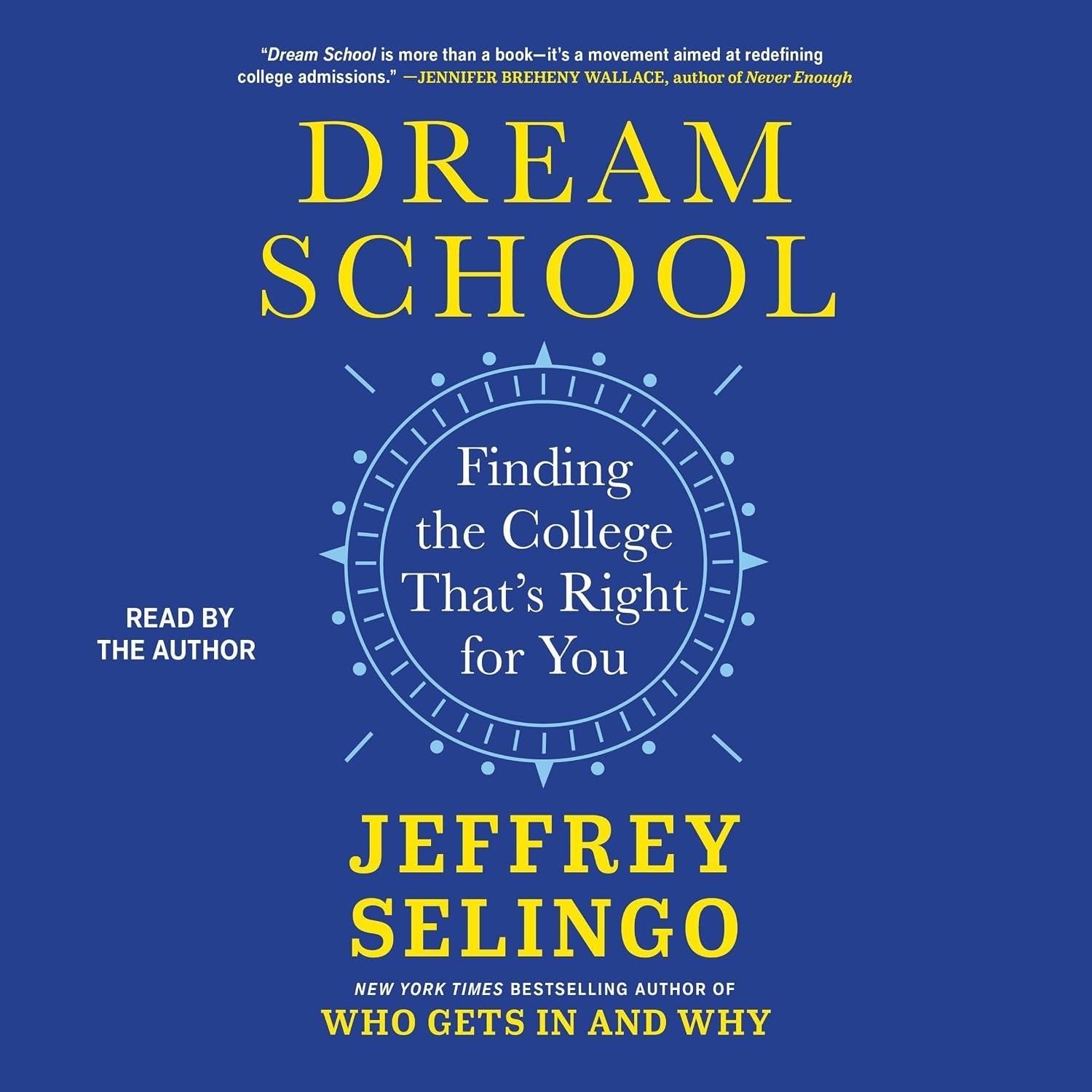
Dream School: Finding the College That’s Right for You by Jeffrey Selingo will help high school students and their parents find colleges that are likely to deliver on the promise of helping you discover what you want to become as they equip you with the mindset, relationships, and skills you will need for a successful and happy life. Be sure to share this with any high school students and their parents that you know and get a copy for your school library.
Introduction
- We start with a student who was accepted at Columbia, his dream school, who transferred to the University of Minnesota, where he found more human connections. Since one-third of college students transfer after their freshman year, there is clearly a need for the advice found in this book. As this example shows, an elite college may not be for everyone and getting into one just for bragging rights is probably a big mistake.
- What students want most is experiential learning, like internships and participation in research. This is followed by job placement of graduates and the strength of their specific major. Fourth is the prestige of the college. If a school can also help them fit in, the sticker price matters less. The goal in your college search is to replace anxiety with excitement so the process is inspiring and not exhausting. This book is your road map for that.
Part I: Why Your Assumptions About Elite Colleges Are All Wrong – 1. Great Expectations: Why You Need a Backup Plan
- When colleges stopped requiring SAT or ACT scores, applications to selective schools doubled, as students with high grades due to grade inflation didn’t have to worry about lower test scores. About half of the students preparing for college use Niche.com to help manage the process. Be sure to start college visits early in high school, and after you have been accepted. Never enroll sight unseen. Check the school’s websites for net prices as the federal government requires them.
- Dig into the curricula of majors you are considering, along with your schedule for a typical week. When most students add schools to the mix, they tend to add “reach” schools that they think are “target schools.” Colleges don’t want to accept too many students from the same high school or geographic region. Consider applying to a school in a different region. You would think that the decrease in the number of students would make it easier to get in, but this is not likely to impact elite schools.
2. Swimming in Calmer Waters: The Elite College Degree Matters Less Than You Think
- Being a big fish in a small pond (top student/non-elite college) will give you confidence and probably not prevent you from realizing success in the workplace. Elite students do make more, but this could be due to their ability rather than the education they get. Students at elite schools are more likely to drop out of STEM majors due to the competition and lack of support.
- Things to do. 1. Visit career services and request a list of organizations that have recently hired students from your planned major. 2. On LinkedIn, look at the early-career paths of graduates from your college of interest in your field of interest. 3. Ask the alumni office what alumni do to help students get jobs. 4. Know the hiring calendar for interns in your field. Don’t forget that very few Fortune 50 employees attended elite colleges.
Share this:


DrDougGreen.com If you like the summary, buy the book