Archive for the ‘Book Summaries’ Category
Tuesday, July 7th, 2015
Why Don’t Students Like School (© 2009) by Daniel T. Willingham answers questions about how the mind works and what it means for the classroom. Daniel’s nine principles are still fresh and can guide teachers to become more effective. The chart in the last chapter summarizes the principles and belongs on every teacher’s wall. Click at the bottom of any page to get copies for any teachers you know.
Daniel T. Willingham
- Daniel has a B.A. in psychology from Duke and a Ph.D. in cognitive psychology from Harvard. He is currently professor of psychology at the University of Virginia, where he has taught since 1992. His research concerns the application of cognitive psychology to K-12 education. He writes the Ask the Cognitive Scientist column for American Educator magazine. Check out his website and follow him on Twitter at @DTWillingham.
1. Why Don’t Students Like School
- The big question is: Why is it difficult to make school enjoyable for students? The kind of thinking that is required to solve problems is difficult. To understand why, Daniel explains how thinking happens in a part of our brain called working memory. Working memory draws on two resources to solve problems. The first is information from the environment such as sensory information or facts presented by another person or some kind of media. The second is information and procedures stored in long-term memory. In order to solve a problem, it has to be not too difficult. It also helps keep things interesting if the problem is not trivial. If problems are in this Goldilocks Zone, student curiosity will thrive. It helps if the content in question is interesting to the students, but that is not enough as Daniel demonstrates by telling of a middle school teacher who made the subject of sex boring.
- With this in mind, it’s easy to see why the teacher’s job is daunting. Problems just right for some will be too easy for some and to hard for others. This implies that it is self-defeating to give all students the same work. It is also necessary to make sure that students have the necessary background knowledge in long-term memory. You also need to avoid overloading working memory with multistep instructions, lists of unconnected facts, long chains of logic, or the application of a just-learned concept. Ideally the problems can be made more interesting by being relevant to the students’ life outside of school.
Posted in Book Summaries, Education Books, Leadership Books | Comments Off on Why Don’t Students Like School by Daniel T. Willingham
Wednesday, July 25th, 2012
Why Social Media Matters: School Communication in the Digital Age by Kitty Porterfield and Meg Carnes (© 2012, Solution Tree Press: Bloomington, IN) offers educators an explanation of why social media is an important powerful tool for communication along with real-world examples of how to use it. They use current research to help you get the most out of your school’s social media efforts and to avoid common pitfalls. As you read my summary, take time to click the book icon at the bottom of any page to purchase at least one copy for each school.
Posted in Book Summaries, Business Books, Education Books, Leadership Books | Comments Off on Why Social Media Matters: Book Summary
Monday, September 23rd, 2013
Why Students Don’t Like School? by Daniel T. Willingham (©2009, Jossey-Bass: SanFrancisco, CA) answers questions about how the mind works and what it means for the classroom. The focus here is how do students’ minds work, and how you can use this knowledge to be a better teacher. Click at the bottom of any page to pick up a copy of this vital book for your favorite teacher(s).
Daniel T. Willingham
- Daniel has a PhD in cognitive psychology from Harvard and is currently professor of psychology at the University of Virginia. He has done extensive research on the brain basis of learning and memory and now is concerned with the application of cognitive psychology to K-12 education. He writes for American Educator magazine. You can check his website DanielWillingham.Com.
.
Thinking Is Hard
- While the human brain is adept at seeing and guiding movement with little effort, thinking is slow, effortful, and uncertain. People do enjoy thinking as long as they can solve the problem at hand. There is not much pleasure in just being told the answer or working on problems that are too difficult. Thinking occurs when we combine information from our environment with information and/or procedures from long-term memory. This takes place in our short-term memory.
- The lesson here for teachers is that students need the proper background knowledge and procedures along with new information from the environment. They also need problems that offer moderate challenges. They need ways to organize the information at hand as short-term memory can only hold so much. Spend time developing the right questions based on the material at hand and look to keep it relevant. It is also self-defeating to give all students the same work as they don’t all have the same ability. If some students are behind others, giving them work that is beyond them is likely to make them fall further behind. Changing the topic will grab attention, and be sure to make notes in your lesson plans as to what works and what doesn’t.
Is Knowledge Under Rated?
- The main point here is that you are better able to engage in critical thinking if you have related knowledge in long-term memory that you can draw on. Many sources today are critical of schools for teaching too many facts and using tests that feature simple recall. It you try to get students to think critically and solve problems without giving them the necessary background knowledge, they are likely to be frustrated and have little success. You can also take in new information faster if you have related information in long-term memory. This will allow you to chunk new information into fewer pieces, which reduces the load on short-term memory. Studies show that reading skill is less important than background knowledge of a specific subject. Background knowledge also provides vocabulary, bridges gaps that authors leave, and helps you wade through concepts that might be ambiguous.
- When it comes to knowledge, the more you have, the more you gain. This explains why students from homes where they are exposed to a lot of language, books, museum trips and such do better in school. This is why poor children generally don’t do as well in school. The question for schools is which knowledge to instill? Daniel suggests newspapers, magazines, and books on serious topics written for the intelligent layman. He also suggests that schools focus on concepts that come up again and again. Knowledge pays off more when it is conceptual and when the facts are unrelated to each other. Drilling probably does more harm as it is likely to make students think that school is a place of boredom and drudgery.
Memory is the Residue of Thought
- Memory is still pretty mysterious. We know that thinking about something carefully should cause it to be stored in long-term memory. Whatever students think about is what they will remember. Attention is key. If you don’t pay attention to something, you can’t learn it. Things that create an emotional reaction will be better remembers, but emotion is not necessary for learning. Simple repetition is not enough either. A teacher’s goal, therefore, is to get students to think about meaning.
- Effective teachers are the ones that students like and who organize material in ways that make it interesting and easy to understand. Emotional bonds between students and teachers accounts for whether students learn. Turning a lesson plan into as story is one effective way to promote learning. Good stories feature causality, conflict, complications, and interesting characters. Teachers should also try to come up with the right questions to that the answers seem more interesting. For necessary rote memorization, Daniel does not discourage memory tricks and gives advice on which ones he prefers.
- Attention grabbers can be useful as long as the don’t continue to grab attention and become a distraction. Since you will usually have student attention at the beginning of a class, grabbers may be better used when student attention starts to fade. It can be interesting if students are exploring their own interests, but incorrect discoveries promote incorrect memories. Making things relevant can work, but making some topics seem relevant can seem phony. In any case, review each lesson plan in terms of what you want the students to think about.
Abstract Ideas are Hard
Our minds prefer concrete ideas over abstractions. The best way to understand an abstraction is to experience it in many different analogous versions. Examples help make abstractions appear more concrete. It is difficult to understand a new idea if it isn’t related to what you already know. Daniel discusses three types of knowledge starting with rote knowledge, which is composed of simple facts. Shallow knowledge implies there is some limited understanding. Finally, with deep knowledge we have the necessary pieces of knowledge richly interconnected. Problems and situations also have a surface structure and a deep structure. Deep structures are not obvious and many deep structures might apply to the same problem. Since surface structure can get in the way, it is sometimes best to disregard it. Comparing diverse examples is a good teaching strategy to promote deeper thinking. Teachers should let students know that the goal is deep thinking, and make sure that tests don’t emphasize too many factual questions. Shallow knowledge is better than no knowledge and is a natural step on the way to deeper knowledge.
Is Drilling Worth It?
- Thinking takes place when you combine information in new ways. This happens in short-term memory, which is limited in size. To make it more efficient you need to have more knowledge in long-term memory, and automate some key processes. You are an experienced reader so you have automated an important process. Memorizing simple math facts is another example.
- Research shows that practice that helps you automate a process is more effective if it is spread out over time. On the other hand, cramming for a test may help you pass the test, but you will forget the material faster than if you practiced over time. Also, if you practice something enough, you will effectively never forget it. For example, people who only take algebra forget most of it while people who take calculus remember most of their algebra. By spreading practice out, you need less of it, and teachers will have a better chance of making it seem less boring. Not everything can be practiced as there isn’t time. Teachers, therefore, must decide which material needs to be automated. These should be the building blocks of the discipline at hand.
Getting Students to Think
- As novices, students cannot think like experts. They lack the organized background knowledge and the practice that makes key processes automatic. While they won’t be able to create knew knowledge or interpretations of historic events, they can work to understand what experts have created. That doesn’t mean that teachers should never ask students to try to create something. It just means they probably won’t be very good at it. They can however, learn to understand how science and other fields work and progress. This also applies to the teaching profession. Beginning teachers may deal with the symptom when misbehavior occurs while expert teachers will deal with the root cause.
Teaching Different Types of Learners
- The guiding principle here is that children are more alike than different in terms of how they think and learn. Cognitive styles are not the same as cognitive abilities. Pages 150-151 offer 12 sets of opposing styles that can help with lesson planning. Unfortunately, scientists have yet to find specific styles in individuals that schools can use. This is due to the fact that the vast majority of schooling is concerned with what things mean, not what they look like or sound like.
- Teachers should differentiate instruction, but not based on any set of learning styles. They should treat students differently on the basis of their experience with each student and remain alert for what works. Here is where craft knowledge trumps science. Daniel also cautions against telling kids they have skills and smarts. Daniel Pink’s book on motivation supports this idea.
Helping Slow Learners
- We know that children differ in intelligence and that intelligence can be changed by hard work. It is vital that children believe this. Some kids think, however, that hard work makes them look dumb. They also seek to avoid failure rather than accept it and learn from it. One key factor is how children are praised. Praising them for being smart will discourage them from taking on challenging tasks for fear of failure. Failure means you are about to learn something. Also, don’t assume that slower students know how to study. Praising students for hard work has the opposite effect. This sends the message the intelligence is under their control. Create a classroom atmosphere in which failure is neither embarrassing nor wholly negative. Praising substandard work sends the message that you have lower expectations of a student. Praise what is good and say “let’s talk about how your could have done the other things better.”
How About My Mind
- Data suggests that most teachers improve during their first five years and then level off. In order to improve you need to increase your factual and procedural knowledge. Practice is difficult and feedback is essential. Students can give you feedback, but higher quality feedback is more likely to come from other experienced teachers. Working with another teacher can help, but it may not be possible to have another teacher in your room very often. Making videos of your lessons can help. You should first watch your videos yourself before you share them with another teacher who you trust. Here are two sites where you can watch other teachers’ videos. videoclassroom.org and learner.org. When you do watch videos with other teachers focus on concrete observations rather than subjective statements. In addition to videos, getting together with other teachers to discuss what seems to work and ask for suggestions can help. Daniel also suggests that you keep a diary of what worked and what didn’t and observe children in the age group you teach outside of the classroom whenever possible. It will help if you can observe children you don’t know you.
Conclusion
- In his final chapter, Daniel offers and excellent table that reviews his nine cognitive principles along with the required knowledge about students, and the most important classroom implications for each. It boils down to knowing how learning takes place, knowing the factors that facilitate learning, and perhaps most importantly, knowing your students. This is analogous to writers knowing their audience. The principles he selected from the entire body of cognitive science are the ones he sees as true all the time and based on a great deal of data. They are principals that can drive lesson planning, and principles that teachers can ill afford to ignore. They all certainly resonate with this educator who has been in the business since 1969. I hope you enjoy this book as much as I did.
Posted in Book Summaries, Education Books, Leadership Books | Comments Off on Why Students Don’t Like School? by Daniel T. Willingham
Monday, August 17th, 2015
Wired to Care: how companies prosper when they create widespread empathy by Dev Patniak with Peter Mortensen ©2009 explains the importance of empathy and how to spread it around. While written for businesses, this is a book that all school leaders should read and act on. Click at the bottom of any page to by copies for leaders you know.
Dev Patniak and Pete Mortensen
- DEV is the CEO of Jump Associates, a strategy and innovation firm. Jump helps companies create new businesses and reinvent existing ones. Jump works with some of the world’s most admired companies, including GE, Nike, Target, and Virgin. Jump has become particularly well-known for its pioneering culture. Dev is a frequent speaker at business forums and his articles have appeared in numerous publications, including BusinessWeek, Forbes, and Fast Company. He is an adjunct professor at Stanford University, where he teaches a course called Needfinding. Contact Dev at dpatnaik@jumpassociates.com and follow him on Twitter at @devpatnaik.
- Pete is the communications lead for Jump Associates. A journalist by training, he has written for and edited numerous monthly, weekly and daily publications, including Spin Magazine, nyou, the Holland Sentinel, the Windsor Times, and Wired News.
Part I: The Case for Empathy Introduction
- As the title says, we are wired to care. Unfortunately, that instinct seems to get short-circuited when we get together in large groups. Real empathy can ensure more ethical behavior in a way that no policies and procedures ever could. The trick is to encourage everyone to walk in other people’s shoes. This book is packed with great stories that demonstrate how some companies strive to really understand their customers and meet their needs. If you want people to be interested in you and what you do, you should be genuinely interested in the people you are dealing with.
2. The Map Is Not the Territory
- Reports are abstractions and often lose touch with reality. A plan is only a map that doesn’t know the territory. In organizations, decision makers often find themselves working with simplified data that lacks context. This makes it easy to digest but can’t tell the whole story. There is a great story here about how Lou Gerstner turned IBM around by sending his people out to meet with customers and develop more empathy. As a result, support and service became a major growth area for the company. His mantra was “what are you hearing from our customers?” Empathy helps people see the world as it really is, not how it looks on a map. (Doug: I have long thought that it is important to view parents and students as customers, listen to them, and try to meet their needs. As a principal, I also viewed teachers and other staff members as my customers.)
3. The Way Things Used to Be
- The longer a team knows each other, the better they tend to do. This is something Dev discovered while teaching at Stanford. For thousands of years people made things for people they knew. Thanks to industrialization, a rift grew between producers and consumers. Is something lost when snowshoes are made by people who have never seen snow? Dev believes that it is much harder to succeed when you create things for people you don’t know. I love the story of the Zildjian Cymbal Company used to reinforce this concept. Their secret was keeping close relationships with drummers. Unfortunately, most companies don’t work this way and lose the ability to meet face to face with ordinary people. Such face to face meetings forms empathic connections.
Posted in Book Summaries, Business Books, Leadership Books | Comments Off on Wired to Care: how companies prosper when they create widespread empathy by Dev Patniak with Peter Mortensen
Tuesday, March 12th, 2019
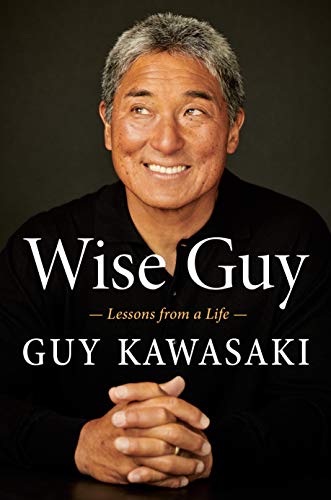
Wise Guy: Lessons From a Life by Guy Kawasaki uses his unique experience with Apple and other tech companies along with his life beyond work to distill wisdom he has gathered to date. His stories are engaging and this book can save you a lot of pain as you strive to be a better leader and a better person. It may well help you have a happier life. As a devoted parent, he has created a valuable book for parents. I strongly recommend it.
Preface
- Rather than an autobiography or a memoir, this book is a compilation of the most enlightening stories of Guy’s life. It’s lessons, not history. Perhaps Guy’s stories can help you live a more joyous, productive, and meaningful life. If Wise Guy succeeds, that will be a pretty good story.
1. Immigration
- Guy’s great-grandparents from his father’s side emigrated from Hiroshima, Japan to Hawaii to avoid military service during the Russo-Japanese War. They worked on farms for $1 a day. Guy’s maternal grandfather also immigrated from Japan where he met his wife. Guy got his name from Guy Lombardo, a famous bandleader from Canada who his father knew. While his parents didn’t go to college they read a lot and were very fond of music. After three tries his father was elected to the state senate where he served twenty years.
- Guy grew up in a poor section of Honolulu. His neighborhood was a melting pot at the time, but Japanese-Hawaiians were looked down on. His parents worked hard and placed a high value on education. Guy believes that by living in America, he was able to accomplish a great deal more than if he grew up in Japan, which wasn’t likely in Hiroshima. The wisdom here is to change a losing game or one that is going nowhere. This might require moving like Guy’s family did.
2. Education
- Guy believes that education is the great catalyst and equalizer. He credits his sixth-grade teacher for telling his parents that he shouldn’t take the typical path through Hawaii’s public schools. This meant great personal financial sacrifice for his parents. Guy found that his best teachers were also the toughest in that they always had high expectations. The advice here is to seek out people who will challenge you. If you are a teacher or the boss, you aren’t doing any favors by lowering your standards. The future cost of short-term kindness is great.
- Guy suggests that you also teach respect for authority and avoid trying to overprotect children. Sometimes being scared can teach an important lesson. Kids should know that people aren’t good or bad. Most of us have done good and bad things. Life offers a lot of contradictions. When it came time to go to college Guy wanted to go to Occidental where he could play football. His father told him no and that if he was going to pay for college Guy was going to Stanford. Guy got into Stanford even though his grades and SATs were not so great because at the time his Asian heritage made him a desirable minority. Guy recommends going away to college so you can meet people from different backgrounds.
3. Inspiration
- Guy was motivated to work hard so he could afford a nice car. He believes that it doesn’t matter what motivates you as long as you are motivated. He also recommends If You Want to Write: A Book About Art, Independence, and Spirit by Brenda Ueland for inspiration even if your goal is to do something other than writing. After getting robbed twice in high school Guy vowed to work hard so he could avoid public transportation and high crime neighborhoods.
- When he told his father that a passerby thought he was a gardener because he looked Japanese his father told him to get over it. Don’t look for insults and don’t let other people get to you. Condoleezza Rice told him “don’t ever see yourself as a victim because then you will start acting like one.” You must believe that you control your own fate. Be sure to read Mindset by Carol Dweck. You can do some unbelievable things, but you have to use the right tool. It’s ok to quit something as long as you reboot and restart. This chapter ends with the text of the speech he gave to the graduates at Menlo College in 2012. It’s full of good advice.
4. Apple
- Guy worked at Apple from 1983 to 1987 and from 1995 to 1997. These two “tours of duty” made him what he is today. When he first saw MacWrite and MacPaint he was dumbfounded by how cool the Macintosh was. His job was to convince software companies to produce products for the Mac. He was an evangelist. Guy felt that the cool aspect of the Mac made his job easy, but he worked hard and was smart enough to succeed. There are no perfect candidates for a job, only successful candidates who make their shortcomings irrelevant. A lot of people get jobs because they know someone. Don’t worry about that, just deliver.
- Working for Steve Jobs required that you prove yourself every day. He demanded excellence and kept you at the top of your game. It was sometimes unpleasant and always scary, but it drove you to do your finest work. Steve demanded honesty and saw it as a test of competence and character. It’s also easier than lying. Trust but document. It’s good to cover your ass when you are bending the rules. Guy recommends Drive: The Surprising Truth About What Motivates Us by Daniel Pink. Pay and perks are nice but look for a job where you can learn new skills, and work autonomously towards a meaningful goal. This chapter concludes with the top eleven lessons Guy learned at Apple.
Tags: Guy Kawasaki, Wise Guy
Posted in Book Summaries, Business Books, Education Books, Leadership Books | Comments Off on Wise Guy: Lessons From a Life by Guy Kawasaki
Monday, February 27th, 2017
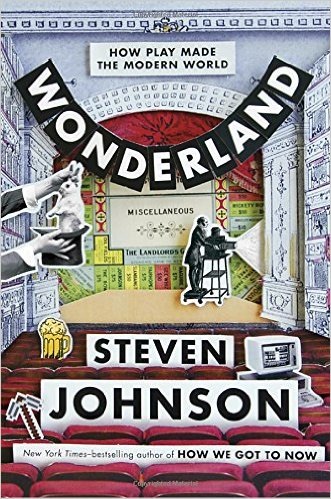
Wonderland: How Play Made the Modern World by Steven Johnson explores how our search for novel experiences and fun has driven many commercial and scientific aftershocks. The process of feeding our senses with pleasure lead to opening up world trade and it had the downside of feeding the slave trade and exploitation. The next time you think slacking off is a waste of time, you just might be in the process of innovation.
1. Introduction
- This book is a history of what we do for fun and how having fun has had a great impact on everything else. One measure of human progress is how much recreational time we have, and the immensely varied ways we have of enjoying it. We see that innovation in one field often sets in motion transformations in other fields, and it’s experiences designed to delight or amaze that often end up transforming society in dramatic ways. Play is often about breaking rules and experimenting with new conventions. Is such, it is often the seedbed for innovations.
- While necessity may be the mother of invention, leisure and play are often involved as well. The pursuit of pleasure also stitches together a global fabric of shared culture. The quest for delight, however, has not always transformed things for the better.
2. Fashion and Shopping
- Start with the story of a purple die from a sea snail. In man’s quest to find more of these snails, the Phoenicians ventured beyond the Mediterranean and unlocked the Atlantic for all time. No one needs the color purple. It just looks nice. As soon as humans became tool makers, they started making jewelry. Since delightful things are valuable, they attract commercial speculation, which funds new technologies, markets, and geographical exploration. The human appetite for surprise, novelty, and beauty dominates in human cultures.
- As people in Europe developed a taste for fine clothing, cotton from the Americas came in demand. To meet this demand, the slave trade boomed and by 1860, half of population of southern states were slaves. Child labor abuse also resulted along with pollution from factories. This also lead to the creation of department stores in the late 1800s where people often went just to shop. Crime among women increased due to shop lifting. More women entered the work force and many were department store clerks. By the 1950s, malls were springing up. They exaggerated suburban sprawl and foreshadowed decline of the inner cities. This chapter ends with a plea to design and build new types of cities.
Posted in Book Summaries, Education Books | Comments Off on Wonderland: How Play Made the Modern World by Steven Johnson
Thursday, August 16th, 2012
World Class Learners: Educating Creative and Entrepreneurial Learners by Yong Zhao (© 2012, Corwin: Thousand Oaks, CA) provides a vision of what schools should look like. He draws on examples for what real innovative schools are currently doing to help make his case. Every educator and parent should read this and do what they can to help realize this vision. As you read my summary, please consider clicking on the icon at the bottom of each page to purchase your copy from Amazon.
Posted in Book Summaries, Education Books, Leadership Books | Comments Off on World Class Learners: Educating Creative and Entrepreneurial Learners by Youg Zhao
Wednesday, October 6th, 2010
Wounded by School: Recapturing the Joy in Learning and Standing Up to Old School Culture, is a must read for all educators. In this book, Kirsten Olson draws on her extensive research to help us understand the types of wounds suffered by students in school. The second part helps us understand how students can heal and how to avoid wounds altogether. If all teachers read and acted on this advice, schools would be better places overnight. Parents of wounded students and students themselves should also get this book.
Click here to see my summary of Wounded by School.
Tags: Kirsten Olson, Wounded by School
Posted in Book Summaries, Education Books | Comments Off on Wounded by School – Put joy back in learning. Kirsten Olson
Friday, May 8th, 2026
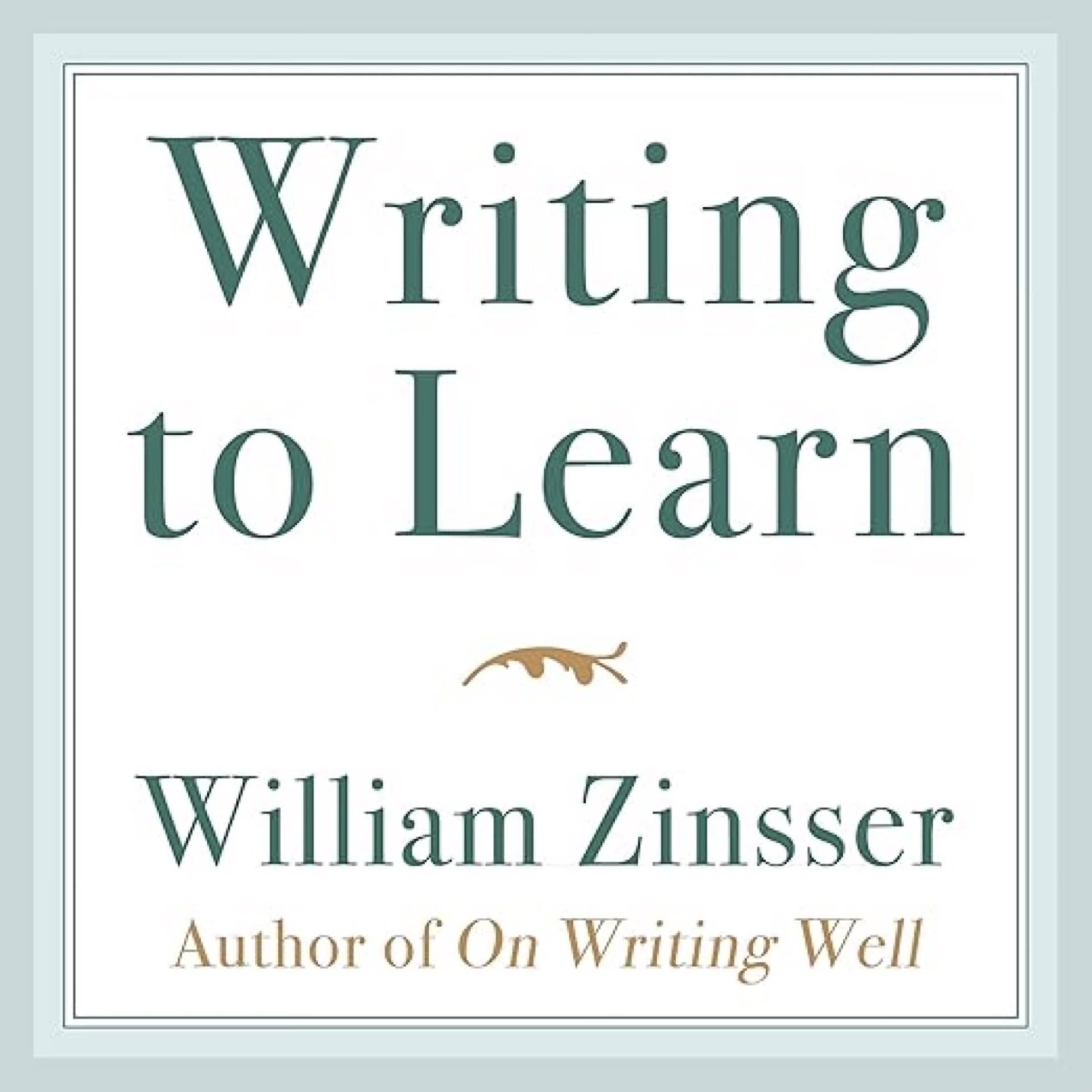
Writing to Learn by William Zinsser explains the power of writing for learning and promoting clear thinking. He takes us on a tour of the disciplines, showing that writing should not be left to English teachers. It’s clear that creating written explanations of your knowledge will not only help you internalize it, but it will also reveal the holes in your knowledge. This book contains delightful examples of excellent writing from many disciplines. It was a joy to read.
Preface
- Writing is a form of thinking. It’s not necessary to be a writer to write well. Clear writing is the logical arrangement of thoughts. We write to find out what we know and what we want to say. This is a book full of great ideas for writers.
Part I: 1. Hermes and the Periodic Table
- This chapter tells how William used Latin, which transported him back to the classical world, rather than chemistry, to get into Princeton. He found Latin to be anything but dead, as thousands of its roots are alive and well in English. He then tells of his time at Princeton during World War II, where he took the fast track through courses and was only a few credits short when he joined the Army and headed to Europe. A few courses he took in Florence earned him his Princeton degree.
- After the war, he began his career trying to write clearly at The New York Herald Tribune. He also became a logic nut. Writing is a basic skill for getting through life, yet many adults are terrified of the prospect. Writing is thinking on paper. Anyone who thinks clearly should be able to write clearly. That is what this book is about.
2. Writing Across the Curriculum
- The key concept is that teaching writing should not be left only to English teachers. This may be the most difficult pedagogical task. Motivation is crucial to writing, but assigned tasks in most schools don’t offer much. Writing is learned by imitation, but we eventually move on to our own style. William stresses the idea that once you dash off a draft, it will need a lot of editing to polish it into a respectable finished product.
- Teachers of other subjects need to find exemplars of literature in their fields to share with students. Everyone loves a good story and every discipline should have some. Even in technical subjects, the best writers are good at writing for the lay person and every subject can be made interesting.
3. A Liberal Education
- After 13 years at the and 11 more as a freelance writer, William ended up at Yale, where he edited the Yale Alumni Magazine with a circulation of 100,000 Yale undergraduates and graduate alumni. During that time he drew on two sources of energy, confidence and ego. If you don’t have confidence in what you are doing, you might as well not do it.
- There is no subject that can’t be made accessible in good English with careful writing and editing. Write good, clean sentences and organize them into a coherent shape. You need to write, rewrite, and prune to hammer out a clear and simple product. Clear writing is a corollary to clear thinking, and therefore a key to learning. You will learn a lot about a subject writing about it that you can’t learn any other way. There are examples of good writing here.
Posted in Book Summaries, Business Books, Education Books | Comments Off on Writing to Learn by William Zinsser
Friday, September 27th, 2019
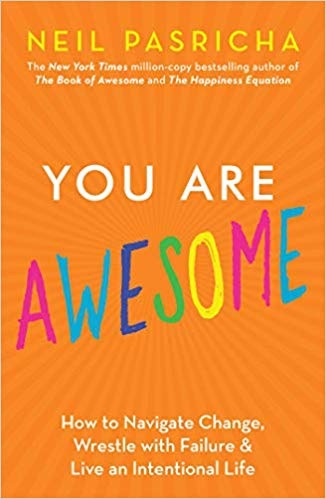
You Are Awesome: 9 Secrets to Getting Stronger and Living an Intentional Life by Neil Pasricha offers excellent advice that we can all use to have a more fulfilled and productive life. The advice here is appropriate for people in business, educators, and students alike. In short, everyone. Be sure to get some copies for your professional development library and get one for yourself.
Introduction: You Need to be More Resilient
- It starts with a very cool fable that demonstrates the notion of resilience. The key is to not let defeats define who you are. Every end is a beginning. Resilience seems to be in short supply, which is why Neil wrote this book. He offers nine research-backed secrets, shared through personal stories on how we can move from shattering to strengthening. If you find yourself off course, this book is for you.
Secret #1 – Add a Dot Dot Dot
- The dot dot dot here is known as an ellipsis which marks incomplete utterances in plays. Compare this to a period known as a full stop, which marks a finished sentence. Neil uses the ellipsis as a metaphor for life were everything is unfinished until you die. He uses the inspirational story of his mother, born the fifth girl in Kenya to a family who wanted a fourth boy. She was self-taught and got the highest score in the nation’s standardized test, which earned her a full scholarship to a white prep school. She just kept going like an ellipsis and looked past the periods.
- The other key lesson here is that like Neil’s mom, the one word you should use over and over at the end of your sentence is yet. As is “I don’t have any better options…yet.”
Secret #2 – Shift the Spotlight
- It’s egotistical to think that “it’s all about you.” It’s foolish to think that people are constantly looking and you and judging you. It’s folly to think the spotlight is on you because it isn’t. Stop caring with other people who are self-absorbed think of you. There is so much beyond your control that you need to simply learn from your failures and move on. Share your failures with others as it will help you seem more human. You will seem more normal, real, and relatable, which will help improve your relationships. If you make self-harming statements you are likely to believe them. Also, avoid exaggerating the size of your problems.
Secret #3 – See It as a Step
- If you think of life as a long stairway you need to realize that you can see the steps taken but the upcoming steps are invisible. Also, realize that we are all really bad a predicting the future. People think that they have changed a lot in the past, but won’t change much in the future. This is probably wrong. When people are down, they often think they will probably stay there. This is the wrong way to think. See failure as a step towards a future that you will be happy with. Neil also recommends that you avoid the endless reports of bad news that our modern media doles out. It’s largely a machine-gun barrage of superficial negativity. He also found that writing a blog was cathartic as it helped him swap dark thoughts for lighter ones. For him, it was the dot dot dot, a shift of the spotlight, and the next step. When you fail, just prepare for this next step, which might be positive.
Secret #4 – Tell Yourself a Different Story
- Shame is an intensely painful feeling or experience that we are flawed and unworthy of love or belonging. It plays a role in how we think of ourselves. Your problem is the story you are telling yourself and you can choose another story like you can choose your attitude. Three questions can help. 1. Will this matter on my death bed? 2. Can I do something about this? 3. Is this a story I am telling myself?
Secret #5 – Lose More to Win More
- Some good things just take time. They take lots of failure, lots of loss, and lots of experience. Wanting to get better is a real gift. It means you keep trying, failing, and learning. If your number of failures exceed those of most people you should be proud of that. Cy Young had the most wins and the most losses. Nolan Ryan had the most strikeouts and the most walks. The more times you step to the mound the more chances you have to win. Go to parties where you don’t know people. Have a failure budget. Can you afford to lose hundreds on something that fails? How about thousands or more? More losses give you more chances to win. If you want good pictures, take more pictures.
Secret #6 – Reveal to Heal
- Physical releases are easier than mental releases. Take time to let go of something and take time to feel grateful and write down at least five gratitudes a week.
Secret #7 – Find Small Ponds
- Would you rather be a big fish in a small pond or a small fish in a big pond? If you choose the former your self-esteem will go up and stay up. Neil got this advice from a dean so instead of applying to a top company he looked for ones that were broken in some way. He got a job where he was a big deal and could make a difference. This concept applies to life. Rather than chase the hot person on the beach, look for the nerd in the library. Just don’t be arrogant or act boastfully while you are in the small pond.
Secret #8 – Go Untouchable
- It seems that every day there are more distractions in our lives. Cellphones are a big culprit while things like meetings at work and a barrage of emails also contribute. When Neil quit Walmart to become a full-time writer he found that he didn’t have the amount of time he anticipated to do creative work. His solution was to create weekly UNTOUCHABLE days where he unplugged and just focused on creative activity. He found his productivity skyrocketed so he now schedules two such days a week sixteen weeks into the future. If he has to shift one of these days he keeps it in the same week.
Secret #9 – Never, Never Stop
- This chapter could have been called “what I learned from my dad.” He emigrated from India to Canada, worked hard, and never gave up. He kept things simple and when he made a decision he didn’t waste time rethinking it. The big idea is that you can only go forward so start going that way and never stop. Thanks, Neil.
Neil Pasricha
- Neil is a New York Times bestselling author of six books including The Book of Awesome and The Happiness Equation. His podcast 3 Books is his quest to uncover the most formative books in the world. He gives 50+ speeches a year including TED Talks and SXSW. He has degrees from Queen’s University and Harvard Business School and lives in Toronto. Reach him on Twitter as @nielpasricha, visit his blog at Neil.Blog, and drop him a line at neil@globalhappiness.org.
Posted in Book Summaries, Business Books, Leadership Books | Comments Off on You Are Awesome: 9 Secrets to Getting Stronger and Living an Intentional LIfe by Neil Pasricha