Archive for the ‘What can Dr. Doug do for you?’ Category

The Highest Paying Freelance Jobs To Focus on For Maximizing Work From Home Earning by Danielle Ward

Monday, April 24th, 2017

SEO
The Highest Paying Freelance Jobs To Focus on For Maximizing Work From Home Earning by Danielle Ward introduces some of the most common and well paid freelance jobs currently available. If you haven’t found a full-time job yet or can only work part-time, some of these jobs might be for you or someone you know.

Introduction

  • Freelancing is the ‘in’ thing, quite officially. The largest corporations out there are hiring freelance IT developers, website designers, copywriters, and app developers for short term and long term projects. Of course, freelancers also continue to thrive by taking up paid projects from the most recognized global job exchange marketplaces with equal success. The point is, freelancing is no more just an additional little drip of dollars, but a gushing brook of decent income, which is comparable to, and sometimes even exceeds that of people with similar skills employed in corporations. All this notwithstanding, here we focus on telling you more about the highest paid freelance jobs, and the skills that are highly in demand.

Marketing

  • Do you have experience in marketing? Didn’t land a job after that marketing diploma? Have you acquired some experience in digital marketing? This is the time to hop on the freelance bandwagon, because marketing gigs can pay you anything between $40 and $50 per hour. Freelance engagements in marketing range from anything like brand management efforts, product promotion strategies, and real sales, to niche digital marketing efforts such as social media brand management, email marketing, etc. Even reputed employers are engaging freelancers to provide impetus to their marketing efforts. Some reselling options are there as well where you don’t need to invest something and based on your marketing skills you can start making money for each sales/sign ups.

Voice Over

  • Did you realize how the advertising winds have been blowing in the direction of video content from the past couple of years? Yes, most advertisers now prefer creating short but catchy videos. If you have a great voice, and have some experience or idea about voice over and dubbing, you can offer your services, and earn up to $70 per hour. People respond well to videos, which has created a large market space for voice over artists and dubbing artists, which means there’s a lot of money to be made for candidates with the right skills.

Recruiting

  • Freelancers are finding great short term opportunities of being a part of HR operations at growing organizations. They can offer services such as drafting of job descriptions, managing recruitment drives, handling documentation aspects of hiring, and even conducting preliminary interviews to shortlist candidates. Better paying opportunities in HR freelancing can go up to $50 per hour, whereas the ones more restricted to documentation can pay up to $30 per hour. The one downside, however, is that freelancers need to aggressively hunt for newer projects to keep the income stream strong. Another downside is that you probably won’t get access the health care from your freelance employers.

Programming

  • This is the umbrella mini-market for all kinds of web development, software development, and app development assignments. Programmers who work with conventional technologies such as Java can make up to $40 per hour by developing programs for projects. However, people with knowledge and experience of lesser known and more contemporary programming languages can make almost double the amount every hour. The key to success as a freelance programmer is to give quality work, and let the positive feedback bring in more clients.

Graphics Designing & Animation

  • Though this is among the oldest vistas of earning via freelancing, skilled graphics designers are in high demand. Experienced Photoshop artists with impressive portfolios can earn up to $40 per hour. Within graphics designing, there’s a niche called ‘info-graphics’ design, which pays as much as $80 per hour. Info-graphics are content heavy designs, with lots of stats and facts organized in the form of a vertically extended graphic. If you have animation skills (2D or 3D) there are many companies in need ot animated content who aren’t big enough to hire full-time animators.

Search Engine Optimization

  • Because of the frequent updates brought on by Google, search engine optimization continues to be a lucrative field for freelancers, especially those with updated knowledge and skills to get good rankings for client websites. The great part about freelance SEO experts is that they land projects that pay up to $40 per hour, and the number of hours they can bill to the client are on the higher side. That’s because freelance SEO engagements extend over a few weeks. Freelance SEO experts can get repeat business from their clients, and can hence earn significant incomes.

Copywriters

  • The number of blogs and websites on the web has had an exponential surge in the past decade. In parallel, search engines have aligned themselves to treat websites with great content with good SEO ranking. These factors have enabled copywriters to sustain their incomes from freelance assignments. Mid-level copywriters can make up to $30 per hour, whereas experiences writers can make up to $55-60 per hour. Like SEO, freelance copywriting comes with the advantage of repeat business from clients, which makes it a lucrative freelancing option.

Final Words

  • So those are some of the most sustainable, highly paying, and in demand freelance skills. If you’re looking to expand the scope of your freelance work, or looking to join millions of people who are already freelancing, you might want to invest effort towards honing skills relevant to these engagements.

Danielle Ward

  • Danielle is a Blogger by profession and loves sharing my thoughts over wealth and wellness blogs so that people can live a healthy life with a handsome income. She is based out in the UK but planning to move to Malta soon.
Share this:
Share this page via Email Share this page via Stumble Upon Share this page via Digg this Share this page via Facebook Share this page via Twitter Share this page via Google Plus

The New Way Students Are Preparing For Real Healthcare Work by fatjoe publishing

Saturday, May 9th, 2026

healthcare
Via Pexels

The New Way Students Are Preparing For Real Healthcare Work by fatjoe publishing

Healthcare has changed. Not just the technology, the systems, or the patient expectations, but the way people prepare to enter the field. For years, many students believed there was only one “proper” path into healthcare: study for a long time, collect a degree, and then finally step into the working world.

That path still matters for certain careers, of course. But it is no longer the only route worth respecting.

Today, more students want training that feels connected to real life. They want skills they can actually use. They want to know what a clinic feels like, how patients communicate when they are nervous, how medical teams stay organised, and how small mistakes can create big problems. That kind of preparation needs more than theory. It needs practice, structure, and a clear understanding of what healthcare work really demands.

Why Classroom Knowledge Is Only One Part Of The Journey

You can learn a lot from textbooks. Medical terms, procedures, safety rules, body systems, admin processes, these things matter. They give you the foundation. But healthcare is not lived on paper.

In a real setting, you have to think while moving. You have to listen carefully, follow instructions, stay calm, and communicate clearly with people who may be scared, frustrated, or in pain. That is where many students realise that knowledge and confidence are not the same thing.

The strongest training programmes understand this. They do not treat students like empty notebooks waiting to be filled. They help you connect what you learn to what you will actually do. That means learning why a process matters, not just memorising the steps. It means understanding how your role fits into the bigger picture of patient care.

The Value Of Learning In Real Medical Environments

Healthcare work has a rhythm. Phones ring. Patients arrive early. Files need updating. A doctor asks for something urgently. Someone needs reassurance. Someone else needs privacy. The day rarely moves in a perfect straight line.

That is why practical exposure matters so much. When you train in a way that reflects real medical environments, you begin to build habits that employers value. You become more comfortable with responsibility. You learn how to stay professional when the day gets busy. You start noticing the small details that separate a prepared student from someone who still needs constant direction.

This is also where programmes like Kino College can be a positive example, because career-focused healthcare education works best when it helps students move beyond theory and into practical readiness. The goal should not only be to pass. The goal should be to feel useful, capable, and prepared when the real work begins.

How Career Support Helps Students Move From Training To Employment

Training is important, but what happens after training matters too. Many students finish a programme and then feel stuck because they do not know how to present themselves to employers. They may have skills, but no confidence in interviews. They may know the work, but not how to explain their value.

Good career support helps bridge that gap. It can guide you with your CV, interview preparation, job expectations, workplace behaviour, and professional communication. These things may sound small, but they can change how quickly you move from student to employee.

Healthcare employers are not only looking for people who have completed a course. They want people who are dependable, teachable, organised, and ready to work with patients in a respectful way. If your training helps you build those qualities, you are already stepping into the field with a stronger foundation.

Choosing Training That Matches The Real World

Before choosing a healthcare programme, look past the shiny promises. Ask better questions. Will you get practical experience? Will the training prepare you for real workplace pressure? Will you understand both patient care and the admin side of the job? Will someone help you think about employment after you complete your studies?
The new way of preparing for healthcare work is not about rushing. It is about learning with purpose. You want training that respects your time, builds your confidence, and helps you become the kind of person a medical team can rely on.

Because in healthcare, preparation is not just about getting a certificate.

It is about being ready for people.

Share this:
Share this page via Email Share this page via Stumble Upon Share this page via Digg this Share this page via Facebook Share this page via Twitter Share this page via Google Plus

The Power of Student Ownership: Why Letting Students Lead School Projects Sparks Growth by Emily Graham

Saturday, November 8th, 2025

Project
The Power of Student Ownership: Why Letting Students Lead School Projects Sparks Growth by Emily Graham
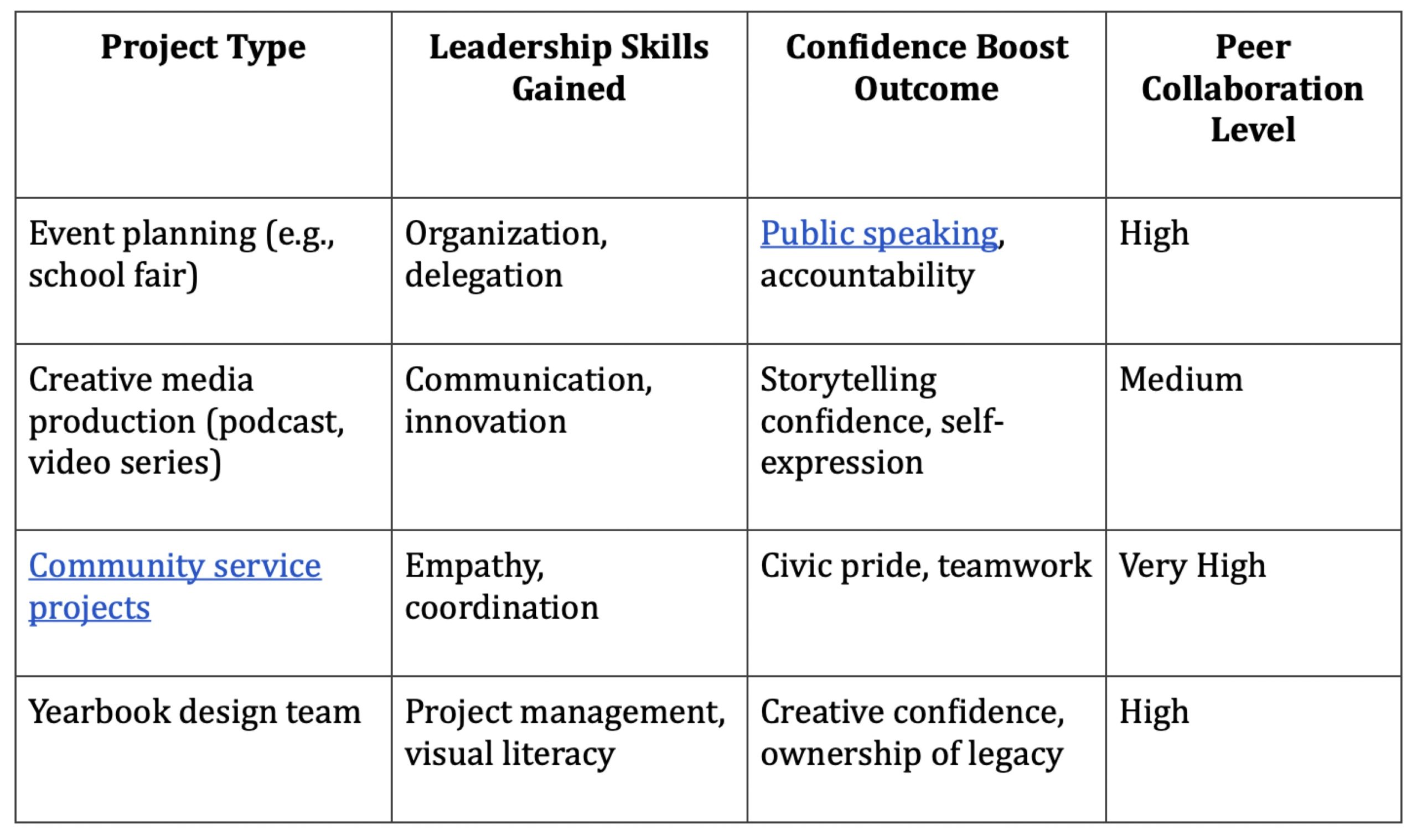
When students take charge of their learning through real projects, something profound happens: engagement skyrockets. Whether they’re planning a community event, creating media content, or designing a campaign, giving students ownership turns school into a launchpad for real-world skills.

Summary

When students lead school-wide initiatives—like art showcases, environmental campaigns, or digital storytelling—they build confidence, collaboration skills, and a deep sense of pride. This ownership transforms passive learning into active leadership.

Impact of Student Ownership

Project
The importance of public speaking in schools
7 Reasons Volunteering Is Good for Children

Why Ownership Works: The Core Drivers

Agency: Students make decisions that matter.

Relevance: Real tasks connect learning to their lives.

Visibility: Seeing results builds pride and accountability.

Mentorship: Adults become guides, not gatekeepers.


Creating a Student-Led Project Ecosystem

1. Define a shared purpose.
Frame each project around a school-wide theme—sustainability, creativity, inclusion.
2. Assign leadership roles.
Encourage rotating positions: project manager, creative director, outreach lead, etc.
3. Set checkpoints, not micromanagement.
Teachers should mentor through reflection, not control.
4. Celebrate outcomes publicly.
Use showcases, assemblies, or digital portfolios to make student work visible.
5. Reflect, iterate, and repeat.
Ask students what worked, what didn’t, and what they’d change next time.

Building Leadership Into the School Culture

Student ownership works best when it is not treated as a once-off activity, but as part of the school’s everyday culture. When learners are trusted to lead with purpose, they begin to understand that their ideas carry weight beyond the classroom. They learn how to listen, negotiate, take responsibility, and represent shared values through action. For schools that already place strong emphasis on mission, service, and character development, frameworks such as Catholic Institution Certification can support a deeper commitment to student-led growth by encouraging projects that reflect identity, community, and meaningful leadership. The goal is not to make students perform leadership. It is to give them real chances to practise it, make mistakes, adjust, and see themselves as capable contributors.

Common Questions About Student-Led Projects

Q: What if some students are shy or unsure?
A: Pair them with confident peers in team-based roles; confidence grows through contribution.
Q: How can teachers balance guidance and independence?
A: Provide frameworks, not step-by-step instructions—like checklists and reflection templates.
Q: How do we measure success?
A: Focus on growth indicators—communication improvement, collaboration, and resilience—not just grades.

Yearbook Projects as a Platform for Student Growth

When students take charge of yearbook design, they practice collaboration, storytelling, and real production management. By working together to choose layouts, images, and stories, they build confidence in decision-making and communication. Using platforms that enable full customization and team collaboration helps them translate creative vision into reality. To support this, teachers can encourage students to explore personalized yearbook options that let them co-design their legacy in meaningful, modern ways.

Ready to Launch a Student-Led Initiative?

Defined the “why” behind the project

Established clear student roles

Set reflection milestones

Provided creative autonomy
Documented the journey for others to learn from


Product Highlight: Padlet

When students lead school-wide initiatives, they need a simple, visual space to plan and share progress. Padlet gives teams a flexible digital wall for brainstorming, tracking milestones, and celebrating wins. Whether students are organizing an event, coordinating yearbook themes, or gathering creative ideas, Padlet helps them stay aligned — visually and collaboratively.

Conclusion

Student-led projects aren’t just about learning outcomes—they’re about transformation. When schools trust students to lead, they don’t just complete assignments; they become collaborators, storytellers, and leaders ready for whatever comes next.

Emily Graham

Emily is the creator of MightyMoms.net. She believes being a mom is one of the hardest jobs around and wanted to create a support system for moms from all walks of life. On her site, she offers a wide range of info tailored for busy moms — from how to reduce stress to creative ways to spend time together as a family. You can email her at emilygraham@mightymoms.net. She lives in Arizona.

Share this:
Share this page via Email Share this page via Stumble Upon Share this page via Digg this Share this page via Facebook Share this page via Twitter Share this page via Google Plus

The Psychology of Money: Timeless Lessons on Wealth, Greed, and Happiness by Morgan Housel

Saturday, June 28th, 2025

Money Book
The Psychology of Money: Timeless Lessons on Wealth, Greed, and Happiness by Morgan Housel provides the advice we all need if we seek freedom and independence that wealth can bring. The secrets are to be a frugal saver and an investor that just lets his income compound. You can do this too if you follow his advice.

Introduction: The Greatest Show on Earth

  • Unlike physics that is guided by laws, finance is guided by peoples’ behaviors. It is best understood, therefore, through the lenses of psychology and history, not finance. Ordinary people can be wealthy if they have a handful of behavioral skills that have nothing to do with the formal measures of intelligence. This book will help you understand what they are.

1. No One’s Crazy

  • We all have our own unique experience with how the world works and that is a big influence on how we deal with money. In theory, people should make investment decisions based on their goals and the characteristics of the investment options available. Unfortunately, that is not what most people do. Willingness to take on risk depends on your personal history and mostly on the conditions when you were born and growing up. Finance is a topic that is more influenced by emotions than facts, which helps explain why we don’t always do what’s best when it comes to money.

2. Luck & Risk

  • Luck and risk both happen because 100% of your actions will never determine 100% of your outcomes. The world is too complex. We tend to associate bad outcomes with bad luck as opposed to bad decisions. It’s very hard to identify luck, risk, and skill. Not all success is due to hard work. Avoid trying to copy extreme examples. Look instead for broad patterns that occur often. Luck isn’t something that you can emulate.

3. Never Enough

  • Why would a very wealthy man like Bernie Madoff risk everything by starting a Ponzi scheme? The idea here is that he failed to realize that he had enough. At some point as you pile up money it’s time to realize that you have enough and to stop thinking about how you can take risks to increase your wealth further. (Doug: I have enough.)

4. Confounding Compounding

  • $81.5 billion of Warren Buffet’s $84.5 net worth came after his 65th birthday. This demonstrates the power of compounding. When something compounds, a little growth serves as the fuel for future growth. The secret is time. To grow your wealth you only need pretty good returns that you can stick with. (Doug: This has worked for me and you can do it too.

5. Getting Wealthy vs. Staying Wealthy

  • Getting money and keeping money are two different skills. It starts with a frugal lifestyle, which involves spending less than you make. Keeping money requires the opposite of taking risks. Compounding only works if you can give your assets years and years to grow, kind of like an oak tree. Don’t be in a hurry or you are likely to take too many risks.
  • Warren Buffet has lived through 14 recessions and he never panicked and sold during any of them. You need a financial plan, but few plans survive their first encounter with the real world. Your plan needs room for error or a margin of safety.
Share this:
Share this page via Email Share this page via Stumble Upon Share this page via Digg this Share this page via Facebook Share this page via Twitter Share this page via Google Plus

The Science of Rapid Skill Acquisition by Peter Hollins

Tuesday, December 3rd, 2024

Book

The Science of Rapid Skill Acquisition: Advanced Methods to Learn, remember, and Master New Skills and Information by Peter Hollins

– This is a self-published book that has no copyright date, citations, or index. It does have a summary guide at the end. The content rings true to me and fits well with other books summarized on this blog. Give it a shot. It’s a easy read.

1. Learn with Rapid Skill Acquisition

  • Information on almost any topic is almost instantly accessible cheap or even free. We just need to learn how to learn. Traditional schools mostly engage students in passive learning, which is inefficient. You need to start with goals that are important to you. These goals will either help you on the job, gain you a new job, help you with your life outside of work, or give you a new hobby.

2. Strategic Planning

  • You need to start with a well constructed plan. Most new skills can be broken into sub skills. You need to determine which sub skills are the most important and focus on them first. For example, if you want to learn another language you need to learn the most common words first. As you gather learning resources and weed some out, make sure they follow this idea. It may be easy to find written material, so be sure to also search for videos and ways you can learn actively.
  • Reading or listening to a lecture may provide 5% TO 10% retention. Audio/visual content can take that up to 20%. Demonstrations are more like 30% and group discussions may take it to 50%. Real-life experience takes it to 75% and teaching others is at the top with 90%.

3. It’s Just Practice

  • Practice needs to be deliberate. This kind of practice is focused. Try to catch yourself from being mindless or sloppy. Determine the proper amount of time for the skill you are working on. You should interleave the practice of several skills rather than doing just one for a long period of time. Such practice should be repeated over time, perhaps daily. Doing some practice each day is much better than cramming. Try to work on recalling or self-testing rather than rereading if you can.
  • Problem-based learning is more effective as it deals with the real world. It requires that you determine what you need to know that you don’t know yet and devise a plan to learn it. This lends itself to group work. As you work you need quality feedback from someone who knows more than you do like a mentor or a coach. You also need to learn how to self access. There are 10 questions here that can help with that. Be sure to schedule your learning and Peter recommends five-minute breaks every 25 minutes.

4. Deep Comprehension

  • One way to deepen your comprehension is to engage in elaborate interrogation. This can be likened to a child asking endless “why” questions. As you interrogate yourself, you can discover gaps or blind spots. One kind of elaborate interrogation described here is the Feynman Technique. The keys to it are to simplify how you explain something and creating analogies.
  • As your learning progresses, you will go through the six steps of Bloom’s Taxonomy. They are remember, apply, understand, evaluate, analyze, and create. If you fully understand something you can use it to create something brand new. Curiosity isn’t required to learn something, but it makes learning easier. It can be the simple joy of learning something new. It can be apprehension due to lack of knowledge. It can be the stress you feel when you gain knowledge that is stressful. It can be the curiosity you feel while getting to know other people, or it can be the knowledge you gain while engaging in thrill seeking experiences.
Share this:
Share this page via Email Share this page via Stumble Upon Share this page via Digg this Share this page via Facebook Share this page via Twitter Share this page via Google Plus

The World Is Open – Curtis Bonk

Wednesday, March 30th, 2011

The World Is Open: How Web Technology Is Revolutionizing Education by Curtis Bonk tells the story of the ten openers that allow the Internet to change the face of education. Bonk builds on the work of Thomas Friedman’s The World Is Flat to explain how anyone can learn anything, anytime, anywhere. He uses abundant stories and examples to make his point. As you read you will want to check out places on the Web he mentions. Any educator, parent, student, or citizen should be familiar with Bonk’s Ten Openers. © 2009, Jossey Bass: San Francisco, CA.

Share this:
Share this page via Email Share this page via Stumble Upon Share this page via Digg this Share this page via Facebook Share this page via Twitter Share this page via Google Plus

Think Wrong: How to Conquer the Status Quo and Do Work That Matters by John Bielenberg, Mike Burn, and Greg Galle, with Elizabeth Evitts Dickinson

Sunday, November 30th, 2025

Think Wrong
Think Wrong: How to Conquer the Status Quo and Do Work That Matters by John Bielenberg, Mike Burn, and Greg Galle, with Elizabeth Evitts Dickinson provides a battle plan for taking on the status quo. Included are six principles and eighteen drills you can use to get out of your own way. Regardless of the kind of organization you work in, this book is for you, but only if you want to make big ass changes that will improve your world.

Introduction

  • Our human default is to defend and maintain the existing state of affairs also known as the status quo. Thinking Wrong is conquering biology and culture to change how things are to how they might be. Throughout history, the true innovators and pioneers were the ones who thought wrong and often suffered for it, at least in the near term.
  • This book will help you move beyond your biases, imagine many solutions, and expand what’s possible. As we age, the synapses we use most get stronger while others are pruned away. It’s time to challenge your brain and your culture at large and learn to Think Wrong.

Who Cares?

  • There are five basic types in each organization. Some people can occupy multiple roles. Outlaws are innovators and disruptors who explore new possibilities. They are happy taking risks and aren’t concerned about cultural norms. Shepherds protect outlaws and provide cover while they explore. They help get outlaws’ work to market. Scouts Help the former navigate uncharted paths and locate resources. They often have unique expertise of new territories. Sheriffs enforce law and order and see that the rules are followed. Posses can be deputized to enforce the cultural norms. They help keep things running well. At times the can also support the actions of the outlaws as they mark out new territory.

The Elements of Thinking Wrong

  • Your brain’s synaptic pathways control everything you do, which causes us to repeat what we have done if we don’t stop to think about other possibilities. This is compounded when a collection of brains work together, which produces group think and group beliefs.
  • The authors have recognized six principals. 1. Be Bold: Dare to make a big difference. 2. Get Out: Find fresh inspiration for non status quo solutions. 3. Let Go: Stretch beyond assumptions, biases, and orthodoxies. 4. Make Stuff: Gain insights through making prototypes. 5. Bet Small: Discover what works without risking it all. 6. Move Fast: Be open so others can help you improve your solutions. For each principal the authors provide three drills so you can pratcice.

The Think Wrong Universe

  • Here is the story of the Pie Lab. Thanks to a lot of wrong thinking by five designers, they obtain a building in downtown Greensboro, Alabama and start selling pie, with the rule that the pie must be eaten on site. It quickly becomes a community center hosting many events. It even wins a James Beard Award. It was the first new business on Main Street for years. Other new businesses soon started and it is now a popular tourist stop were people of all races come to what was a segregated location.
Share this:
Share this page via Email Share this page via Stumble Upon Share this page via Digg this Share this page via Facebook Share this page via Twitter Share this page via Google Plus

Three Cornerstones to Consider When Choosing an Essay Writing Company by Lucy Adam

Friday, June 9th, 2017

Writing
Three Cornerstones to Consider When Choosing an Essay Writing Company by Lucy Adam from the UK offers a look at an industry that is no doubt much larger than most educators realize. She also gives good advice for choosing and working with these companies. While I don’t recommend passing someone else’s work off as your own for a grade or college admission, I do think that getting feedback from a professional writer is a great way to improve your own writing.

Why Students Pay for Essays

  • Why Students Pay for Essays: According to statistics, essay writing is one of the most quickly developing niches in the writing business. Let’s face it – the essay writing industry is worth over 128 million dollars or 100 million pounds and is expected to grow further in the future. For example, the two biggest UK essay mills process more than 20,000 orders a year!
  • This undeniable popularity of essay writing services opens great perspectives for both writers and clients. The latter, however, are always in danger, as they can never know what to expect from the ubiquitous companies on the market. In fact, paying for an essay is basically gambling, as in 90 cases out of 100 you cannot be sure of the reliability of a company that you are using for the first time.
  • But is buying an essay a worthwhile option? How to make sure that the company provides the best value for money? How to hit the bull’s eye when ordering an essay for the first time?Below are three cornerstones to consider before making your first order.

#1 Type of Agency

  • The first thing you will encounter is the company’s website. Ideally, it should be neat, understandable and contain detailed information about the service. If you are satisfied with what you see, compare the type of work you need with the services provided by the agency. Some companies sell ready-made papers, while with others you give detailed instructions to writers in order to explain to them what exactly you need. The big advantage is that you can ask the author to adapt his or her writing style to match yours so that the paper will not look like a sudden huge leap from “D” to “A” level work.
  • Moreover, a reliable writing company must ask you about your class and writing skills, not to mention the paper guidelines. If you are not requested to send a sample of your previous essays, how can you be sure that the future work will suit you? Decide what you need. A custom essay, essay help, research paper, term paper, homework help or proofreading? When it comes to essays, they can be narrative, descriptive, expository, persuasive, argumentative, analytical, etc. The more detailed the guidelines, the easier the essay writing and the less you will be charged.

#2 Reputation

  • Apart from feedback, the best way to check whether a service is reputable is to test its customer support. It most likely operates via email. If so, make an enquiry and wait for a response. It should come very quickly and contain a detailed explanation of the issue. If that does not happen or is delayed, think twice before ordering an essay from this company. You must be able to get in touch with them whenever you need, 24/7.
  • As for reviews from previous clients, it is better to check them personally by contacting a few satisfied customers from the list. Unfortunately, many companies pay strangers to write feedback. Another sign of reliability is the amount of personal information requested. If the company asks for data that you think they do not need (for example, your social security number, phone number or birthday), these people may want to make money off your identity.

#3 Rates, or Value for Money

  • To get the best value for money, pay attention to the following:
    Are Ph.D. and MA writers onboard?
    Do you have an opportunity to choose the author and communicate with him or her yourself?
    Is there a rating system showing the best writers alongside the price?
    Is it possible to get a free sample to assess the level of writing and general look of an academic paper?
  • The price may seem to be crucial, but this is only at first glance. Purchasing based on price alone, you have a high chance of failure, especially when it comes to admission essays. If you need writing help only once, is there really a good reason to save money? Do you care how much you will spend on a ticket to Oxford, Cambridge or any other university that you have been dreaming about for a long time?!

Writing 2

The Conclusion, or Do Ethics Matter?

  • Being a conscientious student (which I hope you are), you cannot help but consider the ethical side of paying for an essay. The problem is a complex one and everything depends on your personality. Cheating is bad, no doubt, but haven’t you asked yourself how fertile the ground must be to generate hundreds of essay mills all over the world, not just in the UK and USA? Don’t you think that worldwide educational problems are too significant to pretend that there is a level playing field?
  • How many chances do non-natives have to outperform natives in essay writing? What about students engaged in voluntary activities? What about those who have personal problems? Do they deserve special conditions? Is education personalized enough? Is it fair and capable of providing students with relevant, up-to-date knowledge that will remain in demand for at least the near future? Since these and many other burning questions remain unanswered, don’t blame yourself too much for paying for an essay. Life isn’t fair and only the strongest will survive

Lucy Adam

  • Lucy is a blogger and aspiring writer. This diligent and responsive author is always ready to bring intriguing topics to life. Lucy covers materials on education, writing, literature, and many other niches. Don’t miss this brilliant chance to start a mutually beneficial collaboration with her. lucyadams@buzzessay.com

Dr. Doug’s Take on Buying Essays

  • While I generally don’t favor submitting work you have purchased as if it is your own, I think it’s important for my readers to understand that this goes on and how the system works. Here are some questions I suggest you and your students consider in addition to the thoughts offered by Lucy.
  • 1. Rather than leveling the playing field, doesn’t purchasing essays tip it more in favor of students with means and against poor kids?
  • 2. If your purchased admissions essay gets you into a better school where you can’t compete, will you be more likely to drop out than if you went to a school that your real skills can get you in?
  • 3. I would hope that most teachers would have students submit writing samples done entirely in class along with outside assignments. This would allow the teacher to see each student’s skill level, which they could compare to submitted work done outside of class. Would this cause more kids to get caught cheating?
  • 4. It seems that going through the process of selecting an author, providing him or her with a sample of your writing and negotiating topic and price would be a valuable experience that requires critical thinking and problem solving. As a result, the student could be building skill for life in the real world.
  • 5. Would it be possible for a service to help a student edit a piece or writing? This wouldn’t involve any more cheating than kids do when they ask a parent or friend to read what they have written. I know my wife read everything my daughter wrote for submission and gave her suggestions for making it better. She also proof read everything I wrote while I doing working on my doctorate. Getting good feedback from a professional writer is valuable. If you can afford to purchase help, this is what I suggest.
Share this:
Share this page via Email Share this page via Stumble Upon Share this page via Digg this Share this page via Facebook Share this page via Twitter Share this page via Google Plus

Three Tips for Opening a Flourishing Business While Caring for Your Baby by Emily Graham

Saturday, August 27th, 2022

Child Care

Three Tips for Opening a Flourishing Business While Caring for Your Baby by Emily Graham
Welcoming your baby into the world is one of the most exciting and memorable times of your life. However, this amazing yet exhausting time can prove extra stressful when trying to get a company off the ground. If you want to make your business ownership dreams a reality and still bond with your bundle of joy, these tips from Dr. Doug Green’s blog can help.

1. Prep the Night Before
Preparing as much as you can at night for the following day saves you time and helps your professional and personal tasks go much smoother the next day. Make a list of tasks that can be done ahead of time.

Lay out the baby’s outfitbaby’s outfit the night before with a couple of spares in case of accidents. Have clean burp rags handy, and stock diapers and wipes. Make sure bottles are clean and any frozen milk is put in the fridge to defrost. 

Be sure your clothes are also ready for the next day. If you have a coffee maker that runs on a timer, load the coffee and set the timer, so your cup of joe is hot and ready when you awake. Prep as much food as possible so that when it is time to eat, your entree is mostly or completely done. 

2. Redesign Your Office
Whether your office space is an entire room or the corner of your bedroom, update your workspace to accommodate your little one. There are times throughout the day you pull double duty as a parent and entrepreneur, so a few tweaks to your office can make the adjustment much easier.
 
Add a rocker or bouncer to the office, such as a baby swing or bassinet. According to What to Expect, babies sleep 12 to 17 hours every 24 hours, depending on their ages. So chances are, your kiddo is going to take some naps throughout the day. This gives the baby a place to snooze while you are hard at work.

Have a mat and box of toys ready to go should your little one want to play. You may need to add a fence once your tike becomes mobile. Finally, be sure to remove any breakable or dangerous objects from the baby’s play zone. 

If the office is simply not functioning for the two of you, it may be time to list your home and purchase one that meets your needs. If you are going to own a business, you must be able to work comfortably while keeping your child safe. Make a list of the new office requirements for your real estate agent so he or she knows exactly what you need. 

3. Utilize Helpful Services and Tools
Finding help takes a portion of work off your plate. A great example is a formation service that can help you complete and process a limited liability company application. Setting your business up as an LLC has numerous advantages, including less paperwork, limited liability, increased flexibility, and tax advantages.The regulations around forming an LLC vary by state, so know your state’s rules before proceeding. Once you are ready to move forward, hiring a formation service saves you lots of time; plus, you avoid the hefty fees that a law office charges. 

Look for ways to make your business more cost and time efficient. Instead of hiring a graphic designer, you can use a logo design tool to create free online logos. This tool offers thousands of professionally designed logos that you can customize. Or you can use images, icons, and other design elements to enhance your current logo. And a PDF joiner may help to organize the multiple documents you and your team are juggling for a client. Instead of searching through dozens of digital documents, you can merge PDFs into one living document during your team’s process. Then, you can formalize the document and it will be ready for your client.

While this momentous time in your life may have more stress than you would like, you can still have a flourishing career as a business owner and be a dedicated parent. Following these three tips can help you achieve success both in the workforce and at home. And you can visit Dr. Doug Green for additional tips for parents and EDUCATORS.

Emily Graham
Emily is the creator of MightyMoms.Net. She believes being a mom is one of the hardest jobs around and wanted to create a support system for moms from all walks of life. On her site, she offers a wide range of info tailored for busy moms — from how to reduce stress to creative ways to spend time together as a family. You can email her at emilygraham@mightymoms.net. She lives in Arizona.

Share this:
Share this page via Email Share this page via Stumble Upon Share this page via Digg this Share this page via Facebook Share this page via Twitter Share this page via Google Plus

Tony Blair on Leadership: Lessons for the 21st Century

Monday, February 17th, 2025

Boook
Tony Blair on Leadership: Lessons for the 21st Century summarizes what Tony has learned as prime minister of the UK from 1997 to 2007 and consulting with leaders in many other countries as head of the Tony Blair Institute. Although this book is written for aspiring politicians, I believe that each short chapter contains timeless lessons for leaders and potential leaders in any field.

Introduction

  • When leaders take over, most listen carefully as they know they have a lot to learn. The second stage occurs when they have become acclimated and start to think they know everything. In the final stage, they realize that what they know is not the sum total of the necessary knowledge associated with their leadership scope.
  • Tony has concluded that the key attributes of leadership are the same whatever the leadership position. While politics has its place, it isn’t the same as leadership. Giving people what they want is not always what they need. Leaders need to do what is in the best interests of the lives they touch.

Part I: Taking Power – 1. Be the Leader with the Plan

  • You must have a plan. It needs to contain your destination, milestones, and priorities and accurately describe the essentials of what you want to achieve. Priorities are essential as if you try to do everything, you just might do nothing. Change takes time and you will need to consider mid-course corrections as you move along. Not all of what you plan is likely to work as intended.

2. Make the Center Strong

  • The skill set you need as a leader is not the same as the skill set that gets you the job. A strong center is needed to initiate and carry though on a change. The most important person is the one who runs your schedule. Leaders are constantly being asked for their time and if they can’t say no, they need someone who can. Meetings and events can be real time suckers. Leave them as soon as you can. Be sure to make time for yourself to recharge and time for your family.

3. Prioritization: Try to Do Everything and You Will Likely Do Nothing

  • Once you get your leadership position, ask what you would like to accomplish the most. You can work back from these items to set your priorities. Tony sees five as a good number. Your followers will all have their pet projects. While they may not be at the top of your list, they don’t need to know that. Priorities have to be doable. Be sure to perform a feasibility check on each one. This process may not be easy, but it deserves your attention along with all of the uplifting rhetoric of hope you can summon.

4. Good Policy Is (Nearly) Always Good Politics

  • Always put policy first and politics second. Avoid maters of ideology and convenience when crafting policy. Policy should be evidence-based. Work hard to do research so you know what you are talking about. Always think about a topic as if you were the person most impacted. Good policy strives to make change that will last rather than a quick splash. Be sure to look outside of your organization (country/school) for bright ideas and be sure to think ahead.

5. It’s All About the People

  • The people Tony refers to here are the people who directly report to you. They need to be smart, hard working, loyal to you and to each other, and able to handle stress. Internal debate is healthy, not disruptive. Don’t reject someone just because they are smarter than you. Be sure to promote your most talented people. They are more likely to challenge you if you don’t. Effort you put in to finding the right people may be the most important thing you do..

6. Curb Your Bureaucracy by Cultivating It

  • As a leader, you will have a bureaucracy to deal with so you need to get to know what it does and doesn’t do. bureaucracies tend to be permanent while the leader tends to be temporary. They are not known for creativity or innovation. Be clear about results, delivery, and on getting things done and the system will adjust. Look for opportunities to re-skill and retrain it. Don’t expect it to be a substitute for a leader and a team.

Part II: Delivery – 7. Democracy or Not, It’s All About Delivery

  • As a leader, your success will be judged by what you deliver. The real test of government is making change that works, which is delivery. If you can deliver a higher quality of life with improved health care, education, and security, you should be reelected. Governments turnover due to instability, which is caused by the failure to deliver. People sometimes accept a strong man because the know that something will get done. Corruption is the enemy of delivery.

8. The Supreme Importance of Strategy

  • Strategy assists in the long-term fulfillment of your overall plan. Without a strategy, failure is likely. Tactics are the smaller decisions that you make on a daily basis. It’s important that they align with your long-term strategy. You have to reconcile your day-to-day tactics to your core strategy. When fundamental facts change, but sure to see if you need to adjust your strategy. You should seldom discard it altogether.

9. Be a Change-Maker, Not a Place-Holder

  • The world is changing fast. If you are standing still, you get left behind. If you are an elected leader, you probably got elected by promising to make some changes. Appointed leaders may have the same expectations. You need to create a constituency for your change so you have some support. Consider how you can break big changes into a series of smaller ones and take them incrementally. Consider how changes will benefit the consumers rather than the providers.

10. Le Suivi: Delivering

  • Two things are necessary here. The priorities you choose must be measurable and you must be able to harvest reliable data so you can show that you accomplished your priority. When it comes to delivery, the leader needs to be actively involved. The leader need not do all of the work, but the leader must know what’s happening.
Share this:
Share this page via Email Share this page via Stumble Upon Share this page via Digg this Share this page via Facebook Share this page via Twitter Share this page via Google Plus