
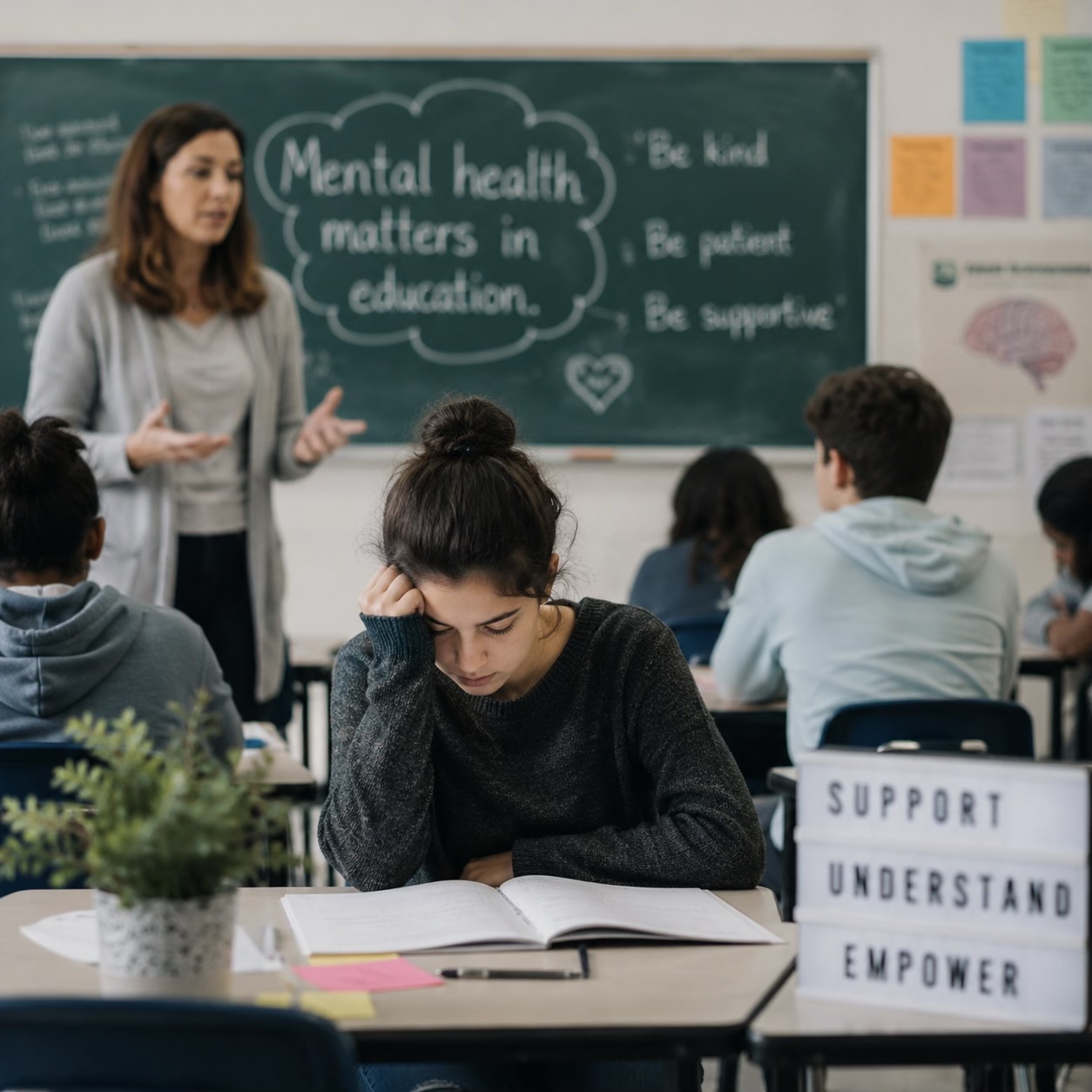
Rethinking Traditional Teaching Methods to Better Accommodate Students Living with Anxiety Disorders and Depression by Sara William offers great advice for teachers, parents, and students. We know that anxiety and depression are more common, so it’s important that school districts address this matter head on. What is your district doing?
The landscape of modern education is shifting. For decades, the traditional classroom model relied heavily on standardized lectures, rigid scheduling, and high-stakes testing. While this approach served a purpose in a different era, it often fails to account for the diverse emotional and mental health needs of today’s student body. As rates of anxiety disorders and depression rise among youth, educators find themselves on the front lines of a growing mental health crisis.
Creating an environment where students feel safe, seen, and supported is no longer just an optional goal; it is a fundamental requirement for effective learning. When a student is consumed by internal worry or the heavy fog of depression, the curriculum becomes secondary to their need for stability. By rethinking traditional teaching methods, educators can build classrooms that not only foster academic achievement but also act as sanctuaries for mental well-being.
The Invisible Barrier: Recognizing Signs of Distress

Before an educator can accommodate a student, they must be able to identify when a student is struggling. Anxiety and depression often wear masks, appearing as behavioral issues, academic apathy, or sudden social withdrawal. Because these conditions are internal, they are frequently misidentified as laziness or defiance.
Common Indicators in the Classroom
Teachers should be alert to sudden, unexplained changes in a student’s baseline behavior. In cases of anxiety, you might notice excessive perfectionism, a fear of participating in group work, or physical symptoms like headaches or stomachaches that frequently occur before tests or presentations.
Depression often presents differently. It may manifest as irritability, a loss of interest in extracurricular activities, or a noticeable decline in hygiene or attendance. Some students may seem to “shut down,” staring blankly during lectures or failing to turn in assignments that they previously completed with ease.
Beyond the Label
It is essential to understand that these conditions exist on a spectrum. A student does not need to have a clinical diagnosis to benefit from a more flexible teaching style. By normalizing the conversation around mental health, teachers can reduce the stigma that prevents students from seeking help. When a teacher proactively mentions that they understand the challenges of stress and burnout, they signal to students that the classroom is a safe space to be human.
Rethinking Instruction for Diverse Learners

The traditional model of “one size fits all” is inherently flawed. It leaves fast learners bored and struggling learners frustrated; furthermore, it creates an environment of intense pressure that can trigger anxiety and worsen depressive episodes. Rethinking instructional delivery can help accommodate those with mental health struggles while simultaneously improving outcomes for every student in the room.
Moving Away from High-Pressure Testing
The modern reliance on high-stakes testing is a primary driver of school-based anxiety. To mitigate this, educators should integrate more varied assessment methods. Instead of relying solely on written exams, incorporate oral presentations, creative projects, or portfolios. These alternatives allow students to demonstrate their knowledge in ways that play to their strengths rather than their triggers.
Differentiated Instruction as a Mental Health Tool
Differentiated instruction is the practice of tailoring teaching to meet individual needs. By offering choices in how students consume content—such as reading articles, watching videos, or engaging in hands-on activities—teachers can lower the barrier to entry. For a student with social anxiety, a choice between a group project and an individual assignment can be the difference between a successful lesson and a panic attack.

When students have agency over their learning process, their stress levels drop. They feel respected as individuals, which helps combat the feelings of helplessness often associated with depression. This approach turns the classroom into a partnership rather than a hierarchy.
Structuring the Classroom Environment
The physical and procedural structure of a classroom significantly impacts mental health. Rigid, loud, and unpredictable environments can be overwhelming for students living with anxiety. Conversely, a predictable, structured, and calm environment can serve as a stabilizer.
The Power of Routine
Students dealing with anxiety disorders often find comfort in routine. When the expectations for the day are clearly posted on the board and the structure of the lesson remains consistent, it reduces the “unknown” factors that trigger apprehension. While variety keeps lessons engaging, it should be balanced with a predictable flow that students can rely on.
Flexible Seating and Quiet Spaces
Consider the layout of your room. Does every student have a place where they feel comfortable? Some students with social anxiety may struggle when they are forced to sit in the center of the room or work in large, noisy groups. Providing options for flexible seating, or even a designated “quiet corner” where a student can take a five-minute break to regulate their breathing, can provide a necessary outlet for students who feel overwhelmed.
Incorporating Mindfulness
Integrating brief mindfulness exercises into the start of a lesson can help reset the room’s energy. This does not need to be a long or complex process. A simple two-minute breathing exercise or a moment of silent reflection can help students transition from the stresses of the hallway or their home life into the classroom setting. By normalizing these practices, you provide students with tools they can use independently when they feel their anxiety rising.
When to Seek Professional Support

While teachers play a vital role in supporting mental health, they are not therapists. Understanding the boundaries of your role is essential. You are an educator, a mentor, and a support system, but you are not a clinical practitioner.
Knowing the Threshold
If a student expresses thoughts of self-harm, exhibits severe withdrawal, or shows signs of a mental health crisis that is beyond classroom management techniques, it is time to involve the school counseling team or administration. Every school should have a clear protocol for crisis intervention.
Leveraging Digital Resources
In some cases, students may benefit from external support that bridges the gap between home and school. While many families prefer traditional therapy, some might explore a virtual psychiatrist for consultation when access to in-person care is limited or wait times are too long. Familiarize yourself with the resources available in your district so that you can provide parents and guardians with helpful information when a student’s needs exceed what can be provided within the school day.
Conclusion: The Path Forward
Reimagining traditional teaching methods is not about lowering standards; it is about widening the doors to ensure that every student can walk through them with confidence. By recognizing the signs of anxiety and depression, diversifying our instructional strategies, and creating predictable and supportive classroom environments, we can transform education from a source of pressure into a source of empowerment.
The most effective classrooms of the future will be those that value the human being just as much as the academic outcome. When we support the mental health of our students, we aren’t just teaching a subject; we are helping them build the resilience they need to navigate the world outside our walls.
Sara William
Sara is a contributing writer specializing in health, home improvement, food, personal finance, and lifestyle. She lives in Illinois. You can email her at infoguestposters@gmail.com.