

Photo by Mikhail Nilov
How To Set Up a Co-Op Learning Space That Will Help Your Homeschooled Children Thrive by Emily Graham
Homeschool families who open their homes to co-op partners quickly discover something important: a dining table and a stack of books aren’t enough. When multiple children—often across ages and families—share one space, the physical environment becomes part of the curriculum.
A dedicated homeschool learning space isn’t about aesthetics. It’s about flow, structure, flexibility, and clear expectations. When designed thoughtfully, it supports focus, independence, collaboration, and calm—even on the busiest shared learning days.
A Quick Snapshot Before You Start
If you’re planning to host multiple children regularly, keep these principles front and center:
- Choose a space with natural light and minimal foot traffic.
- Design in zones (quiet work, group table, independent reading).
- Store supplies visibly but intentionally.
- Set shared norms early with partner families.
- Build flexibility into both layout and budget.
- A well-designed space reduces daily friction, prevents clutter stress, and makes co-op days feel purposeful rather than chaotic.
Step One: Choosing the Right Space in Your Home
The room you select will shape everything that follows.
Look for:
Possible Locations
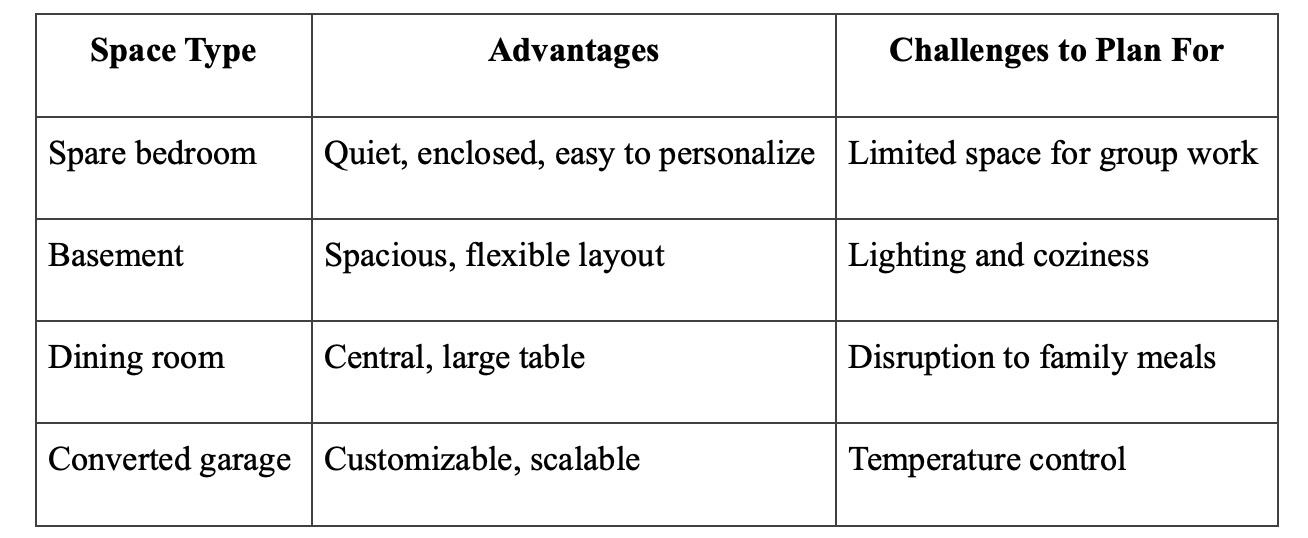
The best space is one that balances privacy with practicality. Children focus better when the learning environment feels intentional.
Designing a Layout for Multiple Ages
The problem many families encounter: one child needs quiet concentration while another thrives in hands-on discussion.
The solution: create micro-zones.
Core Zones to Include
Children of different ages benefit from predictable structure. Even simple visual cues—like rugs to define areas—help them understand behavioral expectations.
Keep sight lines open so you can supervise while allowing autonomy.
Organizing Supplies for Shared Use
When multiple families contribute materials, organization becomes essential.
Instead of mixing everything together, categorize by function:
Clear containers and labels reduce interruptions during learning time. If children can independently find and return materials, instruction flows more smoothly.
Shared Storage Checklist
Use this as a setup guide:
A little structure up front prevents daily disorder.
Setting Expectations With Partner Families
The physical space is only half the equation. The social agreement matters just as much.
Before hosting shared days, discuss:
Put it in writing. A short, friendly agreement eliminates awkward conversations later.
Children feel more secure when adults present a united front. Clarity reduces confusion—and resentment.
Planning for Phases, Not Perfection
Creating a shared homeschool environment rarely happens all at once. Most families build it gradually: first the table and shelves, then additional seating, storage, technology, and upgraded materials as needs evolve.
Because these projects unfold in stages, some homeowners explore flexible financing options. A lowest rate home equity line of credit can provide access to funds as needed—drawing only what’s required for each phase and paying interest only on what’s used. For families steadily expanding a co-op space, that flexibility can align well with the natural rhythm of growth and improvement.
Thoughtful planning makes expansion manageable rather than overwhelming.
Making the Space Feel Welcoming
A structured space doesn’t need to feel institutional.
Simple touches create warmth:
Children learn best in spaces where they feel known and valued.
A Resource Worth Exploring
For families new to homeschooling—or expanding into co-op hosting—the Home School Legal Defense Association (HSLDA) offers state-by-state legal guidance, planning tools, and support resources.
You can explore their materials here:
Understanding your state’s homeschool requirements provides confidence as your shared learning days grow more formal.
Frequently Asked Questions
How much space do I really need for multiple children?
It depends on ages and activities, but as a general rule, ensure each child has at least a small dedicated work surface and access to a quiet space.
What if my home is small?
Think vertically. Wall shelves, fold-down desks, and rolling carts maximize tight areas. You can also rotate groups between indoor and outdoor spaces.
How do I handle behavior differences between families?
Set shared expectations ahead of time. Address concerns privately with parents rather than correcting another family’s child publicly.
Should every child have identical supplies?
No. Shared core materials are helpful, but individual bins allow children to personalize their learning tools.
Bringing It All Together
A dedicated homeschool space for multiple families doesn’t require perfection—it requires intention. When the environment supports focus and cooperation, shared learning days become energizing rather than exhausting. A thoughtfully built space does more than hold desks and books—it holds community, growth, and the rhythms of real learning.
Emily Graham