Author Archive
Sunday, December 5th, 2021

Six Ways To Improve Your Focus At School by Craig Middleton offers tips for students of all ages for paying better attention in class. Please share with any students you know.
Introduction
- You know how important it is to pay attention in class. Your teacher or professor is likely explaining concepts that you cannot grasp just by reading the textbook. Yet it is easy for your mind to wander during a lecture. You may get distracted by your classmates, or you might start thinking ahead to your extracurricular activities.
- If you have your cell phone or laptop nearby, you might start texting or checking social media instead of listening to your class. To survive grade school and college, you must understand how to focus during boring lessons. Learning this skill will also help you concentrate during work meetings as an adult. Here are some tips to help you pay attention during your classes.
1. Eat Right
- Your brain needs certain nutrients to function. If you are not eating properly, then you will struggle to concentrate no matter what else you do. Your diet should include lots of vegetables, healthy whole grains, lean proteins, and some fruit. Limit your caffeine intake, as too much coffee, can make you jittery. You can further maintain the health of your body and mind with supplements from USANA Singapore
2. Prepare Before Class
- As you sit at your desk and wait for class to start, you should get in the right frame of mind for learning. Read your textbook, look over your homework assignment or review your notes from the prior day. This should get your brain into “learning mode.” Similarly, you should spend a minute or two organizing your desk and ensuring you have everything you need. This way, you will not get distracted looking for a pencil or eraser during the lecture.
3. Participate and Take Notes
- Once the class begins, keep your brain engaged by participating in the discussion. This should prevent your mind from wandering. Specifically, asking questions can help you better understand confusing material. Just listening for concepts that you want to be clarified can force you to pay more attention.
- If you are not comfortable speaking in class, you should at least take detailed notes as the teacher speaks. (Doug: Some research indicates that taking notes with pen and paper is better than taking them on a computer. It also allows you to draw graphic organizers.) This should help you better remember the material and connect personally to what the professor says. You can also use the notes to help you study for tests later. There is no one right way to take notes. Instead, find the technique that works best for you. If you learn best from images, use pictures and diagrams to convey certain topics. If you stick to written notes, use color-coded pens or bullet points to organize the information.

4. Stay in the Present
- As mentioned before, your mind can easily wander during a boring lecture. To pay attention in class, you need to stay focused. If you find yourself daydreaming or stressing about your personal life, manually get those thoughts out of your head. Even thinking about future tests or assignments during class can cause you to miss important information from the teacher. To truly absorb the information, you need to keep your undivided attention on the day’s lesson.
5. Remove Distractions
- It is not just random thoughts that can distract you during class. Physical items, particularly electronic devices, can make you lose your focus. The best way to deal with distractions is to physically remove them from your presence. That means keeping your phone or tablet in your bag until class is over. If a window or a chatty classmate is distracting you, try sitting in a different seat. (Doug: I also recommend sitting in front. This way students in front of you can’t distract.)
6. Get Enough Sleep
- It is almost impossible to focus if your brain does not get enough rest. Most people ages 12 and older should get eight to nine hours of sleep per night. Figure out what your ideal sleep schedule is, and stick to it. Avoid getting too much sleep, as this could also make you feel overtired during the day. If you do not focus properly at school, you could end up failing your classes. The above tips should help you concentrate during lectures so you can achieve your academic goals.
Craig Middleton
- Craig is a New York City-based retired business consultant, who is an expert in education and cultural trends. He has a Masters of Business Administration and a Masters in Education from St. Johns and loves sharing his knowledge on the side through his writing. If you have any questions or comments you can direct them to Craig at craigmiddleton18@gmail.com.
Posted in Guest Posts | Comments Off on Six Ways To Improve Your Focus At School by Craig Middleton
Monday, November 29th, 2021
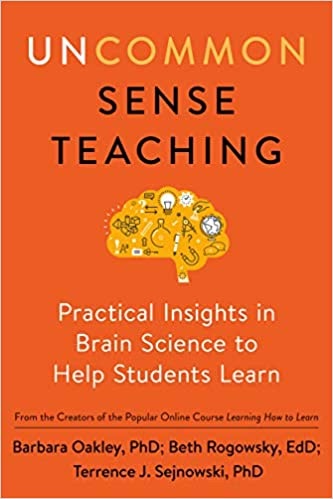
Uncommon Sense Teaching: Practical Insights in Brain Science to Help Students Learn by Barbara Oakley, Beth Rogowsky, and Terrence Sejnowsk
t explains how the brain works when it learns. It also offers lots of practical real world advice for teachers and learners of all ages. No school professional development library should be without it.
1. Building Memory: How Students Fool Themselves into Thinking They’re Learning
- Information in working memory generally goes away when we stop thinking about it. This can fool students into thinking they really know something. What they need to do is right after they have encountered new information, they should see if they can retrieve it from long-term memory. Retrieval practice is one of the best techniques for strengthening new information in long-term memory. The more times you retrieve something the stronger your memory of it will be. Students should jot notes about what they just learned and compare their notes with other students. Retrieving information from previous days or weeks is called spaced repetition, which further strengthens long-term memory.
2. Teaching Inclusively: The Importance of Working Memory
- Not all students have the same amount of working memory. For those with less, it’s vital to build their long-term memory, which will make the short-term memory they have more efficient. Working memory increases over time until children reach the age of about 14. Engaging students’ interests makes learning more effective while stress gets in the way.
- Slower learners can benefit from reteaching, giving them more time to practice, giving them outlines to take notes on, and breaking things down into simpler steps. For faster learners go beyond factual questions, have them work together, increase the complexity of assignments, have extra activities for them to do, and let them devise their own activities. This helps you differentiate your teaching. In all cases, active practice should break up teacher talk.
3. Active Learning: The Declarative Pathway
- Research shows that active learning is much more effective than simply listening to an expert. Note that not all hands-on activities are considered to be active learning. Active Learning engages students in the process of learning through activities and/or discussions in class. It emphasizes higher-order thinking and often involves group work. The foundation for conceptual understanding and creative thinking is the storage of basic facts and procedures in long-term memory. Note-taking and retrieval practice facilitate this process.
- Long-term memories are stored in the neocortex, which is the big front and top of your brain. The process is facilitated by the hippocampus, which is composed of two small bean-shaped pieces at the base. It acts as an index while the connections of neurons that store memories are being made. Retrieving recently stored memories serves to help consolidate the information. Much of this consolidation occurs while we are sleeping. Brief breaks of even less than a minute can help students make sense of new material. Index links from the hippocampus dissolve after a while, which is why cramming the night before doesn’t work as there is no time for consolidation.
- Frequent formative assessments, low-stakes tests, homework, and exercises can all help with retrieval. Daily physical exercise of an hour or more helps with the formation of neuron connections. Be sure to tap into prior knowledge. Use the think-pair-share method when teaching. Students will find that working in pairs or groups of three or four is more effective than larger-sized groups. If possible, pick a shy person from a group with the right answer (or a good answer) to present to the class.
Posted in What can Dr. Doug do for you? | Comments Off on Uncommon Sense Teaching: Practical Insights in Brain Science to Help Students Learn by Oakley, Rogowsky, and Sejnowski
Thursday, November 18th, 2021

Relocating: Helping Your Children Learn in a New Environment by Amanda Winstead offers great advice for parents who have to move. It’s now easy for children, but here are some things to ease the pain. Thanks. Amanda.
Introduction
- Moving can be the beginning of a new adventure. It can be a chance to start fresh. It can also be an opportunity to expand your network of friends and colleagues. Moving to a new location holds all sorts of potential — it is what you make of it.
- Unfortunately, many kids don’t see moving in that light. For many, the idea of moving to a new place is terrifying. It is taking them away from something they know and are comfortable with and putting them into a completely new situation. This means a new bedroom, a new school, and new friends. Starting over is enough to make any child struggle.
- Thankfully, there is a lot parents can do to help make the transition a bit easier. Helping children adapt quickly and successfully to their new home and life is key to keeping kids on the right track. Taking the time to help them work through the emotions associated with such a large change can also help everyone in the family begin to adapt to a new home.
Preparing for a Big Move
- Perhaps one of the most important things you can do as a parent to help your child adjust to a big move and a new school is to start the conversation early. Just like adults, children need time to process the idea of a big change in their lives. Surprising them with something like that and not allowing time for the news to really sink in is asking for trouble and anxiety in your kid.
- Moving is stressful — there’s no doubt about that — but kids are extremely perceptive when it comes to your emotional well-being. If you want them to have a positive attitude about the move, you must do as well. Of course, this doesn’t mean that you avoid talking about the things that make them nervous or that will be hard, but it does mean trying to focus on the things that won’t change such as still having recess or a packed lunch and the benefits of moving like choosing their own bedroom.
- As with most adults, the core of a child’s fear about moving tends to be related to a lack of control in the situation. Do your best to give them whatever control you can and help them feel involved in the decision-making process. This can be as simple as letting them choose how they decorate their new bedroom or picking out their backpack and extracurricular activities. It can also mean getting them involved with packing their things and deciding if there are toys or clothing they don’t want to take with them to the new place.
Making the Time to Make it Home
- If you can choose where you are moving, it will be worth taking the opportunity to look into the quality of the schools in the area. It may come as a surprise, but children are frequently more successful in school districts that have a smaller number of students. Smaller towns rather than big metro areas can provide more one-on-one interaction opportunities between students and teachers because the classroom sizes are typically smaller.
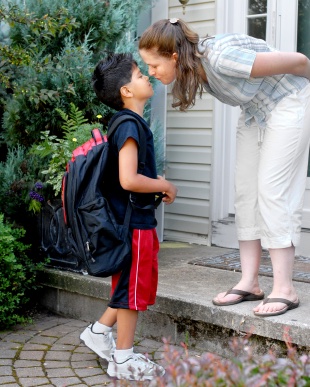
- To help relieve some of the anxiety associated with going to a new school, try to take some of the mystery out of it before the first day. Take your children to explore the school, the playground, and what their walk home from school will be like if you’re close enough for that. Likewise, set up a meeting with teachers and school administration staff. Anything that helps the new location feel more familiar to your child and gives them an idea of what to expect will be a benefit on the first day.
- As your child starts their new school, it is valuable to stay involved and assess how things are going. Set aside time after school every day to see how their day went and listen closely to the things they have to say. Ask questions to keep them talking. If there are opportunities, see if they are interested in inviting some of the new kids they’ve met for a playdate which can help facilitate them making new friends.
Other Moving Opportunities
- Depending upon the age of your child, there may be an abundance of other ways to help them get involved. For instance, maybe you are moving to a new area where there are more types of extracurricular activities outside of school than there were previously. For instance, maybe the nearby city pool has a swim team they can get involved in or the library has a children’s book club. Although some of these activities aren’t directly tied to the school, they can help your children settle into the new place and make friends more quickly.
- Some older students may want to opt out of doing the new school thing altogether. If you feel that it would be a good fit for your child, you could look into e-learning. Doing school online can open up several opportunities to take different or more challenging courses than what is offered at the new school. Of course, going online isn’t for every student — it is important to evaluate whether or not your high school-aged child would be successful or flounder in this environment before making that decision.
- Moving to a new area and starting your child in a new school can be hard on everyone. Helping your children adjust is an important step in successfully adapting to a new school. Doing things such as giving them time to prepare, showing them around the school before the first day, and helping them get involved in activities can make a huge difference.
Amanda Winstead
- Amanda is a freelance writer out of Portland focusing on many topics including educational technology. Along with writing she enjoys traveling, reading, working out, and going to concerts. If you want to follow her writing journey, or even just say hi you can find her on Twitter.
Posted in What can Dr. Doug do for you? | Comments Off on Relocating: Helping Your Children Learn in a New Environment by Amanda Winstead
Sunday, November 14th, 2021

How to Stay Healthy in College by Craig Middleton offers the kind of advice that EVERY college student needs to consider. If you know anyone in college or getting ready to go next fall, be sure to share this with them. It’s also good advice for all of us not in college. Good luck and thanks, Craig.
Introduction
- Most college students arrive on campus in September feeling healthy and happy. After a month or two, lack of sleep, unhealthy food, and exposure to different viruses tend to make the end of the first semester a stressful and uncomfortable time. Here are ways to break that trend and feel great throughout the whole school year.
Sleep
- Sleep is greatly underrated. Getting enough sleep repairs cells (including brain cells) and keeps your immune system in better working order.
Unfortunately, it’s hard for college students with roommates to fall asleep as easily as they did in their own beds at home. Add to that the temptation of going out to party until the pubs close and then dragging yourself out of bed at 8 am for class. Try to keep your late-night outings to a minimum and only on the weekends. If you have trouble falling asleep the other nights of the week, there are some things you can do about it.
- Most college students are using a device right up until the time they go to bed. The blue light emitted from phones, tablets and laptops make your brain think it’s time to wake up. There are several remedies for this. The most obvious one is to do something else before bed. Stay off any devices and read a book or listen to music until you’re sleepy.
- Think about what color light helps you sleep if blue keeps you awake. If you just can’t break the online habit, turn your screens to night mode. This will send amber light to your brain instead of blue light. You can also wear pink or red-tinted glasses while online at night. Another option is to invest in a red light device. It can establish a healthy circadian rhythm and can even be used in an ambient mode to put you to sleep.
- As for “all-nighters” before tests, even if all of your friends decide to stay up all night studying before a test, it isn’t the best idea and you shouldn’t do it. Sleep will give you a better test-taking advantage and your brain can only remain in study mode for a certain amount of time. After that, it needs a rest and will stop retaining information. Doing some studying every day, taking regular study breaks, and getting enough sleep is the way to ace a test.
Food
- College cafeteria food is improving although it will still probably need to be supplemented to help you stay your healthiest. Traditionally cafeteria food has been carb-heavy and contributes to the “freshman fifteen”, the number of pounds the average freshman gains during their first year at college.
After all, no one is encouraging you to eat your broccoli anymore. If you can’t find any healthy organic fruit and vegetable options on campus, there are three things you can do. The first is to get together some like-minded students and ask for more organic options. The second is to supplement on your own but this can be expensive. The third is to ask your parents to send you vitamin supplements.
Stress and Exercise
- Some doctors maintain that there are no real illnesses, only stress. What they mean by this is that your body should be able to fight off whatever germs come your way. However, if you are stressed out, your body’s defenses won’t work as well as they should and you might get sick. Try getting rid of your stress and see how much better you feel. A lot of campuses offer therapy dog programs where you can sit and pet a dog for as long as you want. After a session, you will feel much more relaxed.
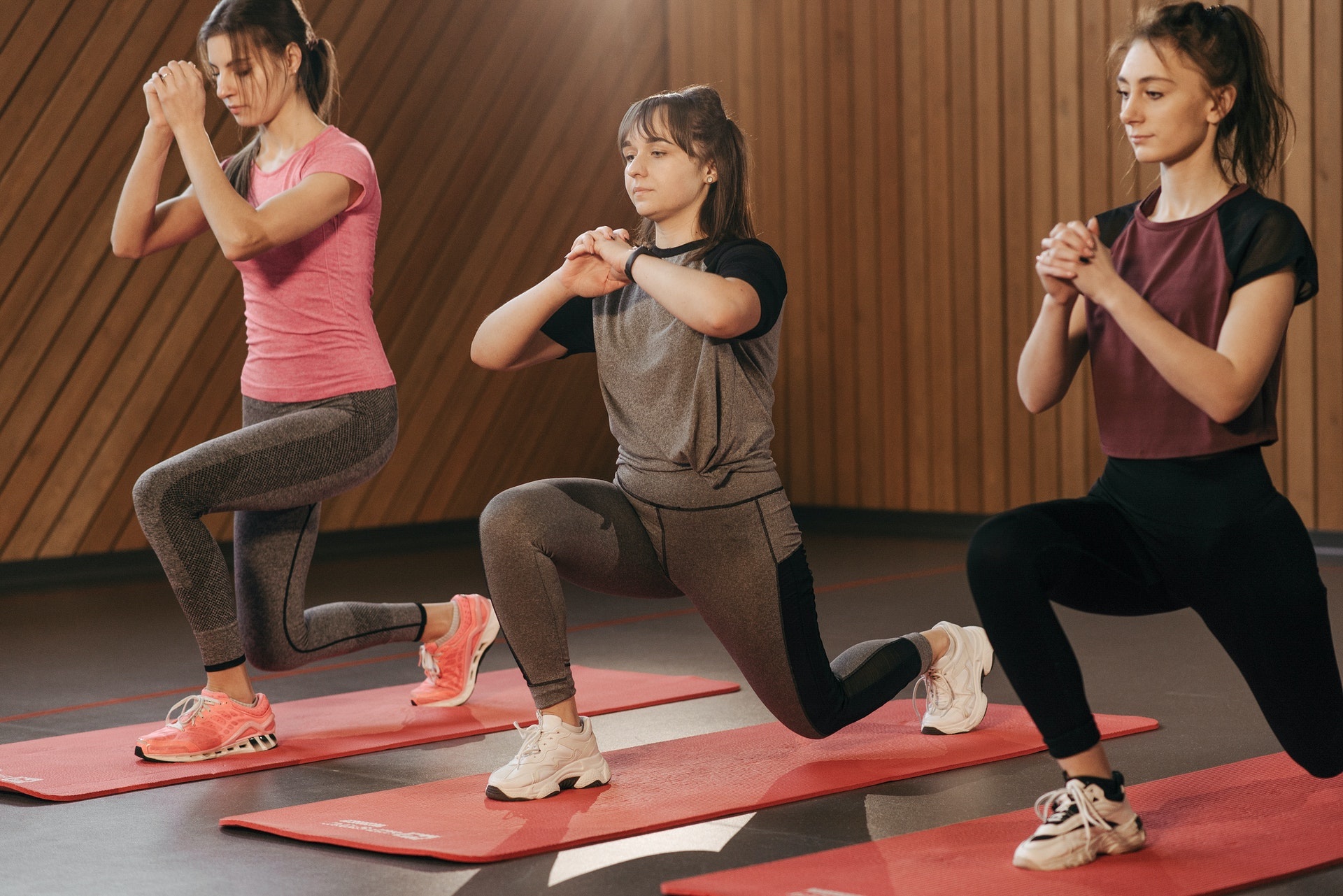
- (Doug) Regular exercise will also help reduce stress. You probably know that you should exercise. Rather than waiting for time to exercise to show up, schedule your daily exercise and stick with it. I do it first thing in the morning prior to breakfast. Many college campuses require a lot of walking, which is good exercise. Use your phone to track your daily steps and check it every day to make sure you are reaching your goal. Mine is 10,000. Most colleges have first-rate workout facilities so be sure to use them. They should give you access to a trainer who can help you set up an exercise routine designed to fit your goals and abilities. Try running and look for opportunities to run with others and sign up for local fun runs.
-
Some campuses also offer yoga and meditation classes and might even supply massage therapists during especially stressful times of the year. Being sick and stressed out are not inevitable conditions at college. Also, since COVID is still around, get vaccinated and stay away from crowded situations like parties. This will also reduce the likelihood of binge drinking. Take care of yourself and you will be able to enjoy these years and graduate with no regrets.
Posted in Guest Posts | Comments Off on How to Stay Healthy in College by Craig Middleton
Sunday, November 7th, 2021
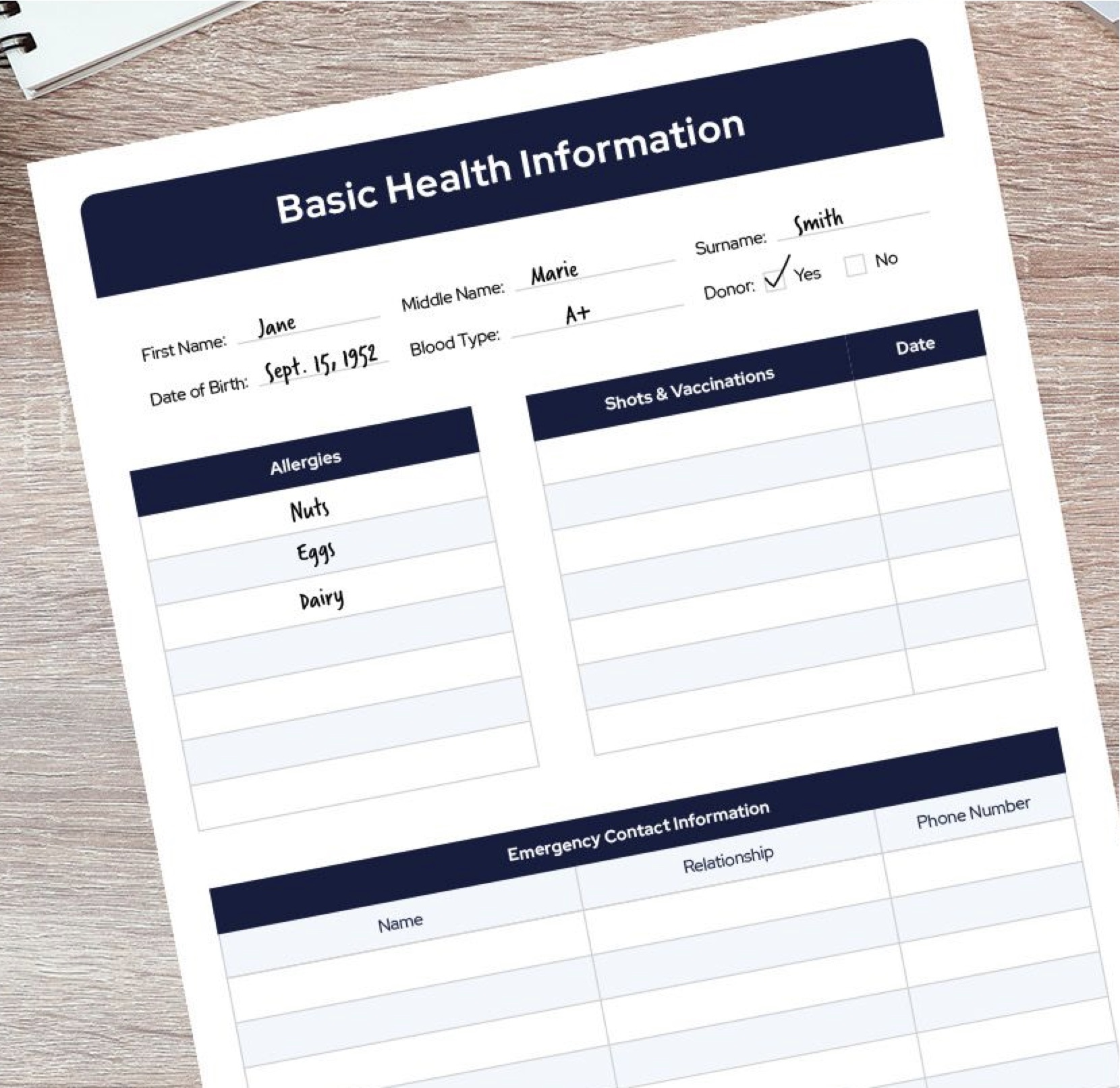
Medical Binder Printables to Keep Your Health Records Organized by Cristina Thorson offers forms you can use to keep track of your medical information so you can easily share it with your physicians rather than just talking about how you feel and neglecting what you can’t remember. Thanks, Cristina.
Introduction
- Whether you’re suffering from a chronic condition, wanting to keep your health information in order, or are somewhere in between, keeping a medical binder on hand can be beneficial. Having a medical binder not only helps you stay more organized, but it can also act as the single source of truth in case of an emergency.
- Thinking about possible “what-ifs” is never fun to do, but making sure you’re prepared for emergencies can make a worst-case scenario a little easier to manage. Use the medical binder printables to start putting together your own health binder. It might save your life one day.
Basic Health Information Sheet
- On a basic health information sheet, you should include the standard information that you might need to receive medical treatment. Usually, when you go in for an appointment, the healthcare clinic will need to have this information on file before you receive treatment.
- The information needed is your full name, emergency contact information, allergies, date of birth, blood type, and any immunization records. Keeping this information up to date and on file can save time if you decide to transfer doctors, or if you start going to a specialized healthcare professional.
Medication Tracker
-
According to WebMD, about half the American population takes an average of four prescription pills. Some medications have conflicting effects which can have deadly consequences. If you keep track of your own medications, it will make it easier for doctors to ensure that they won’t prescribe anything that will have adverse effects on your health.
- Documenting your own medications can also help you and your doctor figure out what has worked in the past, and what hasn’t. It can help you avoid repeating medications, especially if you work with a new doctor or you haven’t been to a medical professional in a while.
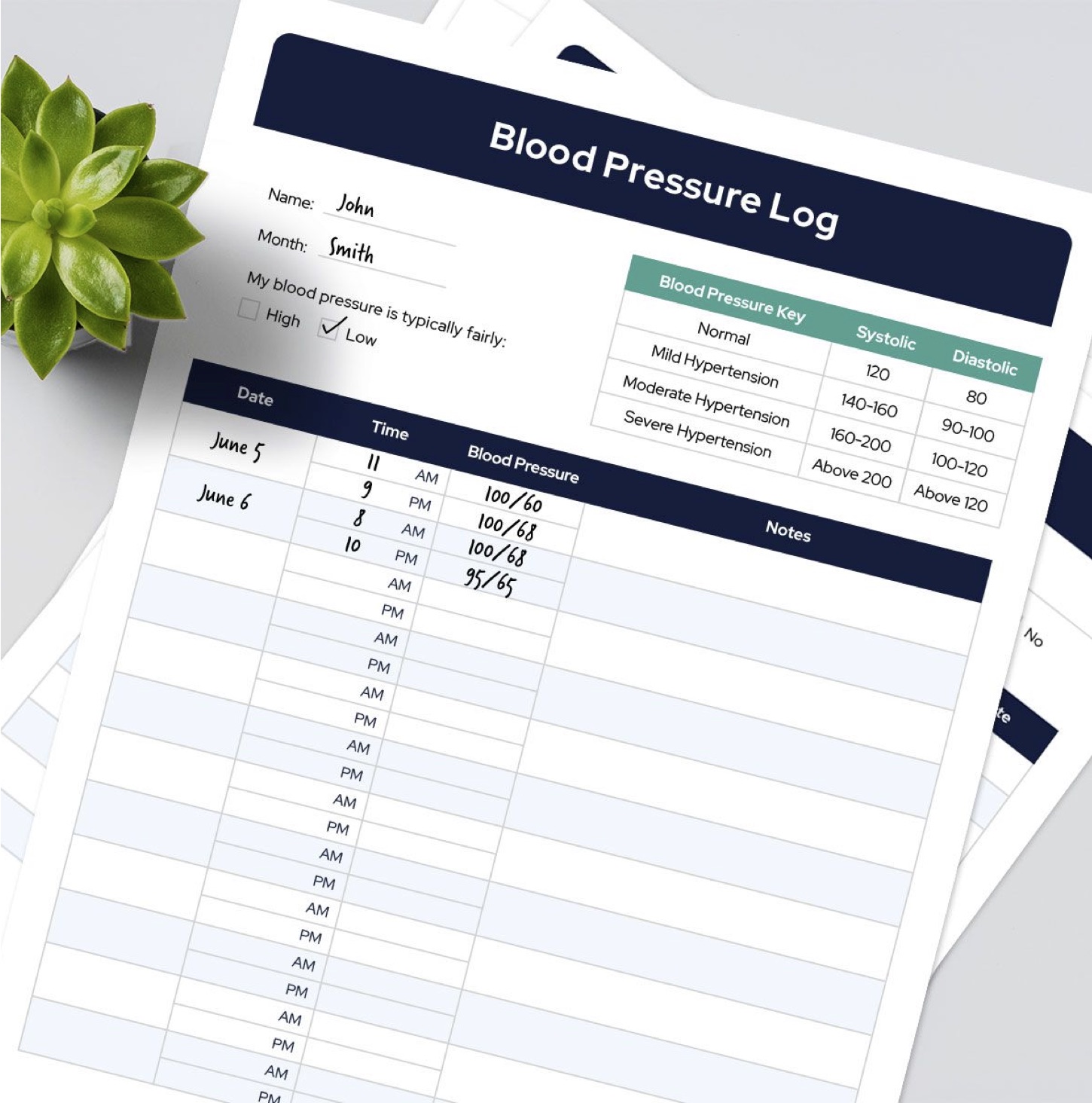
- Keeping track of your blood pressure can save you a world of problems. Hypertension (or high blood pressure) has damaging effects over time, and many are unaware that they even have it. To record your own blood pressure, you should purchase a home blood pressure monitor.
- It’s best to avoid caffeine and exercise at least 30 minutes before you measure, and try to measure at the same time every day. Self-monitoring is actually recommended by the American Heart Association for people with high blood pressure treatments. Even though home monitoring isn’t an adequate substitute for visits, it can be helpful when healthcare professionals are trying to gauge the effectiveness of their treatments.
- It’s useful to be aware of your own medical conditions before a big life transition, like moving homes, leaving for college, or even planning for retirement. The temporary instability during these time periods may cause medical conditions to flare up. These changes may also influence your healthcare provider or the access to healthcare that you receive.
- Start surveying the information in advance of these changes so you’re not overwhelmed during the transitionary period. Make sure your information is up-to-date and easily understood. Many use their smartwatches or their phones to log health information, but you could also try an alternative tracking method, like our printable sheets.
Cristina Thorson
- Cristina is a part-time content writing intern at Siege and a full-time student at Boston University. She enjoys exploring new pockets of cities, culture, and cat websites (as well as alliterative expressions). In her spare time, she can be found reading books, commenting on movies, and writing anything from advertising copy to feminist satire.
Posted in What can Dr. Doug do for you? | Comments Off on Medical Binder Printables to Keep Your Health Records Organized by Cristina Thorson