
Author Archive

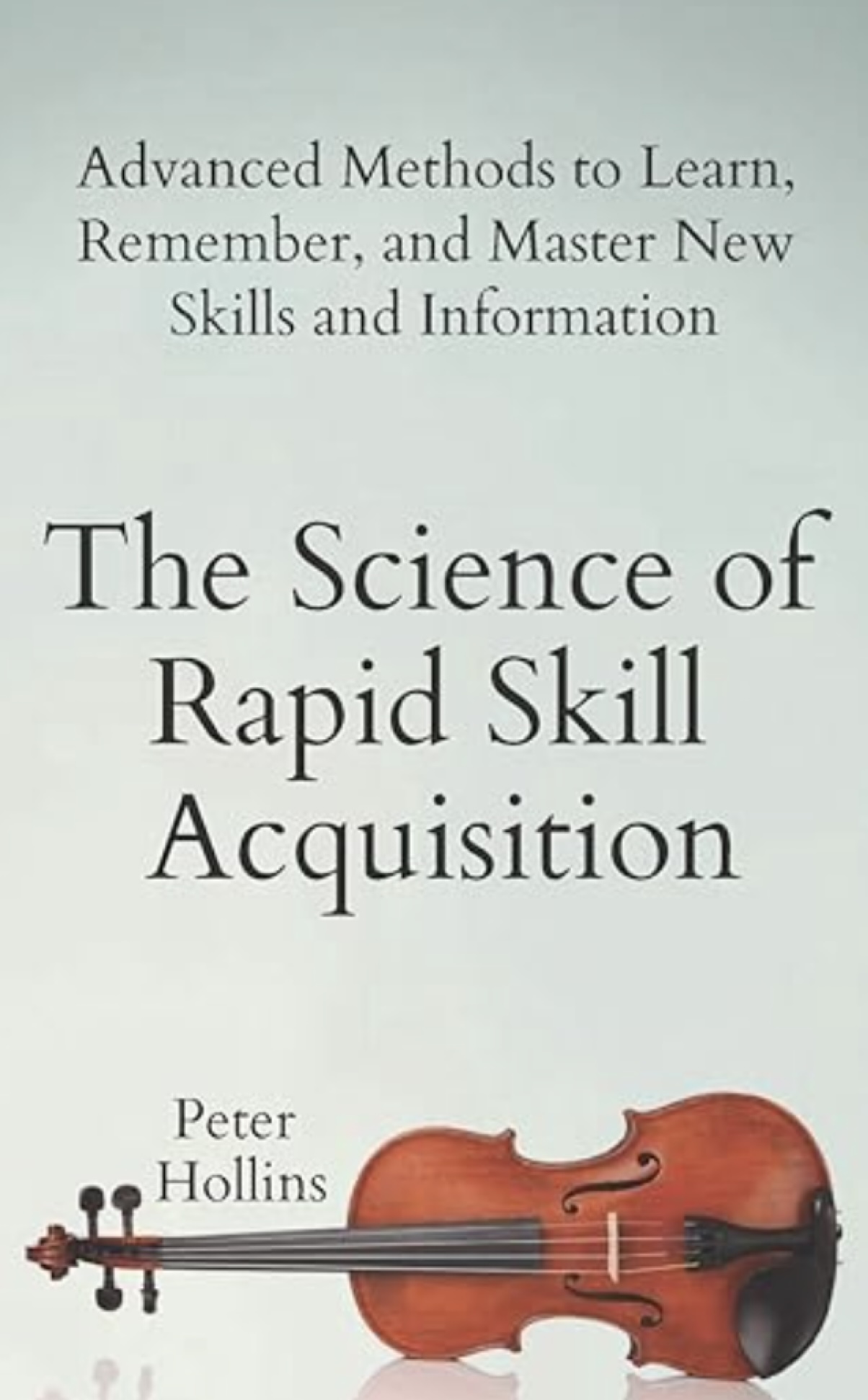
The Science of Rapid Skill Acquisition by Peter Hollins

Tuesday, December 3rd, 2024

Book

The Science of Rapid Skill Acquisition: Advanced Methods to Learn, remember, and Master New Skills and Information by Peter Hollins

– This is a self-published book that has no copyright date, citations, or index. It does have a summary guide at the end. The content rings true to me and fits well with other books summarized on this blog. Give it a shot. It’s a easy read.

1. Learn with Rapid Skill Acquisition

  • Information on almost any topic is almost instantly accessible cheap or even free. We just need to learn how to learn. Traditional schools mostly engage students in passive learning, which is inefficient. You need to start with goals that are important to you. These goals will either help you on the job, gain you a new job, help you with your life outside of work, or give you a new hobby.

2. Strategic Planning

  • You need to start with a well constructed plan. Most new skills can be broken into sub skills. You need to determine which sub skills are the most important and focus on them first. For example, if you want to learn another language you need to learn the most common words first. As you gather learning resources and weed some out, make sure they follow this idea. It may be easy to find written material, so be sure to also search for videos and ways you can learn actively.
  • Reading or listening to a lecture may provide 5% TO 10% retention. Audio/visual content can take that up to 20%. Demonstrations are more like 30% and group discussions may take it to 50%. Real-life experience takes it to 75% and teaching others is at the top with 90%.

3. It’s Just Practice

  • Practice needs to be deliberate. This kind of practice is focused. Try to catch yourself from being mindless or sloppy. Determine the proper amount of time for the skill you are working on. You should interleave the practice of several skills rather than doing just one for a long period of time. Such practice should be repeated over time, perhaps daily. Doing some practice each day is much better than cramming. Try to work on recalling or self-testing rather than rereading if you can.
  • Problem-based learning is more effective as it deals with the real world. It requires that you determine what you need to know that you don’t know yet and devise a plan to learn it. This lends itself to group work. As you work you need quality feedback from someone who knows more than you do like a mentor or a coach. You also need to learn how to self access. There are 10 questions here that can help with that. Be sure to schedule your learning and Peter recommends five-minute breaks every 25 minutes.

4. Deep Comprehension

  • One way to deepen your comprehension is to engage in elaborate interrogation. This can be likened to a child asking endless “why” questions. As you interrogate yourself, you can discover gaps or blind spots. One kind of elaborate interrogation described here is the Feynman Technique. The keys to it are to simplify how you explain something and creating analogies.
  • As your learning progresses, you will go through the six steps of Bloom’s Taxonomy. They are remember, apply, understand, evaluate, analyze, and create. If you fully understand something you can use it to create something brand new. Curiosity isn’t required to learn something, but it makes learning easier. It can be the simple joy of learning something new. It can be apprehension due to lack of knowledge. It can be the stress you feel when you gain knowledge that is stressful. It can be the curiosity you feel while getting to know other people, or it can be the knowledge you gain while engaging in thrill seeking experiences.
Share this:
Share this page via Email Share this page via Stumble Upon Share this page via Digg this Share this page via Facebook Share this page via Twitter Share this page via Google Plus

Space Savvy: Ingenious Home Office Designs for Compact Living by Emily Graham

Wednesday, November 6th, 2024

Space Savvy: Ingenious Home Office Designs for Compact Living by Emily Graham

Graham
Pexels

Space Savvy: Ingenious Home Office Designs for Compact Living by Emily Graham

Creating a home office in a small living space presents unique challenges that
demand innovative solutions. By rethinking traditional setups and furniture
choices, it's possible to carve out a productive workspace. Today, Dr. Doug Green
explores practical ways to utilize limited space effectively. With clever design and
strategic placement, even the smallest area can transform into an efficient home
office.

Transforming Under-Bed Space into a Functional Office

Utilizing the space under a loft bed can significantly increase your usable area,
making it a perfect spot for a home office. Elevating your bed allows for a desk,
chair, and essential office supplies to fit neatly below. This setup not only
maximizes floor space but also offers a secluded nook ideal for concentrated
work efforts. Ensure the area is well-lit to maintain a productive and welcoming
environment.

Peace of Mind for Remote Work

For professionals working from home, the importance of electronics coverage
through a homeowner’s warranty cannot be overstressed. It acts as a safeguard
for your indispensable devices such as computers and printers, protecting
against sudden malfunctions that can interrupt your work. This coverage
alleviates the worry of expensive repairs or replacements, ensuring your home
office stays operational. Ultimately, it allows you to concentrate on your tasks,
secure in the knowledge that technical difficulties won’t derail your productivity.

Separating Your Workspace with a Folding Screen

A folding screen can effectively delineate your work area from your living space,
fostering mental focus and physical separation. Lightweight and portable, these
screens can be easily repositioned or stored, adapting to your daily needs. They
come in a variety of styles to seamlessly blend with your home décor. Utilizing a
screen helps in mentally shifting into a productive workflow while maintaining
aesthetic harmony.

A Must for Small Spaces

When space is at a premium, choosing furniture that serves multiple purposes is
crucial. Opt for a desk that can be folded away or a chair that doubles as storage
to optimize your living area for both work and leisure. These versatile pieces help
keep your home uncluttered and ready for any activity. Multipurpose furniture is
essential for small spaces, ensuring functionality without sacrificing style.

The Mobility Advantage

A rolling cart or a small, lightweight table can add indispensable flexibility to your
home office setup. These mobile solutions allow you to relocate your work setup
to various areas of your home, catering to changes in your mood or environment.
Equipped with wheels, these pieces make it simple to move your essential items
without disruption. This adaptability enhances your office’s functionality and
keeps your space dynamic.

Installing a Pull-Out Desk for Maximum Efficiency

Pull-out desks are a superb solution for creating a work area without losing
valuable space. Installable in a closet or under a shelf, these desks slide out
when needed and tuck away after use, keeping your space tidy. This type of desk
allows for an easy switch from leisure to work mode without the permanence of
traditional office furniture. Pull-out desks are ideal for maintaining a clutter-free
living environment while offering full functionality.

Converting Part of Your Kitchen Counter into a Desk

Transforming a section of your kitchen counter into a desk space is an innovative
way to utilize existing areas
in your home. This setup is particularly useful for
those who enjoy multitasking or prefer to work in the hub of the house. The
counter’s height is suitable for standing work positions or can accommodate a
high chair. By incorporating your workspace into the kitchen, you can manage
work tasks and household activities simultaneously without additional clutter.
Designing a home office in a confined space doesn't have to compromise on
style or functionality. With the right approach, every square foot can be optimized
for both comfort and productivity. These strategies not only enhance the utility of
your living space but also adapt to your lifestyle needs. Embrace these ideas to
make your compact living area work smarter and harder.

Dive into a wealth of educational insights and resources with Dr. Doug Green
start exploring now and elevate your impact in education!

Emily Graham
Emily is the creator of MightyMoms.net. She believes being a mom is one of the hardest jobs around and wanted to create a support system for moms from all walks of life. On her site, she offers a wide range of info tailored for busy moms — from how to reduce stress to creative ways to spend time together as a family. You can email her at emilygraham@mightymoms.net. She lives in Arizona.

Share this:
Share this page via Email Share this page via Stumble Upon Share this page via Digg this Share this page via Facebook Share this page via Twitter Share this page via Google Plus

The Anxious Generation: How the Great Rewiring of Childhood I Causing an Epidemic of Mental Illness by Jonathan Haidt

Wednesday, October 30th, 2024

Anxious
The Anxious Generation: Hoe the Great rewiring of Childhood I Causing an Epidemic of Mental Illness by Jonathan Haidt warns of the harm done to children who live in a phone-based world with limited opportunity to play and connect with the real world. There is serious research to support banning phones in schools and keeping kids off of social media until they turn 16. This could well be the most important book I have summarized out of well over 200. Every principal, teacher, and parent needs to read it.

Introduction<: Growing Up on Mars

  • Jonathan uses the analogy of letting your kid live on Mars or giving them a smart phone with limited or no constraints. The people of generation Z (born after 1995) are at ground zero for increased mental health problems caused by overprotection in the real world and under protection in the virtual world.
  • While there wasn’t research when the tech industry foisted technology on this generation, we have it now. It shows that kids with smart phones are more depressed and depression increases with more use. It’s more harmful for girls who favor social media, but it is also a problem for boys who get lost in games and porn. Childhood has gone from play-based to phone-based.

Part 1: Tidal Wave – 1. The Surge of Suffering

  • In 2010 the iPhone 4 was introduced, the first cellphone with a front-facing camera. The Android version followed the same year. That year, the Instagram app was introduced. Although it was popular, it took off when Facebook bought it in 2012. The years from 2010 to 2015 are considered to be, by the author, as the years of the Great Rewiring of Childhood.
  • It was these years when rates of anxiety, depression, self-harming, and suicide increased from 67% to 134%. Anxiety happens when you perceive threats. This is normal. What isn’t normal is perceiving many threats that aren’t real. Depression is marked by sadness and not feeling pleasure. These are things that seem to happen to kids when they have constant access to the Internet.

Part 2: The Backstory: The Decline of the Play-Based Childhood – 2. What Children Need to Do in Childhood

  • Human children grow quickly until about two years and they grow slowly until puberty. The brain is about 90% of its final size by age five. Then it spends a lot of time making new connections and losing old ones. Play is children’s work. Children deprived of play can come out socially, emotionally, and cognitively impaired. When adults are involved, play is less free, less playful, and less beneficial. Experience, not information is the key to emotional development.
  • Unstructured time with friends plummeted when students moved from basic phones to Internet phones. Parent distraction with their phones interferes with the bond between parent and child. Synchronous activities are essential for development. Social media draws students into endless hours of asynchronous communication. Phone-based activity can seem more like work than play. Using social media shapes children to the culture of the sites they visit. Conformist bias motivates children to copy what they see and prestige is gained by people who pile up the most likes.

3. Discover Mode and the Need for Risky Play

  • Since the 1990s, parents have tended to overprotect children from the real world and under-protect children from the online world where more dangers lurk. Human evolution has been shaped by two behavior modes. The discover mode is one where you detect opportunities and explore them. The defend mode features identifying threats and finding ways to escape them. The more time a child spends in the discover mode the happier and more sociable they will be. By overprotecting kids we doom them to lots of time in the defend mode.
  • Beginning with Gen-Z, children were given less freedom including outside play. When they started showing up on campus in 2014 counseling centers were overwhelmed as students grew up spending too much time in defense mode. They hadn’t learned to deal with stress so they weren’t very strong. They lacked the risky play that would keep them in discover mode. We need to keep kids as safe as necessary, not as safe as possible. They need to expect challenges from the real world. Safety-ism crushes play and the power it has.
  • (Doug: You won’t learn how to deal with conflict and frustration without experience.)
Share this:
Share this page via Email Share this page via Stumble Upon Share this page via Digg this Share this page via Facebook Share this page via Twitter Share this page via Google Plus

Beyond Books: Fun-Fueled Learning Techniques for Kids by Emily Graham

Monday, October 14th, 2024

Kids
Freepik
Beyond Books: Fun-Fueled Learning Techniques for Kids by Emily Graham

Every parent dreams of their child embracing the joy of learning with open arms
and a curious heart. To turn this dream into reality, creative approaches are
essential in making education enjoyable and engaging. By integrating fun into
educational activities, parents can ignite a passion for learning that lasts a
lifetime. These methods enrich a child's academic journey and strengthen the
bond between parent and child through shared discovery.

Setting Goals Together for Progress and Fun

Engage your child in setting specific, achievable learning goals to foster a sense
of ownership and excitement in their educational journey. Discuss areas they're
keen to improve, from increasing their reading volume to acquiring a new skill,
and break these larger ambitions into smaller, manageable tasks. Celebrate each
achievement to maintain high spirits and motivation. This cooperative approach
transforms learning into an enjoyable shared quest, instilling in your child a sense
of purpose and accomplishment.

Group Learning for a Fun, Social Experience

Transform learning into a communal activity involving peers or family members,
making the experience more engaging and interactive. Organize study groups,
family trivia nights, or collaborative projects, introducing healthy competition and
social interaction into the learning process. This collective environment makes
learning fun and allows children to explore different viewpoints and build social
skills.

Let Your Passion for Learning Be an Example

Show your child the thrill of learning by engaging in new subjects and displaying
genuine enthusiasm for knowledge. Pursuing an online accounting degree
enhances your business acumen and teaches you crucial skills like reading
financial statements, auditing, and applying generally accepted accounting
principles. This approach demonstrates lifelong learning and highlights how
education can open new doors. The flexibility of earning a degree online also
exemplifies how learning can adapt to fit your life, making it a practical choice for
busy parents.

Create Time for Reading Every Day

Incorporate daily reading into your routine to instill a lasting appreciation for
literature in your child. Choose a regular time for this activity, such as after dinner
or before bedtime, and encourage your child to select books that pique their
interest. This practice not only improves comprehension and vocabulary but also
stimulates the imagination. Engage in reading and discussing the content to
deepen their understanding and enhance the connection to the material.

Hands-On Activities to Spark Creativity

Use hands-on activities like arts and crafts, construction projects, or science
experiments to make learning more tangible and engaging. These interactive
experiences minimize passive screen time and encourage active participation,
enhancing understanding of complex concepts. Whether it's using baking to
explain measurements or constructing models to discuss geometry, these
creative endeavors foster critical thinking and learning joy. Such activities make
educational content memorable by connecting it to real-world applications.

Explore Museums, Nature Trails, and Cultural Events

Enhance your child's education with trips to museums, science centers, and
nature trails that offer hands-on learning about various subjects. These outings
expose them to new ideas and cultures and provide exciting, real-world
educational experiences. Observing a prehistoric fossil at a museum or exploring
local flora and fauna on a trail, such experiences deepen understanding and
inspire ongoing curiosity.
These adventures encourage a lifelong love of learning
by connecting classroom lessons to the broader world.

Ask Thoughtful Questions to Foster Critical Thinking

Encourage your child's critical thinking and imagination by asking open-ended
questions that require thoughtful responses. Avoid simple yes-or-no inquiries;
ask how they might solve a problem or predict an outcome in a story. These
discussions promote more profound engagement with learning materials and
enhance reasoning abilities. By challenging your child to consider various
perspectives and solutions, you help them develop essential analytical skills.
Fostering a love of learning in children is a rewarding endeavor that goes beyond
traditional schooling. When parents introduce innovative and enjoyable learning
strategies, they help their children see the endless possibilities that knowledge
can bring. This prepares them for academic success and instills a lifelong
curiosity and a robust love for discovery. Ultimately, these experiences enrich the
family's dynamic and contribute to a child's growth and happiness.

Emily Graham
Emily is the creator of MightyMoms.net. She believes being a mom is one of the hardest jobs around and wanted to create a support system for moms from all walks of life. On her site, she offers a wide range of info tailored for busy moms — from how to reduce stress to creative ways to spend time together as a family. You can email her at emilygraham@mightymoms.net. She lives in Arizona.

Share this:
Share this page via Email Share this page via Stumble Upon Share this page via Digg this Share this page via Facebook Share this page via Twitter Share this page via Google Plus

Talking to Strangers: What We Should Know About the People We Don’t Know by Malcolm Gladwell

Monday, October 7th, 2024

Strangers
Talking to Strangers: What We Should Know About the People We Don’t Know by Malcolm Gladwell features a number of notable stories where people were unable to correctly determine the intention of strangers. We default to truth when talking to strangers, which makes us prone to misjudgment. The opposite approach of always being skeptical of strangers, however, seems to be less productive.

Part One: Spies and Diplomats: Two Puzzles – 1. Fidel Castro’s Revenge

  • Many of the spies the US had in Cuba were double agents. For some reason our people couldn’t tell that they were.

2. Getting to Know Der Führer

  • Here is the story of British Prime Minister Neville Chamberlin. Although he had met Hitler, he was duped while those who had not met him like Chamberlin’s predecessor Winston Churchill were not. This puzzling pattern pops up everywhere.
  • Judges are more likely to misjudge the people they see than a computer program that only knows their dossier. The main point of this book is that strangers are not easy to judge correctly.

Part Two: Default to Truth – 3. The Queen of Cuba

  • Here is another spy who fooled just about everybody. It’s not that the spies are brilliant, it’s something wrong with the people who misjudge them. Evolution should have favored people who can spot a lier, but it hasn’t.
  • One theory is the Truth-Default Theory. We operate on the assumption that the people we are dealing with are honest. Our lie detector is set to “off.” It also takes a lot of evidence over time for our suspicions to outweigh our default. A story here about a top Cuban female spy supports this.

4. The Holy Fool

  • Bernie Madoff is known as the perpetrator of the largest Ponzi Scheme in history. Malcolm gives the names of a number of people in the securities business who thought that something had to be amiss with Madoff’s business, but they assumed that they were wrong and gave him the benefit of the doubt. The Holy Fool comes from Russian folklore. This is the one person who sees through a scheme and is in a position where he is free to tell everyone what he sees. An example is the boy in Hans Christian Anderson’s The King’s New Clothes. Gladwell tells of one such Holy Fool associated with the Madoff scandal.
Share this:
Share this page via Email Share this page via Stumble Upon Share this page via Digg this Share this page via Facebook Share this page via Twitter Share this page via Google Plus