Author Archive
Tuesday, October 16th, 2018
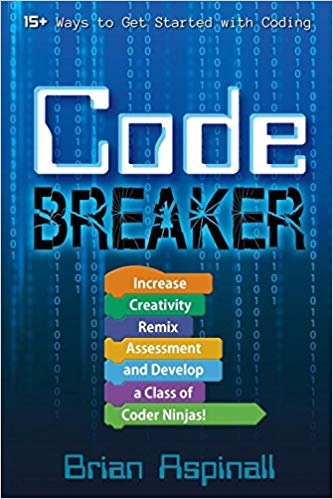
Code Breaker: Increase Creativity, Remix Assessment, and Develop a Class of Coder Ninjas! by Brian Aspinall shares his experiences and those of some colleagues in the process of teaching coding from kindergarten to high school. It deals with computational thinking which is a fundamental skill at the heart of engineering and mathematics. It includes coding and much more, and can even happen without technology. Make sure your school has a few copies.
Preface
- We live in an era of access as answers to knowledge-based questions can be quickly retrieved. As for coding, we have been teaching that in many forms since the 1960s. Like many, Brian is a self-taught coder. He offers ten reasons for teaching coding. They include building self-confidence, allowing students to create, self-expression, teaching storytelling, opportunities for risk-taking, reinforcing math principles, and teaching problem-solving. It is required for many future jobs, developing teamwork, and helping humanity.
1. The Clarity of Poop
2. A Wing and a Papert
- Here we get some learning theory. Assimilation happens when you incorporate new things into your current understanding. Accommodation happens when you learn new things and have to change what you currently understand. People learn best when they are involved in making or constructing things in the real world. To do this you need some control over your own learning. Learning should be concrete and computers are a good way to teach this. Computational thinking is a fundamental skill and it is at the heart of engineering and mathematics.
- Coding Rock, Paper, Scissors to Teach Probability
- Indigenous Trail: Trees and Coding a Micro:Bit Compass
- What Is Computational Thinking? Computational Thinking can take on a variety of forms.
Posted in Book Summaries, Education Books, Leadership Books | Comments Off on Code Breaker: Increase Creativity, Remix Assessment, and Develop a Class of Coder Ninjas! by Brian Aspinall
Saturday, October 6th, 2018

Seven Things That Can Spoil Your Relationship with the Students by Kate Khom offers excellent advice to all teachers regardless of their experience. It also provides guidelines for administrators who have to observe and guide teachers.
Introduction
- Your most important job as a teacher is to create appropriate and pleasant conditions in which learning can take place while maintaining a good, stable relationship with your students. Your relationship with the students largely depends on your personality, attitude, and intentions. No teacher is ever identical to another teacher, just like every student is an individual. Teaching is certainly not an easy job, and it takes effort, time and experience to get better at it. However, there are certain things that you should always avoid doing in order not to spoil your relationship with the students.
1. Being Cold and Distant
- While it’s certainly important that you maintain your authority over the class, you should never allow yourself to become one of those cold and distant teachers that the students are scared of or uncomfortable around. If you act this way you will never be able to establish a good rapport with the students and you will surely hinder their learning because they simply will not feel comfortable enough in the classroom.
2. Unwillingness to Elicit and Accept Honest Feedback
- Sometimes, while teaching, we can unknowingly do certain things that can bother our students. Maybe you’re talking too quickly or using complicated language. Natalie Schwartz, a renowned author of multiple books on teaching, explains how to deal with this in her her article. “Eliciting feedback can entail asking a simple question such as, So how was the homework last night?” All in all, you have to elicit and accept feedback without getting angry or offended when you get it.
3. Being Too Friendly
- You absolutely should have a positive attitude towards your students and you should strive to create a pleasant learning environment in the classroom, but there is a difference between being a good teacher and being their friend. Make sure that they still remember that you are the teacher and that they have to listen to you.
4. Being Hypocritical
- There is always that teacher that strictly forbids students from using their phone in class, but when their phone rings, they pick up the call and chatter away, simply because they are the teacher and that ‘’gives them the right’’ to do something they don’t allow students to do. If teachers establish certain rules in class, then they need to remember that the rules have to apply to them too.
5. Humiliating students
- This one should go without saying, but you should absolutely never humiliate your students in any way. Melissa Kelly, a writer at ThoughtCo. says in her article that, if humiliated: ‘’The students will either feel so cowed that they will never feel confident in your classroom, so hurt that they will not trust you ever again, or so upset that they can turn to disruptive methods of retaliation.’’
6. Flying With the Fastest
- If you only pay attention to the students that speak first, you will definitely get a wrong impression about how easy or difficult the lesson is. Not everyone can learn at the same speed and by only paying attention to the best students, you will lose track of the rest of the class, which will make them feel inadequate and they won’t really understand the lesson. John Marks, an expert in classroom management from says that you should ‘’Try directing questions at individuals and sometimes actively ‘shh’ the loud ones, or simply not hear them.’’
7. Unwillingness to Repeat or Explain
- As Derrick Meador, a writer at ThoughtCo.claims in his article on teaching, ‘’You should never say things like: ’’I’ve already gone over that. You should have been listening.”Make sure that the students know that it’s safe to ask you about anything they find difficult or confusing. It is like R. J. Odora points out in his research study on using explanation as a teaching method “In the context of education, good explanation in teaching is essential for unlocking the students’ understanding of the subject.’’
Conclusion
- To conclude, as teachers grow in experience, their teaching improves, but until then, it is crucial that they learn to maintain a good relationship with the students. Hopefully, this article will help teachers understand what to pay attention to in their behavior and attitude towards the students so that everyone is happy and all the conditions for learning are met.
Kate Khom
- Kate is passionate writer and learner located in Kyiv, Ukraine. She likes to help people and make this world better. Feel free to chat with her on Twitter or check her website .
Posted in What can Dr. Doug do for you? | Comments Off on Seven Things That Can Spoil Your Relationship with the Students by Kate Khom
Friday, October 5th, 2018
Posted in Dr. Doug's Twitter Service | Comments Off on Why Do We Have Elite Schools? My Latest Post at EdWeek Teacher
Wednesday, October 3rd, 2018
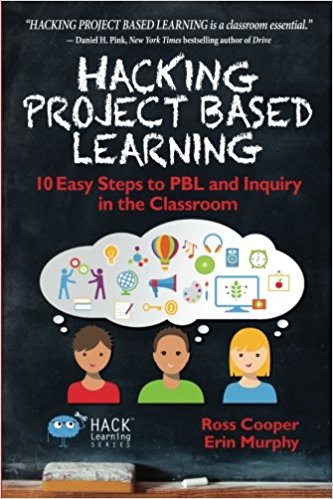
Hacking Project-Based Learning: 10 Easy Steps to PBL and Inquiry in the Classroom by Ross Cooper and Erin Murphy is a must read for any teacher interested in this mode of teaching. Their ten hacks provide a path for more student-centered learning in any classroom. Be sure to get some copies for teachers you know.
Introduction
- Project-Based Learning (PBL) is messy. The authors have done everything in their power here to de-clutter and tidy up the mess to make it as approachable as possible. PBL may not happen overnight in you classroom or school, but it won’t happen if you don’t get started. Ross and Erin started doing PBL as teachers and now support it as administrators. They will help you set the stage for students to thrive in a culture of inquiry and creativity with these ten hacks. Keys are to make student work public and for them to reflect on their work. The role of feedback is also vital.
Hack 1: Develop a Space That Promotes Risk-Taking
- Schools are designed to fill kid’s heads with information. Student questioning diminishes. The assembly line is populated by robots. We need students who can think and solve problems. They need to be driven by their curiosities. Teachers need to do what they can to bring in materials from garage sales or anywhere. They should post failed ideas. They also need to develop relationships. Make sure that things are designed for student learning rather than teacher convenience. The walls should contain student work. Bring in the real world.
Hack 2: Teach Collaboration Skills
- Starting group work without first teaching collaboration skills is a mistake. Working with others requires dialog and productive struggle. Students should know this. They should understand that collaboration is working with others in order to achieve or do something. A good way to teach collaboration is to search the Internet for collaborative experiences. Look for discussion skills, body language, transitions, and organization strategies. Students can also visit other classrooms and watch collaboration in action.
- A big focus should be on the idea that it’s possible to not like someone else’s idea without disliking the person. After early collaboration activities, students should debrief and discuss what went well and what didn’t.
Posted in Book Summaries, Education Books, Leadership Books | Comments Off on Hacking Project-Based Learning: 10 Easy Steps to PBL and Inquiry in the Classroom by Ross Cooper and Erin Murphy
Sunday, September 16th, 2018
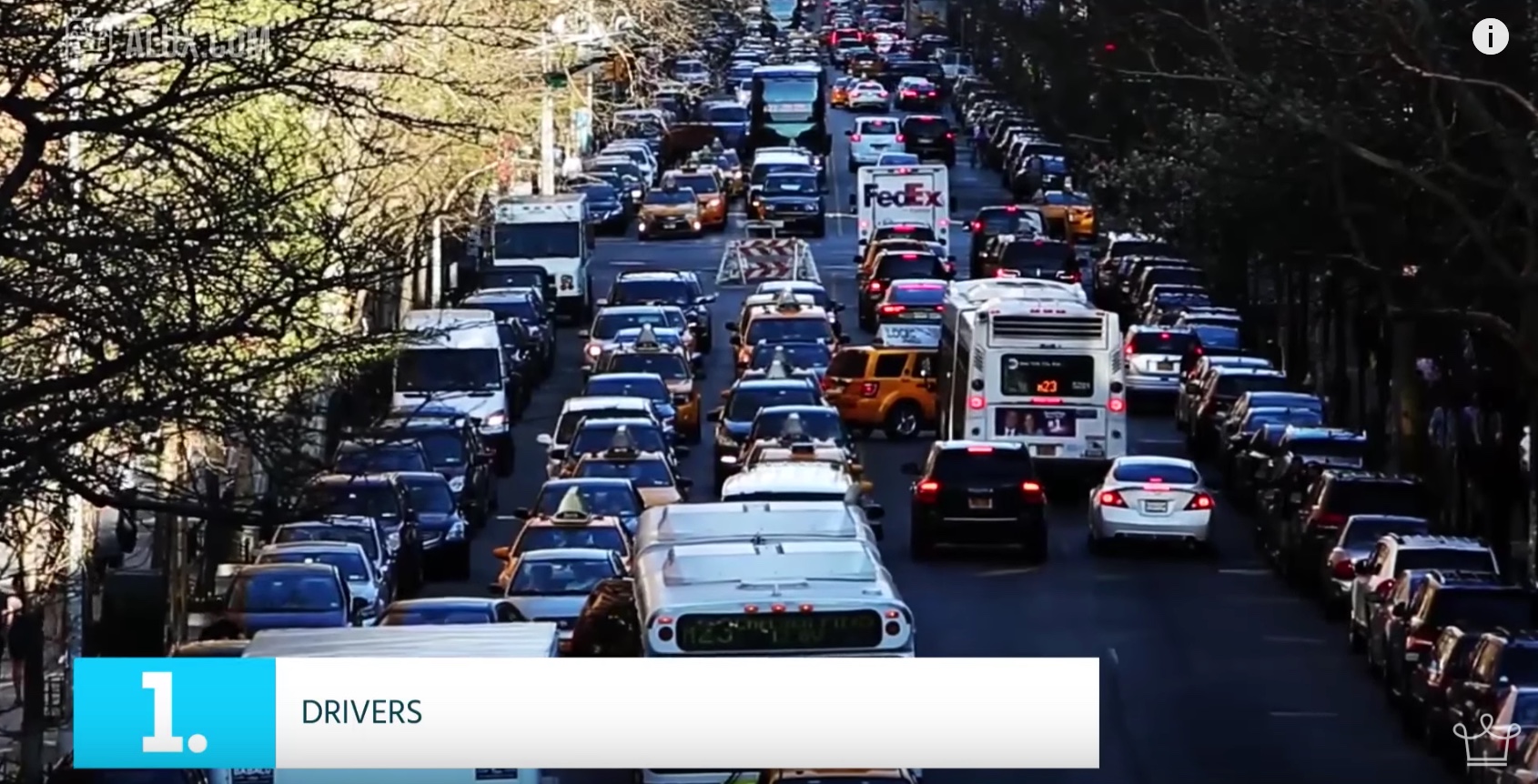
16 Jobs That Will Disappear In The Next 20 Years Due To Artificial Intelligence from Alux.Com (@aluxcom) should provide guidance to students and people already in the workforce. If you have one of these jobs, start preparing for something else. If you are still in school, prepare for something else. Watch the original Alux.Com video on YouTube. For each job, I have added my own thoughts and advice based on my daily viewing of Internet resources for this blog.
One study at Oxford found that 45% of all jobs will disappear in the next ten years.
- For the most part, it’s easy to extrapolate from where we are to where we are going as many of these job loss trends are well underway or available as prototypes. As time marches forward, machines and computer software will be able to do more and more and this isn’t new. Not only will jobs in the US disappear, but many of the jobs that have been sent offshore will return only to be done by machines and/or computers.
16 Jobs Not to Train for and to Start Retraining If You Are In One
- 1. Drivers – It looks like it won’t be long before cars and trucks drive themselves. Our 20 million drivers will have to reinvent themselves. There are already self-driving trucks in Nevada and self-driving Uber cars in Pittsburg. This should be a real boon for old people and it should save many lives. Perhaps when I get to the point where my daughter tries to take my car keys away I’ll have a self-driving car.
- 2. Farmers – Much of what needs to be done is rapidly being automated. Labor intensive jobs are already disappearing. This should reduce our reliance on immigrant labor. Already under 2% of employed people in the US work on farms. Farming also continues to become more hi-tech. On some dairy farms, for example, cows are already milking themselves. If you want to be a farmer, take as many science and engineering courses as you can. You can also expect to work for one of the ten companies that control almost all of the food we eat.
- 3. Printers and Publishers – This one is well on its way with the growth of Internet publishing. Few publishers have been able to establish a successful paywall in front of their online content. These jobs won’t totally disappear for a while as older people like me still like the experience of holding real books, magazines, and newspapers. There is no laptop screen as big as my physical New York Times.
- 4. Cashiers – Self-checkout stations are expanding already. At my Walmart, as of today, there are eight along with an equal number of checkouts staff by humans. I prefer self-checkout at grocery stores and places like Walmart as there is usually no waiting. I suspect that as soon as lines show up they will add more and have fewer humans. I’ve used them in restaurants as well and I like this experience. I don’t have to give my credit card to some server I don’t know who takes it someplace where I can’t see it. In the last year, my card was hacked twice in restaurants in New York City for this reason. Fast food restaurants now let you order and pay using your smartphone from the parking lot.
- 5. Travel Agents – I’ve been doing my own booking online for years. The last time I used a real agent was in 2002. Many of my retired friends sign up for tours where someone does all the planning and makes all the arrangements for at least a bus full or people. I prefer doing it myself as when you go on a tour bus or cruise ship you take the crowd with you.
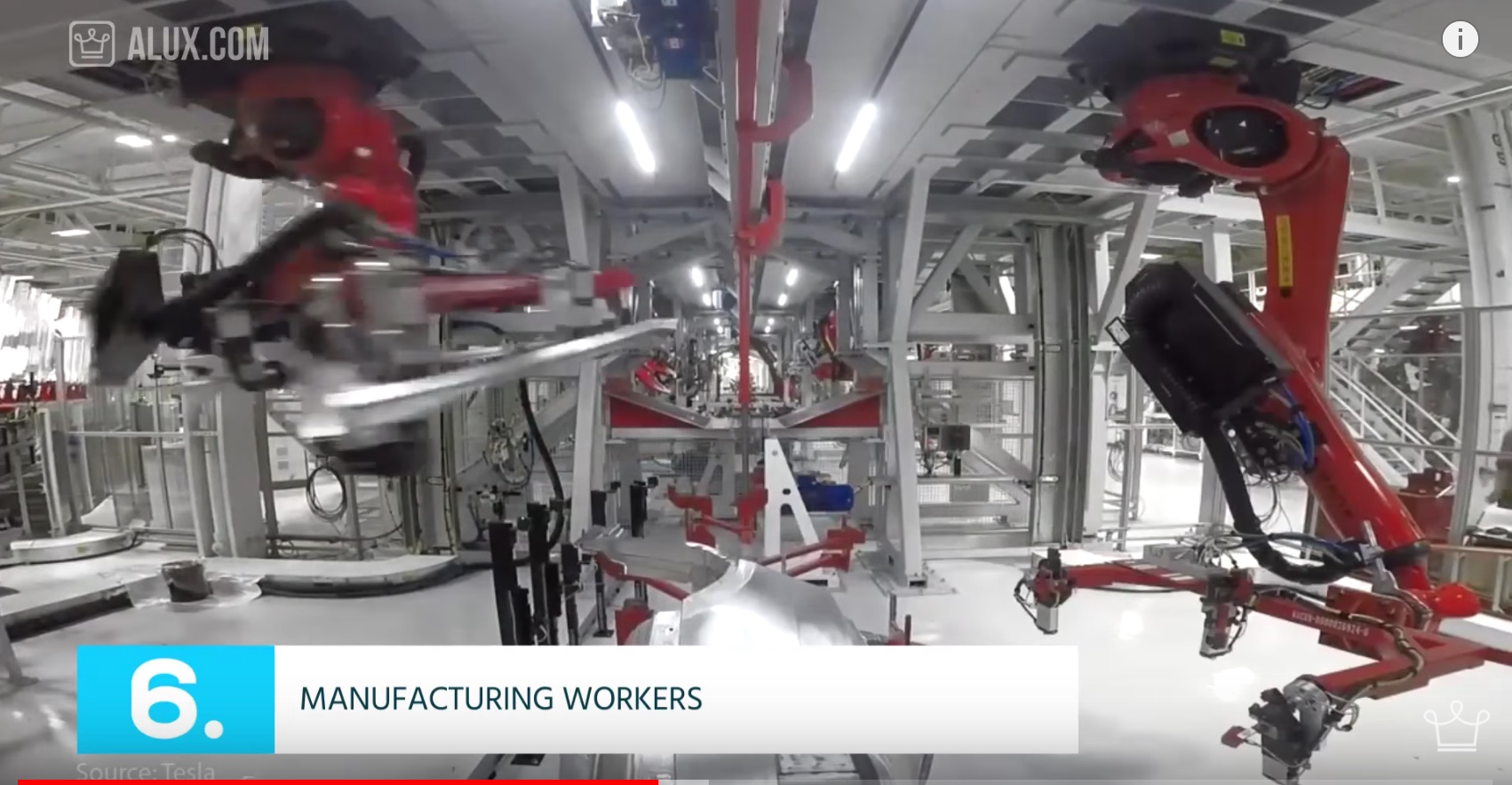
- 6. Manufacturing Workers – Now machines build other machines with less human interaction every year. This is not new as car manufacturers have been using robots for decades. This is a slow and steady change unlike some of the others listed here. Many schools are letting students manufacture things with 3D printers. This is one more reason why all students should try to take a few programming courses.
- 7. Dispatchers – The role of the dispatcher is coordinate people in the field. Technology will soon do this better. You can already call your own cabs and pay with your smartphone. I think we will need people who can maintain and repair vehicles for some time. These jobs have already become more technical as the first thing they do is connect a computer to the vehicle’s computer.
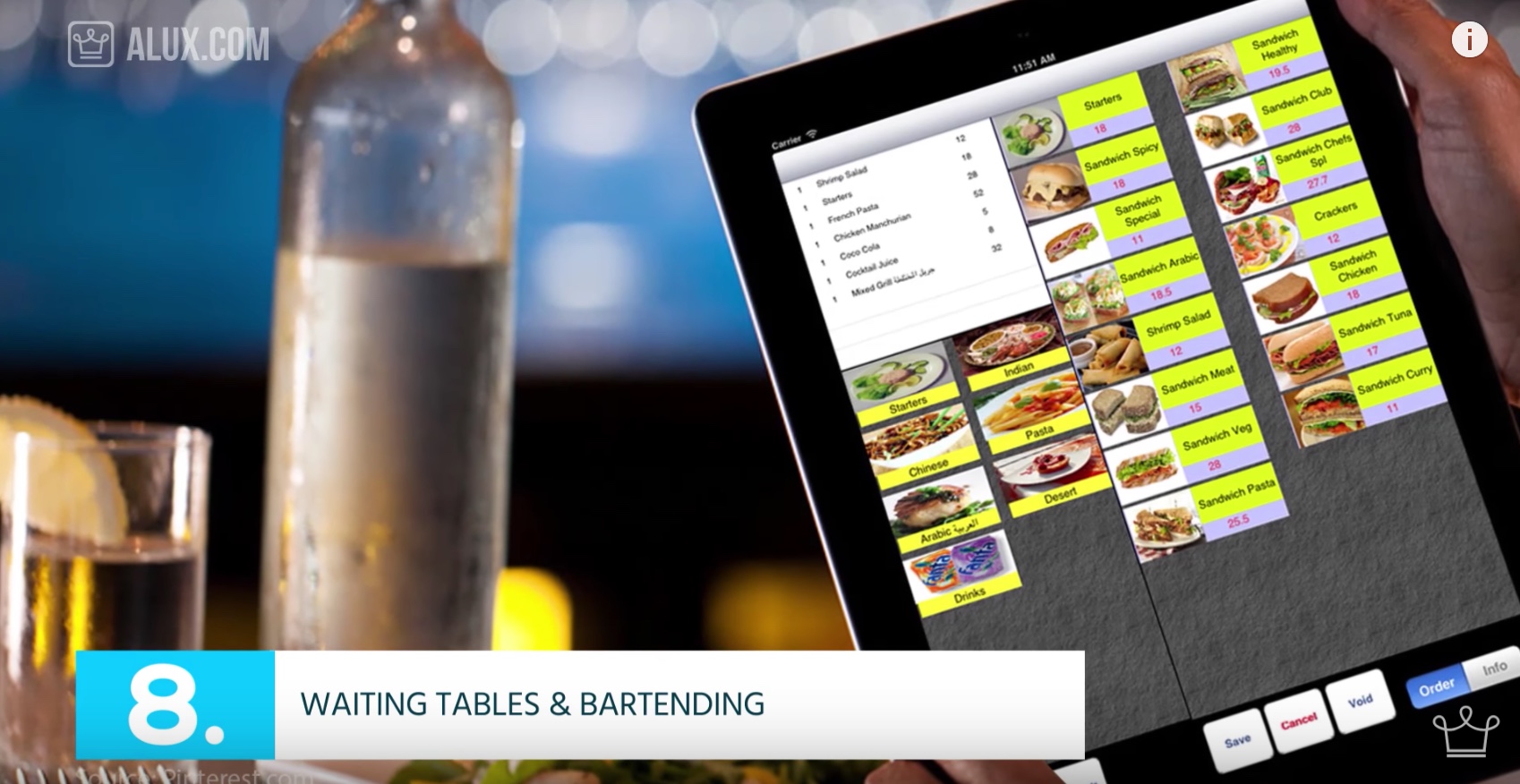
- 8. Waiters and Bartenders – This trend has already begun. I’ve been to restaurants where once you are seated you use a tablet at the table to order and pay. We still need humans to do some of the food preparation, but there is no reason why a robot can’t serve the food someday soon.
- 9. Bank Tellers – ATMs have already cut the number of people doing this job. There are still many transactions that we need tellers for, but efficiency is making them more productive. At my bank, the tellers use a machine to count the money I get when I cash a check.
- 10. Military Pilots and Soldiers – The military is often the first to adopt new technology. Drones are more accurate and safer, at least for the person piloting the craft. We only have prototypes of robot soldiers at this point, but the idea of a robot soldier engaging bad guys in urban warfare has a lot of appeal. Check out this prototype soldier from Boston Dynamics. We also have robots that help clear IEDs and landmines. As terrorists adapt and evolve, we will need to do the same with increasingly advance technology.
- 11. Fast Food Workers – This falls in the same category with the waiters and bartenders. According to some thinking, the push for $15/hour pay has pushed automation to be adopted faster. Order taking and paying is easy to automate. The harder part of food preparation will take a bit longer, but it is already underway. The remaining humans will need to be more skilled to troubleshoot the entire process.
- 12. Telemarketer – This industry has been taken over by online ads. People like me that only have cell phones can block calls, which takes a big piece of the market off the table. Facebook, for example, can test the effectiveness of ads and target them to people who are more likely to respond. I don’t mind seeing this job go as it seems like a crappy job.
- 13. Accountants and Tax Preparers – Boring and repetitive jobs are ripe for takeover by machines. Most people have simple needs for tax preparation that can easily be met by software. Tax preparation software is already decades old. If you are an accountant or plan to be one, you better be good and expect to only get the tricky nonroutine work. Rich people and large corporations will still need tax preparation people, but they better be really top notch.

- 14. Stock Traders – Only 10% of stocks traded today are traded by humans. In this world, the bots always win. Most people will still want to talk to a financial advisor who needs to be very knowledgeable and constantly learning. The habits of constant learning and continuous improvement should serve workers well as they try to deal with the ever-changing nature of the job market.
- 15. Construction Workers – Technology is getting more efficient and fewer specialized workers will be needed at the job site. For example, watch Sam the Bricklaying Robot that can lay bricks better and three times as fast as the fastest human. Sam’s human supervisors will have to understand the entire job and not just be able to lay bricks. This trend probably started with the invention of the wheel or something like that. Automation has also dramatically cut the number of people needed to run mines and oil fields.
- 16. Movie Stars – Human actors are expensive and moody. Actors will just be generated by computers. The 3D animated movies like Toy Story and others already give us an idea of how movies can be made without actors. Next time you see one of these animated movies be sure to stay for the credits and read about the hundreds of jobs that take the place of a relatively small number of actors. The problem here is when the movie is done, all of those people have to look for their next job. There are a lot of jobs for non-starving artists who are willing to do what the boss wants as opposed to their own thing so don’t hesitate to develop some artistic skill.
Dr. Doug’s General Advice On Preparing For the Future
- We know that it is very difficult to know what kind of job you are going to be doing even a few years in the future. In the meantime, there are a few things that are clear as far as what you can do to prepare for whatever comes next no matter how old you are.
- 1) Whatever you do, get good at it. There will be less and less work for people who are mediocre.
- 2) Become a self-directed learner so you can acquire as much in the way of skill and knowledge as possible on your own. This can start as early as elementary school for some students. Tricky jobs require fast learners who can figure things out as they go. There are tools on the Internet that make learning much more available.
- 3) Work hard and learn something new and try to improve every day. The future is not likely to belong to the slackers, at least for a while. If we get to the point where machines are doing everything we have to get good at slacking.
- 4) Consider taking as many science, engineering, and programming courses as possible. In a future featuring more and more robots, you want to be designing, maintaining, or supervising them rather than being replaced by them. Even if you don’t want to get serious about programming, at least learn how to create and maintain an attractive website.
- 5) Creative people will always be in demand. Some might argue that creativity cannot be taught, but most educators believe that it can be facilitated. If you don’t give students open-ended problems and projects, they won’t be able to exercise their creative ability. Parents can do this too.
- 6) Artistic skills will be in demand. Everything you see on television, print media, and the Internet was created in part by artists. If you want to go to an art school, make sure it’s one where you will spend most of your time developing your artistic ability rather than taking a bunch of liberal arts courses. Try to take the AP versions in high school so you can avoid them in college. Also, pick a school in a big city where it will be easier to get high quality internships.
- 7) Develop your network. Most people get their jobs by way of word of mouth. In addition to working hard to become highly skilled and creative, make sure that as many people as possible in addition to family and friends know what you can do. Rather than a resumé, put samples of your best work, whatever it is, on your website.
Some TED Talks on the Topic
- Jobs of the Future and How We Can Prepare For Them, a TED Talk by Avinash Meetoo. @AvinashMeetoo As robots proliferate, the creative arts will thrive because people will have time on their hands and will be able to create things that entertain. In addition to the creative arts, there will be a high demand for jobs that call for computer science.
- AI and the Future of Work a TED Talk by Volker Hirsch @vhirsch FoxCon in China is replacing 60,000 workers with robots. This means it’s cheaper to use robots than it is to pay someone $5 a day. Keep in mind that we have had industrial robots for decades. Drones are already delivering pizzas in New Zealand. Large legal firms are using AI to do legal work. Automation will take every job that it can take. Anything that has repetition machines can probably do better. If you are an account or radiologist you should consider retraining. Hoping that change won’t happen is a bad idea.
- How the Future of Work is Not Jobs a TED Talk by Rudy Karsan @RudyKarsan tells us that people are already creating work and that entrepreneurism will increase in the future. He also makes a pitch for universal minimum income.
Posted in Doug's Original Work | Comments Off on 16 Jobs That Will Disappear In The Next 20 Years Due To Artificial Intelligence from Alux.Com