Author Archive
Tuesday, June 12th, 2018
My informal research has found that many if not most students lack serious interests let along a passion for anything worthy of academic effort. When I ask students what they are interested in or what they want to major in someday, I often get little more than a shrug. So what should we do?
What My Blogging Effort Reveals
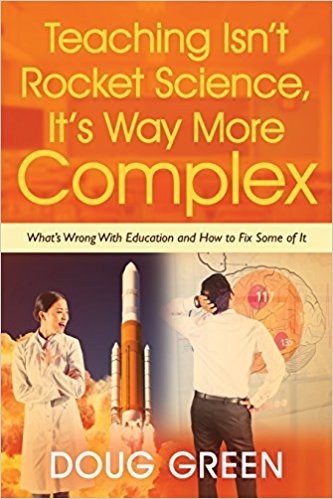
- Every day I surf the Internet searching for resources for my audience of parents and educators. I have found a number of themes that show up often. These themes form the basis of my recent book Teaching Isn’t Rocket Science, It’s Way More Complex: What’s Wrong With Education and How to Fix Some of It. (Purchase at Amazon — Executive summary) In it I deal with themes like the importance of relationships, personalizing instruction, and the harm caused by standardized testing.
So what should we do?
- One reoccurring theme is that teachers should allow students time to pursue their interests and passions rather than being forced to only study the school’s standard curriculum. I like this idea. In some schools, students are allowed to study what they want on a regular basis. This resembles Google’s 20% time where employees can do what they want one day each week and let everyone know what they accomplish. Other schools weave student interests and passions into project-based learning.
Most Lack Passion
- While this sounds good, my informal research has found that many if not most students lack serious interests let along a passion for anything worthy of academic effort. When I ask students what they are interested in or what they want to major in someday, I often get little more than a shrug. I don’t count passions for things like social media or computer games as topics that we should turn students lose to study in school, although I’m sure creative teachers can work them in somehow.
Convince the Teachers
- We need to convince teachers that it’s important for students to find interests and passions about topics that could lead towards a career. The next step is to suggest ways they can help students find their passion as part of their current teaching practice. I don’t think this should be too difficult. Regardless of what one teaches, one can make an effort to simply expose students to as many potentially interesting aspects of their discipline as possible.
Be Direct
- Tell students directly that it is their job to find things they are interested in as they encounter new things anywhere and to make notes of what they find attractive. They should turn in a list of things that they would like to explore further. The teacher then carves out time for individual exploration that can be online and hands on. Students need to be responsible for reporting on what they find.
Put Student Work On a Blog
- A classroom blog can help. With help from the school IT staff it should be easy for students to post their work. Once posted, the teacher, their classmates, and parents can see evidence of growing passions. Students should be allowed to continue with a subject of interest or to explore something else. This seems possible and I believe that it would serve the students well and accomplish the vision of many people with strong expertise in the field of education.
Who is Dr. Doug Green
- Doug has been an educator since 1970. After teaching chemistry, physics, and computer science, he became an administrator for the next 30 years with experience at the secondary, central office, and elementary levels. He has also taught a number of leadership courses for The State University of New York at Cortland and Binghamton University and authored over 300 articles in computer magazines and educational journals. In 2006 he gave up his job as an elementary principal to care for his wife who had Lou Gehrig’s disease. After her death in March of 2009 he decided to see how I could use my expertise to help busy educators and parents hone their skills and knowledge and started this blog.
Posted in Doug's Original Work | Comments Off on If Supporting Student Passion Is So Important, What If They Don’t Have Any?
Tuesday, June 5th, 2018
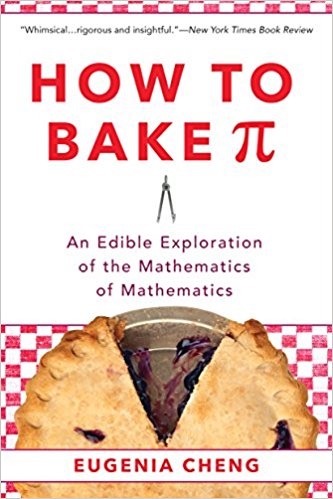
How To Bake ∏: An Edible Exploration of the Mathematics of Mathematics by Eugenia Cheng uses classic baking recipes to illuminate many math concepts. It helps take math into the real world as it helps to make some math seem easier to its readers. At the very least, it should find its way into the hands of every math teacher and serious math students.
Part I: Math – 1. What Is Math?
- Like all chapters this one starts with a recipe since like recipes math has both ingredients and methods. In math, however, the method being used is probably more important than the ingredients. Once you find a technique in math you can always find more things to study with it. The two key concepts here are abstraction and generalization. Math is abstract in that it studies ideas of things, rather than real things. The invention of numbers to represent things was perhaps the first-ever process of abstraction.
2. Abstraction
- To do math you have to step away from reality. This is where math finds its strength. The idea that two things cost twice as much as one thing applies to all things, for example. Here we have a process that generalizes. Maps are abstractions of reality. The key for map makers is to find the most appropriate level of abstraction for the given moment. There are a number of math problems here that show how procedures work regardless of the specific numbers involved.
3. Principals
- When making any recipe, it helps to understand the principals of the ingredients and finished products you are working on. Understanding the principles allows you to take shortcuts and substitute ingredients without ruining everything. Recipe books, however, rarely explain such principles. Understanding is power in cooking and in math. At the heart of math is the desire to understand things rather than just knowing them. The chapter goes on to spell out the principals for the natural numbers we use for counting.
4. Process
- Flour, butter, water, and salt can make a delicious puff pastry, but only if you follow a specific method. Math requires the proper method also and further requires that almost nothing is basic or given. The rules of logic must be followed. Eugenia shows how you can make two mistakes in math and still get the correct answer. At the heart of math is the need to understand things rather than just knowing them. In other words, the means justifies the end.
Posted in Book Summaries, Education Books, Leadership Books | Comments Off on How To Bake ∏: An Edible Exploration of the Mathematics of Mathematics by Eugenia Cheng
Tuesday, May 22nd, 2018
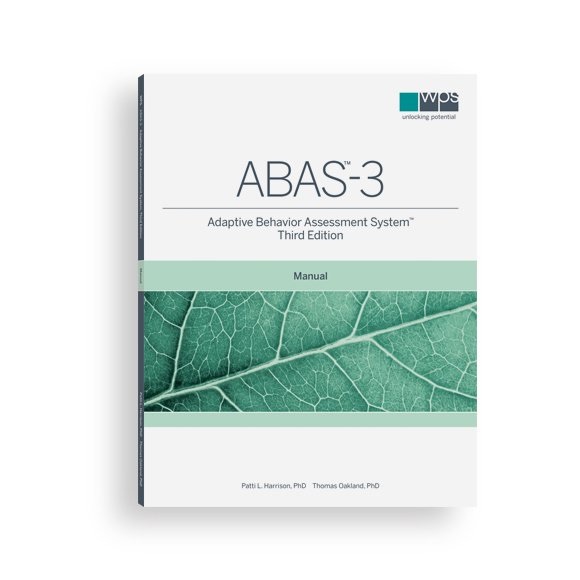
Illustrating the Flexibility of ABAS-3 to Diagnose Individuals with Adaptive Skills Limitations by Patti Harrison, PhD and Thomas Oakland, PhD provides a complete assessment of adaptive skills across the lifespan from birth to 89 years. Please share this with the people at your skill who are responsible for doing this type of assessment. Parents who homeschool thier children should also take a look at this important product.
Introduction
- By nature, humans have skills that enable them to adapt to their environment. However, because of learning disabilities, developmental delays, or other environmental factors, some people struggle to develop their adaptive skills and need intervention.
- The ABAS-3, or the Adaptive Behavior Assessment System, enables professionals to identify these limitations and create intervention programs that assist children and adults with developing the adaptive skills necessary to function in their everyday environments.
- The ABAS-3 can help increase an individual’s independence and improve social behaviors. Assessing a person’s ability to function independently enhances their quality of life and enables them to continue into adulthood with the skills they need to perform at work, school, and home.
Diagnosing Adaptive Skills Limitations
- Clinicians, school psychologists, and other mental health professionals use the ABAS-3 to diagnose many different disorders. Included are cerebral palsy, emotional disturbance, autism spectrum disorder and intellectual disabilities.
- The ABAS-3 uses tests to measure IQ, visual-spatial processing, knowledge, working memory, and fluid reasoning. From these scores, professionals can measure an individual’s achievement in specific areas and establish helpful interventions.
- The ABAS-3 can identify strengths and weaknesses, document progress over time, determine eligibility for services like disability benefits, or evaluate the person’s ability to live and work independently. From this information, a clinician can make a diagnosis and establish a treatment plan.
The Flexibility of ABAS-3 to Diagnose
- The ABAS-3 has the ability to help evaluate people with a wide range of disorders, and because it’s so versatile, it has a lot of flexibility to identify adaptive skills limitations. For instance, school psychologists can use the ABAS-3 to recognize and assess significant developmental delays in children who are not meeting developmental milestones. This enables psychologists to identify limitations and recommend treatment plans or interventions.
- The ABAS-3 can also be used as an adaptive behavior assessment to plan and coordinate homeschool programs for children with special needs. With resources like the ABAS-3 at their disposal, parents who homeschool special needs children, along with a skilled professional, can now develop and follow programs benefiting their children’s development.
Other instances of the flexibility of the ABAS-3 and benefactors of intervention treatment plans include:
- Dealing with emotional disturbances
- Social and self-direction problems at home
- Children with visual impairment who need home interventions
- Problems with daily behaviors and practical skills
- Monitoring the transition from school to work environments
- Comprehensive assessments for people with ADHD who have diminished self-direction and self-care
- Rehabilitation after traumatic injuries
- Evaluating Alzheimer’s patients and improving functional behaviors
- Assessing the effects of mental health on daily functioning
- Monitoring change in daily routines due to medication
- The list goes on. The flexibility of the ABAS-3 to help diagnose individuals with adaptive skills limitations is proven in how school psychologists, clinicians, and other mental health professionals use the tests to evaluate their subjects.
WPS Publishing
Posted in Guest Posts | Comments Off on Illustrating the Flexibility of ABAS-3 to Diagnose Individuals with Adaptive Skills Limitations by Patti Harrison, PhD and Thomas Oakland, PhD
Monday, May 21st, 2018
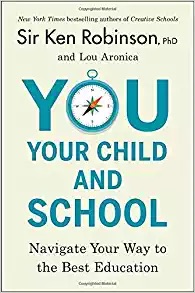
You, Your Child, and School: Navigate Your Way to the Best Education by Sir Ken Robinson and Lou Aronica will help parents get the education their children need to live productive, fulfilled lives. If you or anyone you know has children in or approaching school, this is a must-read. Be sure to get a copy and perhaps some gift copies for parents you know. This is a sequel to Creative Schools. See my summary here.
1. Get Your Bearings
- As a parent your worry list includes too much testing, a narrow curriculum, individual attention, learning problems, medication, possible bullying, college costs, and finding a good job. Schools also might not value a child’s strength as they magnify their weaknesses, and make grades so important that students lose a sense of self. Children love to learn and are natural learners. For most of human history, children educated themselves as they learned from others. With today’s focus on test scores, children are more likely to dislike learning as they become less healthy and more sedentary.
- A focus on things like STEM is often done to the detriment of other subjects that are none the less important to our economy and society. Ken argues for ditching the acronyms. Current reforms have not budged achievement levels as they cause enormous stress and loss of enjoyment. Businesses want employees who are adaptable creative team players as the support reforms that suppress these very attributes. Vocational courses are also squeezed out as too many college graduates can’t find appropriate work.
2. Know Your Role
- Regardless of your family structure, the adults in a child’s life are responsible for meeting a variety of needs. Here Ken uses Maslow’s hierarchy, which includes physiological, safety, love and belonging, esteem, and self-actualization. The final need means becoming meaningfully fulfilled as a person. As for esteem, children need praise, but it shouldn’t be endless and it should be tempered with constructive criticism. Children know when they have worked hard. Parents should set boundaries and provide moral education. Help them learn how to make decisions and to find a sense of direction and purpose. This shows why one-size-fits-all education is wrong.
- Ken defines five parenting styles. It seems that the authoritative style is usually the best as it involves setting rules that can be justified to the child and the willingness to alter the rules it conditions permit. Students should be allowed to struggle at times so as to work to solve their own problems. Such rules are more like guidelines that are a work in progress, and they tend to produce the happiest children.
3. Know Your Child
- Research indicates the one’s genes and one’s environment have about the same impact on what one becomes. This means that parents have about half of the responsibility. The culture surrounding a child has a huge impact. Usually, money has a big role as poverty brings with it a great deal of stress for many reasons. Poor kids are six times more likely to be neglected or abused, live in neighborhoods that are less safe, have lower birth weight, learning disabilities, and emotional and behavioral problems. There is no single definition of intelligence and each child’s potential needs to be unlocked if they are to be successful.
Posted in Book Summaries, Education Books, Leadership Books | Comments Off on You, Your Child, and School: Navigate Your Way to the Best Education by Sir Ken Robinson and Lou Aronica
Thursday, May 3rd, 2018

Save These Fun Indoor Activities for a Rainy Day by Charles Carpenter offers some great advice for keeping children active and involved when they can’t go outside. While many kids spend too much time indoors, it’s important that they have fun and learn something interesting when outside is not an option. Thanks, Charles.
Introduction
- Spring outdoor fun is finally upon us. If you’re like many families, you’ve planned outdoor activities from now until the weather turns frosty once more. But what happens when rain interferes with those plans? If your kids have been forced to come back inside due to rainy weather, you’re probably looking for fun ways they can burn off some energy, especially if they just got an enticing dose of warm weather activity. Fortunately, there are plenty of indoor activities that can keep the kids engrossed and maybe even teach them a thing or two. The Internet is your best friend if you’re looking for activities that are wholesome and enriching. In the meantime, here are a few ideas to get you started.
Show Them Something New
- Kids love learning something totally new as long as it doesn’t involve schoolwork. Use the time to show your children how to do something that’s new and interesting to them. These don’t have to be involved in complex projects, just easy things that are helpful for kids to know, like how to make scrambled eggs using the microwave, or how to whip up a kid favorite like a peanut butter and banana sandwich. Show them how to sing in harmony using a favorite old song like “Row, Row, Row Your Boat,” or get everyone together for a music circle. No instruments to speak of in the house? No problem – you just have to know where to look. Plexus suggests gathering a few items you won’t mind getting banged on (think: wooden spoons, pots and pans, plastic tubs, and metal spoons) and create your own.
- If you have little ones who are still developing their manual dexterity, pull up a Youtube video on how to lace a pair of shoes. a pair of shoes. The blender is one of the easiest appliances for kids to learn, so why not use it to teach the little ones how to whip up a healthful and delicious smoothy, always a kid favorite. Challenge the group’s storytelling abilities by developing an impromptu story using contributions from everyone involved.
Indoor Gardening
- It may be too cold and wet outside to plant all your favorite vegetables and flowers, but that doesn’t mean you can’t do some good old-fashioned indoor gardening with the kids. It’s still possible to plant a few herbs and vegetables and watch your kids giggle with glee as their very own patch of garden takes shape. You can do it with some potting soil, a few flower pots and some grow lights. Talk your kids through the process of planting and why it’s so important to keep plants watered and near a light.
Fun Indoor Exercise
- Get the little ones up and moving with a Youtube exercise video. Check out this exercise routine, which allows your kids to get moving while learning about animals from around the world. Youtube is also a great source for teaching kids about music. There are many videos that teach children music essentials in a fun and engaging way. If you have a piano at home, you have a great opportunity to give your kids a hands-on music lesson.
Family Time Capsule
- Have your children put together a family time capsule by writing down their favorite foods, television shows, movies, video games, favorite music and any instruments they may be learning. Take pictures of each, as well as a family picture, and put it all together in a box or large bag. Sock it away in a secure location (not too secure – you don’t want to lose or forget about it), and plan on breaking it open in five or ten years. Use this fun little project to encourage your kids to talk about what they’d like to be doing in the future, where they’d like to be going to school, and how they’ll keep in contact with their friends.
Get Your Art On
- Nothing keeps kids busy quite like drawing, painting or making art using their favorite medium. Kick things up a notch by having your kids learn to create challenging and colorful patterns, which can help kids learn to solve problems, symmetry and improve their math skills. If cold and wet weather has your kids stuck inside again, fill the time with music, art, dancing, exercise and new skill activities. Children learn best when they’re having fun, so emphasize activities they’ll truly enjoy. Be sure to also look for opportunities to challenge children to come up with their own activities. You might learn something new, too.
Charles Carpenter
- Charles created HealingSounds.info. He believes in the power of music and sound as a healing tool. He is based in San Antonio, Texas. Charles Carpenter can be reached at information@healingsounds.info.
Posted in Guest Posts | Comments Off on Save These Fun Indoor Activities for a Rainy Day by Charles Carpenter