Archive for the ‘What can Dr. Doug do for you?’ Category

Personality Poker: The Fast, Fun Way to Unload Innovation, Collaboration, and Predictable Growth by Stephen M. Shapiro 4th Ed

Thursday, October 23rd, 2025

Personality Poker
Personality Poker: The Fast, Fun Way to Unload Innovation, Collaboration, and Predictable Growth by Stephen M. Shapiro 4th Ed offers a fun game that any organization can use to help everyone determine their dominant and secondary personality types. It makes it easier to put people in positions that best suit their personality strengths, better drive the innovation process, and help connect people with complimentary personalities. Once you know your hand, you can compliment it when you hire new staff. To date, the game has been played by over 250,000 people and scientifically validated.

Introduction

  • Personality Poker is a fast-paced game that helps you discover and understand your unique contributions to your team’s success, whether in driving innovation, strengthening collaboration, shaping culture, or achieving shared goals. Once everyone knows their strengths, the goal is to place the right person in the right position. Creativity is about generating new ideas. Innovation is about shifting culture to implement valuable new ideas.
  • Stephen divides people by suits. The Spades dig and organize data. Diamonds are the idea people. Clubs plan and execute. Heats engage the hearts and minds of team members. Stephen has used this system with success with organizations of all sizes since he invented it in 1999.

Part I: Are You Gambling Your Company’s Future? 1. Pregame Warm-up

  • Personality Poker can be used as a powerful conflict resolution tool. It focuses on what people like as opposed to what people are like. People often game personality tests by picking what they think is the “right” answer. People in a good mood solve more problems through flashes of insight and creativity. How others see you is an indicator of your behavior. Some personality traits such as inquisitiveness, are difficult to observe. First impressions can be “sticky.” Work roles often prescribe a particular behavior.

Part II: Playing Personality Poker 2. Before Getting Started

  • It’s important to know the difference between your preferred style and your adapted style. Your adapted style is a learned behavior that you develop on the job due to the role you are put in. You can tell it’s an adapted style as it tends to sap you of energy whereas using your preferred style is more likely to energize you at work. If you are different at home, you are probably using an adapted style at work.

3. How to Play

  • You first need a deck of the special cards that have style descriptive words on each regular playing card. The solitaire version involves going through the deck and placing cards in piles that are most like you, least like you, and others. The goal is to get nine cards in the like you and not like you piles. When you have that you should know which style you are most like, which style(s) are somewhat adjacent, and which are your opposite.
  • You can also do a five pile version, which adds like me but I infrequently use it and like me but an adapted skill piles. In a five-card draw version each player gets five cards and players trade cards until they get a hand with cards most like them. There is also a 52 card pick up version.

4. Finding and Understanding Your Style

  • The black cards are more rational and are more liked by people who rely on expertise and knowledge. The red cards are more relational in nature. These people like to connect ideas, experiences, and people. If your five cards don’t tell you what your primary style is feel free to get more cards. You are more likely to have two or three suits than only one or all four. Like the author, my primary style is diamonds and my secondary style is spades. The suit or suits you are missing are the styles you need to rely on from colleagues.
Share this:
Share this page via Email Share this page via Stumble Upon Share this page via Digg this Share this page via Facebook Share this page via Twitter Share this page via Google Plus

Practical Strategies to Manage Stress in Daily Life by Emily Graham

Friday, January 10th, 2025

Graham
Image: Freepik

Practical Strategies to Manage Stress in Daily Life by Emily Graham

offers great advice for teachers, parents, and kids. Please share.

In an era where demands on our time and energy are relentless, managing stress is not just beneficial but essential for maintaining a healthy lifestyle. The pressures of modern life can lead to overwhelming stress, affecting both mental and physical health. However, by adopting practical strategies, individuals can mitigate these effects and foster a more balanced existence.

Limit Exposure to Social Media

Social media often amplifies the pressures people feel to meet unrealistic expectations, fueling self-doubt and anxiety. The constant comparison to curated snapshots of others’ lives can distort perceptions of personal success and happiness. Overexposure to idealized images and narratives may also contribute to feelings of inadequacy or fear of missing out. These platforms can blur boundaries between reality and projection, leaving individuals vulnerable to heightened stress or diminished self-worth.

Find Stress Relief Through Hobbies and Recreation

Engaging in hobbies and recreational activities can be a powerful way to manage stress, offering both mental and physical benefits. Activities like painting, jogging, or even gardening can release endorphins, your body’s natural mood enhancers, which help reduce anxiety and elevate your mood. These pursuits also provide a mental break from daily responsibilities, allowing you to focus on the present moment and enjoy a sense of accomplishment. By incorporating hobbies into your routine, you not only improve your physical health but also foster a more positive mental state.

Try Holistic Approaches to Stress Management

Alternative therapies offer a natural approach to managing stress and fostering relaxation in everyday life. Magnesium is a vital mineral that helps relax muscles and calm the nervous system, making it a popular choice for stress relief. Ashwagandha, an adaptogen, supports the body’s stress response by balancing cortisol levels and promoting a sense of calm. CBD and THCa diamonds interact with the body’s endocannabinoid system to reduce tension and enhance relaxation without causing a high.

Leverage Technology for Effective Stress Management

In our fast-paced world, utilizing technology can be a powerful ally in managing stress. Wearable devices with biofeedback sensors, such as those that track heart rate, offer insights into your stress patterns. By pairing these devices with meditation apps, you can enhance relaxation and maintain a consistent sleep schedule, both crucial for reducing stress. Additionally, stress relief apps provide immediate interventions during high-stress situations, potentially improving your quality of life.

Try Aromatherapy

Aromatherapy taps into the powerful connection between scent and emotion, using essential oils to promote relaxation and balance. Certain fragrances, like lavender or chamomile, are known for their calming effects, while citrus or peppermint can uplift and energize. These oils are often diffused, applied topically, or added to baths, offering a simple way to create a soothing environment. Engaging the senses through these natural scents can ease tension and encourage a sense of well-being.

Integrate More Exercise into Your Routine

Exercise provides a natural outlet for stress, channeling physical energy into movements that promote mental clarity and calm. Activities like walking, swimming, or strength training stimulate the release of endorphins, which elevate mood and reduce tension. Beyond these immediate benefits, consistent physical activity helps regulate sleep patterns and build resilience to everyday challenges. The rhythmic nature of many exercises also creates a meditative state, offering a mental break from worries.

Seek Help from Healthcare Professionals

Healthcare professionals are essential in managing stress-related health conditions, offering a comprehensive approach that addresses both physical and psychological aspects. By collaborating with specialists like endocrinologists, they can tackle underlying metabolic issues that may worsen stress. This holistic strategy is crucial because stress can lead to significant physiological changes, such as altered hormone levels, potentially resulting in chronic health problems. Addressing these issues early can prevent the escalation of stress-related disorders, ultimately enhancing patient outcomes.
Stress management thrives on consistency and intentionality, weaving small but meaningful habits into daily life. By fostering mindful awareness and embracing supportive practices, it becomes easier to navigate challenges with greater ease. These approaches empower a stronger sense of control and emotional balance in the face of life’s demands.

Emily Graham
Emily is the creator of MightyMoms.net. She believes being a mom is one of the hardest jobs around and wanted to create a support system for moms from all walks of life. On her site, she offers a wide range of info tailored for busy moms — from how to reduce stress to creative ways to spend time together as a family. You can email her at emilygraham@mightymoms.net. She lives in Arizona.

Visit DrDougGreen.Com to explore curated book summaries and educational resources to enhance your professional development.

Share this:
Share this page via Email Share this page via Stumble Upon Share this page via Digg this Share this page via Facebook Share this page via Twitter Share this page via Google Plus

Practical Strategies to Overcome Single Parenting Challenges and Thrive by Emily Graham

Saturday, March 7th, 2026

PArents

Practical Strategies to Overcome Single Parenting Challenges and Thrive

Single parents and the educators and school administrators who support them often carry a quiet question: why does daily life feel like it’s always one step from falling apart? The emotional challenges of single parenting can stack up fast, grief, guilt, isolation, and the pressure to be the steady one, while single parent stressors keep coming without a pause. Financial difficulties for single parents add another layer, turning ordinary needs into constant calculations and hard trade-offs. Add the daily struggles of single parenthood like logistics, school communication, digital learning demands, and limited childcare, and the strain becomes predictable, not personal failure. Practical help starts with naming what’s real.

Understanding How Single-Parent Stress Stacks Up

Single parenting pressure rarely comes from one problem. It builds when emotional load, money limits, and daily logistics collide, especially around time, childcare, and who you can call when plans break.

This matters because generic advice assumes extra hours, flexible work, and backup adults. When educators understand that children under 18 living in a single parent household is common, support can shift from judgment to realistic planning and resource-sharing.

Picture a parent who gets a school behavior email during a work shift, while childcare cancels, and rent is due. That same week, 33% compared to 8% becomes more than a number, because stress keeps compounding.

With the stack identified, routines, communication, budgeting, support networks, and reliable childcare can reduce friction fast.

Use This 7-Step Playbook to Stabilize Your Week

When single-parent stress stacks up, it’s usually not one “big” problem, it’s the daily friction of time, money, logistics, and emotional load. This weekly playbook reduces decision fatigue by turning your highest-stress moments into predictable systems.

  • 1. Lock in 3 non-negotiable routines: Choose one morning routine, one after-school routine, and one bedtime routine that happen in the same order most days (even if the timing shifts). Keep them short, 10 minutes each is enough, so you’re building consistency, not perfection. Predictable routines lower conflict, support kids’ regulation, and make it easier for you to spot what’s actually going wrong when a day unravels.
  • 2. Run a 10-minute Sunday “week preview” with your kids: Use a simple weekly grid on paper: school events, work deadlines, appointments, and who is handling pickup. End with one question: “What’s the hardest part of this week?” This quick check-in prevents midweek surprises and opens a low-pressure space for kids to name worries before they show up as behavior.
  • 3. Use one communication script for hard moments: Pick a repeatable structure: “I notice… I feel… I need… Here are two choices.” Example: “I notice homework isn’t started. I feel worried about tomorrow. I need 15 minutes of focus. Do you want to start with reading or math?” This keeps you calm and specific, reduces power struggles, and teaches effective communication skills kids can copy at school.
  • 4. Create a ‘minimum viable week’ plan for your busiest days: Identify your two most fragile time blocks (often mornings and dinner-to-bed). Pre-decide what “good enough” looks like: a rotating 5-meal list, a standard outfit setup, and a 20-minute tidy/reset timer. When time management is the pressure point, a fallback plan protects your energy without lowering your standards, just your workload.
  • 5. Set a 3-bucket money system you can check in 15 minutes: Label your buckets: Fixed Bills, Weekly Needs, and Cushion. Every payday, fund Fixed Bills first, then set a weekly amount for groceries/transportation, then put anything left into Cushion, even $10. This supports financial management as handling your finances so you can meet real expenses and still plan ahead.
  • 6. Build a support network with clear, small asks: Make a list of five people or places: one neighbor, one family member, one school contact, one parent friend, and one community option. Ask for specific help tied to a timeframe: “Can you be my emergency contact for pickups?” or “Can we trade one after-school supervision hour on Thursdays?” Small, repeatable support beats occasional big rescues.
  • 7. tabilize childcare with a “two-deep” backup plan: Write down your primary childcare option and two backups (a vetted sitter, another parent swap, a relative, a school-based program). Given that families spend on childcare, planning for coverage gaps is also a financial strategy, because last-minute care often costs more and disrupts work.
  • A stable week isn’t a perfect week, it’s one with fewer urgent decisions and more predictable support, which frees up the bandwidth you need to build resilience that lasts.

    Sustainable Habits That Keep You Out of Survival Mode

    Start with a few small habits.
    These practices turn coping into capacity building, so you can apply practical strategies with confidence even when the week gets messy. They also translate well into professional development reflections for educators and parents because each habit is observable, repeatable, and easy to track.

    Two-Minute Self-Check

  • What it is: Name one feeling, one need, and one next step in a note.
  • How often: Daily
  • Why it helps: It builds the capacity to withstand stress without ignoring what you need.
  • One-Problem Plan

  • What it is: Pick one friction point and write two fixes you can test.
  • How often: Weekly
  • Why it helps: Behavioral research links problem solving with improved effectiveness.
  • Anchor Meal + Backup Plate

  • What it is: Choose one default dinner and one no-cook backup you always stock.
  • How often: Weekly
  • Why it helps: Reduces last-minute decisions and protects evening energy.
  • 15-Minute Paperwork Power Block

  • What it is: Set a timer to tackle one school form, bill, or email.
  • How often: 3 times weekly
  • Why it helps: Prevents small tasks from becoming urgent crises.
  • Ask-and-Thank Loop

  • What it is: Send one clear ask and one thank-you message to helpers.
  • How often: Weekly
  • Why it helps: Keeps support reliable and relationships strong.
  • Choose one habit this week, then adjust it until it fits your real life.

    Common Questions Single Parents Ask

    When life feels full, quick clarifications can lower the pressure.

    Q: How can single parents establish a consistent daily routine to reduce stress and create stability for their children?


    A: Start with two anchors that rarely change, like a wake-up routine and bedtime steps. Keep the rest “good enough” by using a simple visual schedule and prepping one item the night before. Build in recovery time by treating self-care as part of your time budget, not an extra.

    Q: What are effective ways for single parents to find and build a reliable support network among friends and family?

    A: Make one specific ask that includes the task, time window, and backup plan, such as “school pickup on Tuesdays, 3:00 to 3:30.” Rotate small requests so no one person carries the load, and follow up with a brief thank-you and next check-in date. Reliability grows when expectations stay clear and manageable.

    Q: How can single parents manage their finances wisely to avoid feeling overwhelmed by economic pressures?


    A: Create a one-page spending plan that covers essentials first, then automate bills when possible to reduce decision fatigue. Add a small “buffer” line, even if it is modest, to prevent one surprise from derailing the month. If you are unsure where to start, track three categories for two weeks to spot the fastest wins.

    Q: What strategies can single parents use to communicate effectively with their children while balancing multiple responsibilities?


    A: Use short, predictable touchpoints like a five-minute check-in at dinner or lights-out to hear the high, low, and next. When you are rushed, reflect feelings first and then give one clear choice or next step. This keeps connection strong without needing long talks.

    Q: What options are available for single parents who want to further their education online while managing parenting and work responsibilities?


    A: Look for programs with flexible pacing, clear weekly workload estimates, and strong advising, so you can plan around childcare and shifts. For RNs exploring a BSN, structured cohorts can provide steady deadlines, while competency-based paths may offer faster progress if you can dedicate focused time and compare bsn completion programs. Protect your energy by scheduling 10-15 minutes out of each day to reset before studying.

    Small steps, repeated often, build a calmer home and a steadier you.

    Turn Single-Parent Stress Into Steady, Sustainable Family Strength

    Single parenting often means carrying the mental load, money worries, and school-day logistics all at once, with little room to breathe. The path forward isn’t doing more, it’s empowerment for single parents through applying parenting strategies with steady priorities, realistic planning, and ongoing support. When those pieces are practiced consistently, daily decisions feel clearer, kids get more predictable care, and long-term well-being becomes something you protect, not postpone. Small, consistent choices build resilience in single parenthood. Choose one next step today: pick a single routine, boundary, or support you’ll keep for the next seven days. That steady follow-through is what sustains a hopeful outlook on single parenting and builds stability for the whole family.

    Emily Graham

    Emily is the creator of MightyMoms.net. She believes being a mom is one of the hardest jobs around and wanted to create a support system for moms from all walks of life. On her site, she offers a wide range of info tailored for busy moms — from how to reduce stress to creative ways to spend time together as a family. You can email her at emilygraham@mightymoms.net. She lives in Arizona.

    Share this:
    Share this page via Email Share this page via Stumble Upon Share this page via Digg this Share this page via Facebook Share this page via Twitter Share this page via Google Plus

    Quit: The Power of Knowing When to Walk Away

    Tuesday, February 6th, 2024

    Quit

    Quit: The Power of Knowing When to Walk Away by Annie Duke

    goes beyond winners never quit to winners quit a lot. Everyone should read this to avoid sticking with goals that become no longer worthwhile. Grit can help you reach worthwhile goals, but it can also help you stick with goals that are no longer have positive expected value. Every school should have a copy in its professional development library.

    Prologue: The Gifted Scale

    • Success lies in picking the right things to stick to and quitting the rest. Just because you stubbornly stick to something doesn’t mean you will succeed at it. Unfortunately, quitting almost uniformly has negative implications, while being gritty and staying with something is considered in a positive light. The science of quitting spans disciplines from economics to game theory to behavioral psychology.

    Section I: The Case for Quitting

    1. The Opposite of a Great Virtue is also a Great Virtue

    • On Mt. Everest, there is a quitting plan. It goes if you haven’t reached your goal, the summit or a camp higher up, by 1:00 pm, turn around. Over the years, people who have ignored this plan have been much more likely to die, as you are eight times more likely to die on the way down. In Silicon Valley, the motto is Fail Fast. Since most projects fail, knowing when to quit is key in terns of conserving resources.
    • Luck often plays a big part in success. When we make a decision, we usually don’t have all the information we need. As we move forward after making a decision, we need to be constantly on the lookout for new information. As new information arrives, be sure to analyze it as it may point toward quitting or changing course. Once you quit, you won’t know what would have happened if you didn’t. You need to be ok with that. In poker, this is like folding hands that would have won. This is why pros play about half as many hands (15-25%) as amateurs (50%).

    2. Quitting on Time Usually Feels Like Quitting Too Early

    • We start with an owner of a computer game that appears to be successful as he’s adding players at 7% a week. When he sees that new players are much less likely to stick, he can see it will be a money pit and quits. The key concept here is to calculate expected future value be it a function of money, happiness, or anything else. This requires some mental time travel. This involves educated guesses and thinking like a poker player.
    • You also need to look for clues from the past, be it your past or someone else’s. When a decision to quit is near 50-50, quitting is more likely the best choice. This includes big life decisions. If you are unhappy in a situation, you are likely to be unhappy in the future. This should make quitting an easy decision. Many athletes and TV shows have lingered too long. Those that went out on top are usually thought to have quit too soon. They didn’t.

    3. Should I Stay or Should I Go

    • Studies of cab drivers show that they generally use the wrong heuristic for deciding how long to drive. Most drive until they have reached an income goal. That means that they often stop when conditions are good and keep driving longer shifts when conditions are poor. Experienced cab drivers tend to do better. They seem to understand the concept of expected gain.
    • The same is not true for professional stock traders. While they tend to make good buying decisions as they have studied the assets they are buying, their sell decisions are not as good. These people usually sell something to free up money for things they want to buy. What they sell tends to be either stocks that have gained the most or lost the most. They are not doing expected gain analysis. What they should also do is follow the sold stocks closely to get feedback on their decisions. Most don’t.
    • For most decisions we make, feedback is hard to come by. If you change majors, colleges, or jobs, all you have is what if questions. We also tend to have a greater negative emotional impact for losses than positive emotions for gains. This loss aversion creates a preference for options associated with a lower chance of loss.
    Share this:
    Share this page via Email Share this page via Stumble Upon Share this page via Digg this Share this page via Facebook Share this page via Twitter Share this page via Google Plus

    Relocating: Helping Your Children Learn in a New Environment by Amanda Winstead

    Thursday, November 18th, 2021

    Child 3
    Relocating: Helping Your Children Learn in a New Environment by Amanda Winstead offers great advice for parents who have to move. It’s now easy for children, but here are some things to ease the pain. Thanks. Amanda.

    Introduction

    • Moving can be the beginning of a new adventure. It can be a chance to start fresh. It can also be an opportunity to expand your network of friends and colleagues. Moving to a new location holds all sorts of potential — it is what you make of it.
    • Unfortunately, many kids don’t see moving in that light. For many, the idea of moving to a new place is terrifying. It is taking them away from something they know and are comfortable with and putting them into a completely new situation. This means a new bedroom, a new school, and new friends. Starting over is enough to make any child struggle.
    • Thankfully, there is a lot parents can do to help make the transition a bit easier. Helping children adapt quickly and successfully to their new home and life is key to keeping kids on the right track. Taking the time to help them work through the emotions associated with such a large change can also help everyone in the family begin to adapt to a new home.

    Preparing for a Big Move

    • Perhaps one of the most important things you can do as a parent to help your child adjust to a big move and a new school is to start the conversation early. Just like adults, children need time to process the idea of a big change in their lives. Surprising them with something like that and not allowing time for the news to really sink in is asking for trouble and anxiety in your kid.
    • Moving is stressful — there’s no doubt about that — but kids are extremely perceptive when it comes to your emotional well-being. If you want them to have a positive attitude about the move, you must do as well. Of course, this doesn’t mean that you avoid talking about the things that make them nervous or that will be hard, but it does mean trying to focus on the things that won’t change such as still having recess or a packed lunch and the benefits of moving like choosing their own bedroom.
    • As with most adults, the core of a child’s fear about moving tends to be related to a lack of control in the situation. Do your best to give them whatever control you can and help them feel involved in the decision-making process. This can be as simple as letting them choose how they decorate their new bedroom or picking out their backpack and extracurricular activities. It can also mean getting them involved with packing their things and deciding if there are toys or clothing they don’t want to take with them to the new place.
    Child 4

    Making the Time to Make it Home

    • If you can choose where you are moving, it will be worth taking the opportunity to look into the quality of the schools in the area. It may come as a surprise, but children are frequently more successful in school districts that have a smaller number of students. Smaller towns rather than big metro areas can provide more one-on-one interaction opportunities between students and teachers because the classroom sizes are typically smaller.
    • To help relieve some of the anxiety associated with going to a new school, try to take some of the mystery out of it before the first day. Take your children to explore the school, the playground, and what their walk home from school will be like if you’re close enough for that. Likewise, set up a meeting with teachers and school administration staff. Anything that helps the new location feel more familiar to your child and gives them an idea of what to expect will be a benefit on the first day.
    • As your child starts their new school, it is valuable to stay involved and assess how things are going. Set aside time after school every day to see how their day went and listen closely to the things they have to say. Ask questions to keep them talking. If there are opportunities, see if they are interested in inviting some of the new kids they’ve met for a playdate which can help facilitate them making new friends.

    Other Moving Opportunities

    • Depending upon the age of your child, there may be an abundance of other ways to help them get involved. For instance, maybe you are moving to a new area where there are more types of extracurricular activities outside of school than there were previously. For instance, maybe the nearby city pool has a swim team they can get involved in or the library has a children’s book club. Although some of these activities aren’t directly tied to the school, they can help your children settle into the new place and make friends more quickly.
    • Some older students may want to opt out of doing the new school thing altogether. If you feel that it would be a good fit for your child, you could look into e-learning. Doing school online can open up several opportunities to take different or more challenging courses than what is offered at the new school. Of course, going online isn’t for every student — it is important to evaluate whether or not your high school-aged child would be successful or flounder in this environment before making that decision.
    • Moving to a new area and starting your child in a new school can be hard on everyone. Helping your children adjust is an important step in successfully adapting to a new school. Doing things such as giving them time to prepare, showing them around the school before the first day, and helping them get involved in activities can make a huge difference.

    Amanda Winstead

    • Amanda is a freelance writer out of Portland focusing on many topics including educational technology. Along with writing she enjoys traveling, reading, working out, and going to concerts. If you want to follow her writing journey, or even just say hi you can find her on Twitter.
    Share this:
    Share this page via Email Share this page via Stumble Upon Share this page via Digg this Share this page via Facebook Share this page via Twitter Share this page via Google Plus

    Reset: How to Change What’s Not Working by Dan Heath

    Tuesday, March 25th, 2025

    Reset
    Reset: How to Change What’s Not Working by Dan Heath shows how you identify leverage points that can improve any organization. He encourages you to look for bright spots, reallocate your resources, start with a burst, recycle waste, tap motivation, and let people be more autonomous. These principles apply to any organization so school leaders should take note and get a copy.

    Introduction

    • Dan starts with a story about a hospital mail room that went from taking three days to deliver packages to delivering all packages the day they arrived. They went from dysfunction as the natural state of affairs to resetting and getting unstuck. Sometimes it takes more resources to sustain a bad system. The key thing is to look for and find a leverage point to transform the way you work. Part one will help with this. Learn how to shake off bad habits so you can go from spinning your wheels to rolling forward.

    Section I – Find Leverage Points: 1. Go and See the Work.

    • If you are a manager of others, or a school administrator, you need to go see what people and students are doing in person. Sitting around a table and talking about something is not the same as seeing it up close. (Doug: As a principal, I prided myself on managing by walking around, which allowed me to see what students and teachers were doing.
    • In some cases, the work people are doing may not be visible. This is when you have to get creative and make it visible. Be sure to check out the links in this book at Reset-Links.

    2. Consider the Goal of the Goal

    • Before you sink effort into a difficult task, make sure it’s the right task. If you lock into a goal too quickly, you may be blind to the bigger picture and alternate routes. Dan introduces the concept of the miracle question, which helps you identify the first productive steps to take. Be skeptical about the goals you select. Asking what’s the goal of the goal helps identify your destination and why it is important.

    3. Study the Bright Spots

    • Bright spots are your most engaged employees. You need to analyze them and do what you can to replicate them.

    4. Target the Constraint

    • Constraints are limiting factors or bottlenecks. They are standing in the way of greater success. As you deal with one constraint, the constraint will shift to somewhere else. Dan tells the story of Chick-fil-A and how their constraint shifted from ordering to food prep as they worked to maximize their drive through business. If you don’t direct investments at your constraint, they may be wasted. If you change your goal, your constraint may also change.

    5. Map the System

    • Sometimes you have to take a big picture view of a situation to improve things. One approach is to look at multiple silos at the same time to see if a change in one can help the other. There is a story here that shows how this can work. There is another story about how a methane monitoring satellite launched in 2024 is helping the industry find and plug leaks of this greenhouse gas. Be sure to ask questions like why do we do that and can we do it better?
    Share this:
    Share this page via Email Share this page via Stumble Upon Share this page via Digg this Share this page via Facebook Share this page via Twitter Share this page via Google Plus

    Safe Ways to Encourage Kids to Play and Explore Outdoors by Emily Graham

    Friday, July 23rd, 2021

    Play Outdoors
    Safe Ways to Encourage Kids to Play and Explore Outdoors by Emily Graham offers excellent advice for parents and teachers about getting kids outdoors for fresh air and exercise. It’s easy to just let them sit around inside and play computer games or watch TV, but with a little effort and this advice, you can make them healthier and more vibrant. Thanks, Emily.

    Introduction

    • Research shows that more of today’s modern kids are spending their time inside, and parents get to see this firsthand. Today’s kids are busy with their video games, computers, and gadgets, and they’re not getting the fresh air, sunshine, and physical activity they need as a result. Dr. Doug Green shares some ways to encourage your kids to get outside and play safely, and get them out of the house.

    Help Them Hunt for Treasure

    • Turn outdoor exploration into a fun treasure hunt and make a game out of it. Try an idea from Momtastic and make a list of flowers, plants, trees, birds, and bugs that can be found in your own backyard or in close proximity. Have kids take a photo or draw a sketch of each of these items to add it to their list of found treasures. This is an observation-only event, so kids can use just their eyes to find treasures rather than poking their fingers into strange holes or trying to pluck plants. Kids will end up learning more about the natural world, and have fun doing it.

    Stage a Backyard Camping Trip

    • You don’t have to go on a road trip to enjoy camping. Set up a tent in your own backyard, lay out some sleeping bags and stage a fun camping adventure that will be much simpler than actually heading out on the road to find a campsite. You can easily keep an eye on the kids while they have their backyard adventure. Give them some fun snack items like trail mix, and stuff to play with like balls and jump ropes. This will keep kids outside instead of glued to their video games.

    Just Add Bubbles

    • Pretty much every kid loves to play with bubbles, and they can stay busy for hours outdoors having fun with this activity. Mix up your own bubble solution using ordinary dishwashing soap and glycerin, according to What to Expect. Make a bubble wand out of a bent coat hanger, and kids can make enormous bubbles for hours and hours. They’ll have fun blowing bubbles, chasing them around, and seeing how many bubbles they can make.

    Build Some DIY Bird Feeders Together

    • Make some bird feeders with the kids, and encourage them to watch the birds that come to enjoy your DYI project. You can even turn this into a learning project, and get your kids a book on different birds so they can look up the feathered friends who visit. You don’t need much to make a bird feeder. In fact, an old shoe will work. Take the shoe and nail it directly to a tree or a post. Fill it with birdseed, and watch your avian visitors enjoy their meals. If you’re more creative, you can make a bird feeder out of almost anything, from an old cup and saucer to a used wine bottle.

    Outside Safety Tips

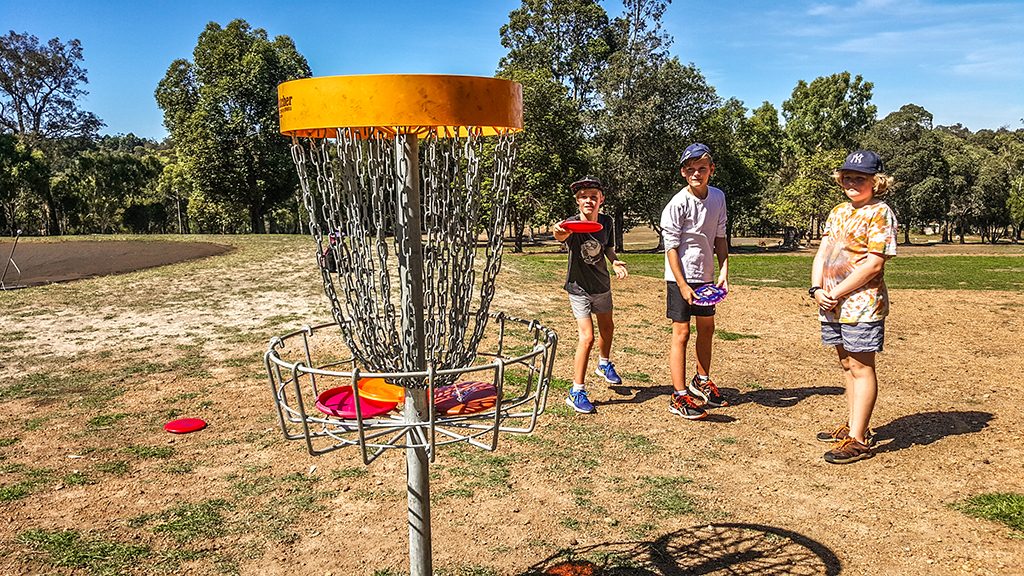
    • Keep kids safe when they play outdoors by taking some simple safety measures. First, don’t get a trampoline. They cause horrible accidents frequently and should only be used under careful supervision for training and exercise — not recreation. Second, don’t let your kids wear drawstring clothing. Drawstrings are accidents begging to happen because they can come untied and get snagged, cause kids to trip, and get hung up on toys and playground equipment. Thirdly, make sure all your playground equipment is totally safe. It should only be on a soft surface, not hard decking or concrete, and safely away from tall buildings, trees and structures.
    • Make sure your kids stay on your property by installing a fence to surround your yard. Fence companies charge an average of $4,500 to install a fence, but peace of mind is priceless. Before hiring a fence installer, it’s a good idea to review customer feedback and ratings. Always get three estimates and make sure the company is insured and licensed.
    • Most importantly, keep an eye on your kids when they’re outside. Outdoor play is healthy and good for children, but it can be dangerous. Monitor your kids and take steps to make sure they’re staying safe. You can’t prevent every accident, but there is a lot you can do to make sure your kids avoid accidents and injuries when they’re outside. (Doug: Consider getting a camera or two so you can see your backyard from a TV or computer.)

    Photo Credit Pexels.com

    Emily Graham

    • Emily is the creator of MightyMoms.Net. She believes being a mom is one of the hardest jobs around and wanted to create a support system for moms from all walks of life. On her site, she offers a wide range of info tailored for busy moms — from how to reduce stress to creative ways to spend time together as a family. You can email her at emilygraham@mightymoms.net. She lives in Arizona.
    Share this:
    Share this page via Email Share this page via Stumble Upon Share this page via Digg this Share this page via Facebook Share this page via Twitter Share this page via Google Plus

    Sensory Play For Toddlers Using Regular Household Items by Herman Samano

    Monday, July 5th, 2021

    Sensory Play For Toddlers Using Regular Household Items by Herman Samano is a must-read for any parent with young children. This article offers excellent advice for how to help a toddler better adapt to the world around them. Be sure to share with toddler parents you know. Thanks, Herman.

    Introduction

    • Growing children rely on their senses from birth onward to explore and make sense of their surrounding world. Through sight, hearing, touching, tasting, smelling, and even moving, young children process the information obtained through their senses, which informs their development. By enriching infant’s and young children’s experiences with sensory play activities, families can support their little one’s brain development.
    • Sensory play can take many forms. Parents can use household items or DIY toys to encourage toddlers to understand better and navigate their world. The different forms of sensory play can enhance brain development in many ways, which we’ll explore here. Learn how to engage your child with fun sensory development activities so that you can spur their development and nurture their well-being.

    SP 1

    What Is Sensory Play?

    • Sensory play refers to virtually any activity that can stimulate a child’s senses. It might involve splashing their hands during bathtime or touching the different textures featured in a “touch and feel” book. Children typically find these types of activities fun without knowing that the sensory information they obtain from these activities helps forge stronger connections in their brains to process and respond to sensory stimulation.
    • Sensory play helps children create a context for their sounds or the textures they come into contact with. They learn what the different sounds are and how to respond or not respond to them. For instance, when a car horn blares outside the home, a toddler might cry the first time they are disturbed by it. But after processing it and realizing this sound does not impede or impact them personally, they may learn to ignore it.
    • Linked to healthy childhood development, sensory play helps introduce children to their world in a safe, fun-filled environment. As kids develop an awareness of different sensations, they may become more excited to build on their developing knowledge base and better explore their surroundings through more playtime fun.

    Benefits of Sensory Play for Brain Development

    • By engaging in sensory play with your young children, you can better prepare them for the world. During their initial years of life, children’s brains grow quite rapidly. Parents can support this healthy development by helping children safely explore their world through each of their senses. Some of the key benefits your child is likely to experience through sensory play include the development of Fine and Gross Motor Skills.
    • As we know, children aren’t born with command over their motor skills. It takes time and practice to develop them. Learning how to manipulate their fingers and hands, use their arms for throwing, and their fingers for properly holding a pencil requires practice. The better developed your child’s fine and gross motor skills, the better they’ll be prepared for school or even enjoy playing at the park or with their toys more fully.

    Problem-Solving Skills

    • Life is filled with problems and challenges for humans of all ages. Solving them is integral to the human experience. Through play, toddlers can practice interpreting the world using their senses to solve small challenges such as building a block tower that doesn’t fall or sorting items with different shapes or colors. As they develop a knack for solving minor problems, they enhance their ability to solve problems of great difficulty.

    Social Interaction

    • Sensory activities can help children develop essential social interaction skills such as making eye contact, reading emotions in faces, or listening to others. By developing strong social skills, children may interact more comfortably and successfully with other children.

    Language Development

    • Language development happens gradually, but the more caregivers can promote this development, the better their child’s language skills. Good language skills will allow kids to communicate more effectively as they age. Sensory exploration has a significant impact on language and speaking domains of child development. Receptive and expressive language are some of the areas of language development that can be worked upon when a child engages in Sensory play. You can help your toddler using fun descriptive words while playing to introduce new vocabulary and promote sentence formation. Pretend play can really improve your child’s expressive language skills and verbal expression.

    What Is Sensory Processing Disorder?

    • Sensory processing disorder (SPD) refers to a condition that affects stimuli processing. Children affected by SPD are often susceptible to stimuli, but SPD can have the opposite effect, too; children may require a more significant amount of a particular stimulus before responding to it. SPD can affect many or even just one sense. While adults can have this disorder, they don’t usually exhibit symptoms as they’ve learned how to cope with them.
    • Most often, SPD is a condition seen in children. Some specialists view SPD as a singular condition that can occur independently, while other researchers believe it is more often than not a condition associated with other conditions such as autism spectrum disorder or attention deficit hyperactivity disorder.
      Symptoms of SPD may include:
      Exhibiting poor balance, coordination, or clumsiness
      Finding sounds to be too loud
      Finding lighting to be too bright
      Bothered to the point of gagging by certain food textures
      Feeling that clothing items are too scratchy
      Becoming upset by sudden movements, touches, or loud noises
    • Although there is no known way to prevent SPD, it is manageable. However, it typically takes time and considerable therapy to help children develop coping strategies to live with this condition. Doctors may recommend sensory integration therapy, occupational therapy, or a sensory diet, which consists of tailored activities that are chosen for a child based on their sensory needs. DISCLAIMER: These tips are based on the personal experience of the writer and are not meant to replace the advice of your healthcare professional. For questions or concerns, please talk to your licensed healthcare provider.

    SP 2

    How Sensory Play Can Prevent Picky Eating in Children

    • Many children have food aversions based on the textures of foods. This is common among children with SPD, but any child may develop a picky eating habit. Sensory play can reduce the tendency for picky eating, helping kids enjoy healthy eating habits. Often the sense of taste is indeed the deciding factor for whether or not a child will want to eat certain foods, but have you ever witnessed a child refuse to eat something because of the way it looked before they’ve ever tasted it?
      Through sensory play activities, parents can prevent kids from deciding whether or not they will eat a food merely based on its texture or appearance. Food texture aversion can be highly frustrating for both parents and kids. To help your children enjoy exploring new food textures and tastes, you may want to let them enjoy activities like helping you to cook. Their little hands can help form meatballs. You might even let them ‘paint’ with some spices, so they get used to seeing and smelling them. By spending time with ‘food’ in a positive context, they can become more comfortable with different textures and appearances.

    SP 3

    Creating a Designated Sensory Play Space at Home

    • Parents can create a space indoors and outdoors for sensory play. Consider outfitting your indoor play space with items such as:
      Busy boards (toys with knobs, dials, buttons, etc.)
      Touch and feel books
      Simple puzzles
      Play-Doh
      Building blocks
      Bristle blocks
      Fidget cubes
      Sensory table
      Sensory bins
    • When designing your outdoor sensory play area, you might include a:
      Swing
      Slide
      Sandbox
      Toddler gardening ‘tools’
      Baby pool
      Colorful sidewalk chalk
      T-ball set
      Of course, parents can supervise children in all kinds of ways to explore their world safely. They use many different household items to engage in sensory play. However, always be careful when using small objects with your little ones as they can be choking hazards. And, always, supervise your child around water.

    SP 4

    5 Sensory Play Activities Using Things You Already Have at Home

    • You may not realize it, but your home is full of a wealth of sensory items that you can feature during sensory playtime with your toddler. Here are just a few to inspire you to get started with sensory play:
      Pasta Pictures
      Pasta comes in all kinds of fun shapes and sizes. All you need are some different pasta shapes such as macaroni, cavatappi, rotini, and some construction paper and non-toxic paste. Encourage your child to paste the pasta to create pictures like a circle, a square, or even more complicated items that you trace for them like a star or a heart.
      Salt Dough Ornaments
      Don’t have Play-Doh? No problem. Using a combination of flour, water, and salt, you can whip up a batch of salt dough to create fun seasonal ornaments. Children will enjoy squishing the dough, rolling it, and forming it into shapes using their hands or cookie cutters. After you bake the ornaments so they’ll harden, you and your children can paint and decorate them with small pom poms, ribbon, or other odds and ends.
      Sensory Bin
      Create a sensory bin with different items and leave it out for daily stimulation. Provide plastic measuring cups and other tools for children to touch and explore on their own. You can swap in new items to keep them interesting. Here are some examples:
      Dry beans
      Edible sand
      Little toys
      Rice
      Cotton balls
      Shredded pieces of paper
      Tea Party
      Unless you’re having high tea with the queen, you don’t need a formal tea service to have a tea party. Plastic cups, some water, and a plate filled with cookies or apple slices will do just fine. The key is to let your child do the hosting. That means it’s their job to fill and refill your glass with ‘tea.’ It’s their job to serve your cookie.
      Pots and Pans Band
      Pots and pans, of course, make great drums. But there are many items around your house that children can use to make sounds. You can hand them a couple of spoons and allow them to make ‘music’ on the kitchen floor using items like pots, plastic colanders, boxes, and more.
    • Keep these ideas in mind as you prepare to engage your child in sensory play. One of the highlights of sensory play that we haven’t yet mentioned, of course, is all the fun you can have as you bond over these different activities. You’re sure to create some fabulous memories, so keep your camera handy.

    Hermann Samano

    • Hermann enjoys writing content that helps parents and kids with ideas to explore and learn together. He is passionate about gaming, music, roller skating, and outdoor activities. Seattle WA. You can email him at HermannSamano-t@porch.com.
    Share this:
    Share this page via Email Share this page via Stumble Upon Share this page via Digg this Share this page via Facebook Share this page via Twitter Share this page via Google Plus

    Serious Challenges for School Leaders in 2017 by Sam Jones

    Saturday, October 29th, 2016

    FatJoe
    Serious Challenges for School Leaders in 2017 by Sam Jones offers warnings and advice along with some additional valuable resources for anyone involved in education.

    Introduction

    • If you are at the head of a school going into 2017, you’re going to facing some serious challenges. These issues need to be overcome if your school is going to survive. But it’s not just schools that could be in trouble. Any educational platform could be affected by these problems and leaders need to be prepared. What type of issues am I talking about?

    Tech, Students And Teachers

    • Tech can be useful in the school environment for a variety of reasons. For instance, you can use an online school directory to keep everyone up to date and connected. It can be useful for making sure that different areas of school body aren’t segregated such as teachers, students and parents. But, there is an issue that we need to come to terms with when thinking about tech in schools. Your understanding of tech and the students understanding of tech is going to be different. Research shows that by middle age, most of us are already losing our grasp on technology. Essentially, this means the students are going to know more than us. The simple solution to this problem is to use that fact to our advantage. Let’s harness their minds and make sure we control but accept the ways they want to use tech to learn. It will benefit them and the teaching standards that we have in schools.

    Fun With Funding

    • It’s currently unclear what state the government will be in next year. However, you can bet that as always funding in education is going to be under severe constraint. This happens every year, and we need to start preparing for it now. School leaders need to know how to effectively cut costs without losing the higher standards of education. There are both large and small ways to do this. Almost every business is now looking at ways to use greener practices to save money. Like it or not, a school is a business, and it needs to be run like one. It might be worth in investing in ways to cut energy usage if it means costs will be lower. For instance, you may want to look into purchasing new solar panels for the roof of your school. I know what you’re thinking. How can we possibly afford that? Well, you can encourage parents to invest by explaining how it will benefit their children. You should also be price checking any supplies that you buy for your school.

    Bigger Student Populations

    • Gone are the days when you have a class of ten or fifteen students. Now, classes are typically three times that size, and this is a problem. Research shows that teachers can not successfully provide teaching to a class of more than thirty children. Some of the students will be missing out, and this will show through their quality of work. You must make sure that you are keeping class numbers low by hiring more teachers. Although this means excess costs for the school, it will drive performance levels higher. We have to remember that educating children must be the main goal, rather than saving money.
    • These aren’t easy problems to solve. But we need to think about how to tackle them now. Otherwise, our children’s standard of schooling will be rapidly sliding downhill.
    Share this:
    Share this page via Email Share this page via Stumble Upon Share this page via Digg this Share this page via Facebook Share this page via Twitter Share this page via Google Plus

    Seven Things That Can Spoil Your Relationship with the Students by Kate Khom

    Saturday, October 6th, 2018

    Learning
    Seven Things That Can Spoil Your Relationship with the Students by Kate Khom offers excellent advice to all teachers regardless of their experience. It also provides guidelines for administrators who have to observe and guide teachers.

    Introduction

    • Your most important job as a teacher is to create appropriate and pleasant conditions in which learning can take place while maintaining a good, stable relationship with your students. Your relationship with the students largely depends on your personality, attitude, and intentions. No teacher is ever identical to another teacher, just like every student is an individual. Teaching is certainly not an easy job, and it takes effort, time and experience to get better at it. However, there are certain things that you should always avoid doing in order not to spoil your relationship with the students.

    1. Being Cold and Distant

    • While it’s certainly important that you maintain your authority over the class, you should never allow yourself to become one of those cold and distant teachers that the students are scared of or uncomfortable around. If you act this way you will never be able to establish a good rapport with the students and you will surely hinder their learning because they simply will not feel comfortable enough in the classroom.

    2. Unwillingness to Elicit and Accept Honest Feedback

    • Sometimes, while teaching, we can unknowingly do certain things that can bother our students. Maybe you’re talking too quickly or using complicated language. Natalie Schwartz, a renowned author of multiple books on teaching, explains how to deal with this in her her article. “Eliciting feedback can entail asking a simple question such as, So how was the homework last night?” All in all, you have to elicit and accept feedback without getting angry or offended when you get it.

    3. Being Too Friendly

    • You absolutely should have a positive attitude towards your students and you should strive to create a pleasant learning environment in the classroom, but there is a difference between being a good teacher and being their friend. Make sure that they still remember that you are the teacher and that they have to listen to you.

    4. Being Hypocritical

    • There is always that teacher that strictly forbids students from using their phone in class, but when their phone rings, they pick up the call and chatter away, simply because they are the teacher and that ‘’gives them the right’’ to do something they don’t allow students to do. If teachers establish certain rules in class, then they need to remember that the rules have to apply to them too.

    5. Humiliating students

    • This one should go without saying, but you should absolutely never humiliate your students in any way. Melissa Kelly, a writer at ThoughtCo. says in her article that, if humiliated: ‘’The students will either feel so cowed that they will never feel confident in your classroom, so hurt that they will not trust you ever again, or so upset that they can turn to disruptive methods of retaliation.’’

    6. Flying With the Fastest

    • If you only pay attention to the students that speak first, you will definitely get a wrong impression about how easy or difficult the lesson is. Not everyone can learn at the same speed and by only paying attention to the best students, you will lose track of the rest of the class, which will make them feel inadequate and they won’t really understand the lesson. John Marks, an expert in classroom management from says that you should ‘’Try directing questions at individuals and sometimes actively ‘shh’ the loud ones, or simply not hear them.’’

    7. Unwillingness to Repeat or Explain

    • As Derrick Meador, a writer at ThoughtCo.claims in his article on teaching, ‘’You should never say things like: ’’I’ve already gone over that. You should have been listening.”Make sure that the students know that it’s safe to ask you about anything they find difficult or confusing. It is like R. J. Odora points out in his research study on using explanation as a teaching method “In the context of education, good explanation in teaching is essential for unlocking the students’ understanding of the subject.’’

    Conclusion

    • To conclude, as teachers grow in experience, their teaching improves, but until then, it is crucial that they learn to maintain a good relationship with the students. Hopefully, this article will help teachers understand what to pay attention to in their behavior and attitude towards the students so that everyone is happy and all the conditions for learning are met.

    Kate Khom

    • Kate is passionate writer and learner located in Kyiv, Ukraine. She likes to help people and make this world better. Feel free to chat with her on Twitter or check her website .
    Share this:
    Share this page via Email Share this page via Stumble Upon Share this page via Digg this Share this page via Facebook Share this page via Twitter Share this page via Google Plus