
Archive for the ‘What can Dr. Doug do for you?’ Category

What Schools Should Be Teaching About Nutrition by Craig Middleton

Friday, January 24th, 2020

Apple Pic
What Schools Should Be Teaching About Nutrition by Craig Middleton covers some of the basics of nutrition that schools should consider adding to their formal curricula. While there is a lot more to know, this is a good place for you and your kids to start.

Introduction

  • For a long time, many educators have pleaded that schools should teach more about problems that children will run into when they become adults. Adult challenges that some schools have started preparing students for include finances and general computer classes like teaching office software for example. Often disregarded is nutrition even though physical education is still typically required. Whether a school decides to integrate nutrition into their physical education or health classes or create a separate class, it should be part of every school’s formal curriculum.

The Truth About Sugar

  • Added sugar has been increasingly seen in more foods than ever in the United States and around the world thanks to initiatives like the U.S. Sugar Program. Making sure you don’t consume too much sugar is important as it can cause many different issues such as cavities, weight gain, and even diabetes. Teach kids how to read labels on food products so they can limit how much sugar they consume on a daily basis. Additionally, have them avoid or very sparingly consume high sugar products like soda and instead consume better alternatives like green tea or just water. Cutting down on sugar is one of the best ways you can live a nutritious lifestyle.

The Truth About Protein

  • Protein is a very important factor when building a diet for yourself. While protein is in so many foods, make sure to know which types of foods have the most like eggs, milk, beef, pork, fish, or chicken so you are able to build a well-balanced diet. Without protein, you can have deficiency issues that can stunt growth and make you more susceptible to infections. Additionally, you’ll want to eat more protein anytime you get into weightlifting as protein is what will help you build muscles. Make sure you fully understand protein when you want to know about proper nutrition.

The Truth About Dairy

  • Dairy is the group of products made out of the milk of mammals such as cows, goats, sheep, and more. These products all include cheese, milk, butter, ice cream, and more, and you probably have at least one of these on a daily basis. If you’ve ever had stomach problems, for example, make sure you don’t have lactose intolerance. Lactose is a sugar found in dairy products and the enzyme lactase is needed by people consuming dairy products to digest them without problems. Make sure you don’t have lactose intolerance when consuming dairy products and if you do, consider ways you can still have dairy products such as taking lactase supplements or going for lactose-free products. Understanding dairy products is important when living a nutritious lifestyle.

The Truth About Cell Health

  • Cell health is important as the more healthy your cells are the more energy you will have and the easier time you will have maintaining your target weight. Following proper cellular nutrition is important in gaining positive cell health. To do this, you’ll want to go for plant-based nutrients (fruits and vegetables) that will trigger your cells to become more healthy. Once you’ve started incorporating plant-based nutrients into your diet, you’ll see results down the line. Ensure that your cell health is good when you want to live a healthy nutritious lifestyle.

Conclusion

  • No matter what age the children you’re responsible for teaching are, it’s always a good time to start teaching about nutrition. While many kids won’t be able to plan their own diet until they become young adults, some will be able to pass on what they learn to their parents so they might cook better for them. Teaching nutrition at a younger age can also get them to be dead set on following a stricter diet once they are cooking on their own. Building knowledgeable kids for the future will make them happier and healthier adults.

Craig Middleton

  • Craig is a New York City-based retired business consultant, who is an expert in education and cultural trends. He has a Masters of Business Administration and a Masters in Education from St. Johns and loves sharing his knowledge on the side through his writing. If you have any questions or comments you can direct them to Craig at craigmiddleton18@gmail.com.
Share this:
Share this page via Email Share this page via Stumble Upon Share this page via Digg this Share this page via Facebook Share this page via Twitter Share this page via Google Plus

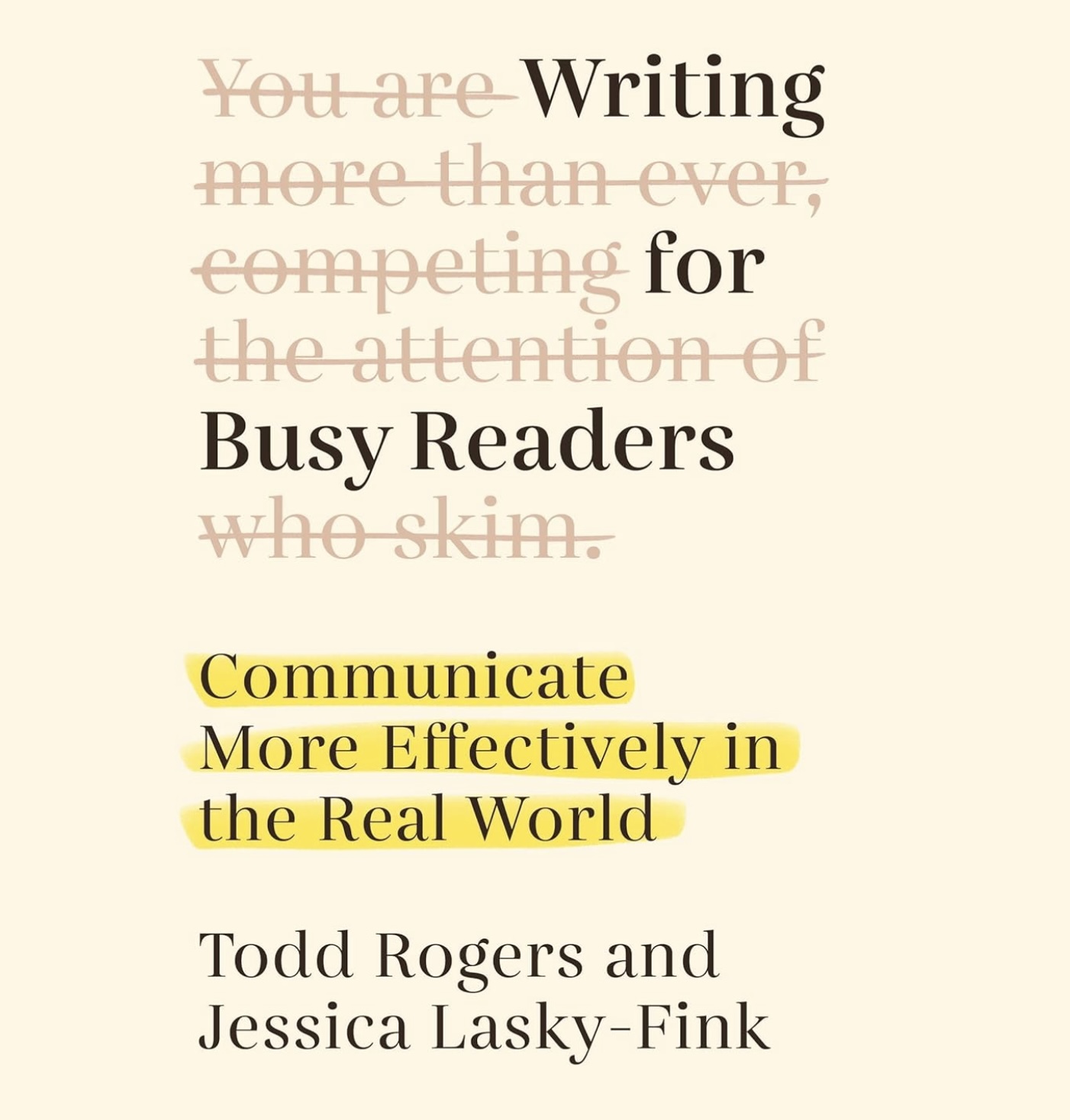
Writing for Busy Readers: Communicate More Effectively in the Real World by Todd Rogers and Jessica Lasky-Fink

Tuesday, November 11th, 2025

Writing
Writing for Busy Readers: Communicate More Effectively in the Real World by Todd Rogers and Jessica Lasky-Fink spells out the six principles you can follow to increase the probability that people will read, understand, and respond to what you write. Be sure to add it to your professional development library.

Introduction

  • This book sets out the six fundamental principles of effective writing. It should have a well-defined purpose, help the writer and the reader, not be beautiful writing, have a rigorous science underlying its rules, and have a real context. Busy people tend to skim, postpone, or ignore complex messages. The average professional spends nearly one-third of their time reading and responding to email. If messages are ineffective they impose a tax on the readers’ time. Voters, for example are likely to skip ballot questions that use complex language.
  • Much of what we learned in school is irrelevant or counterproductive in the real-world. The principles in this book are derived from the sciences of cognitive psychology, social psychology, behavioral economics, neuroscience, marketing, and time management. The authors draw on randomized studies and have worked hard to make this book easy to navigate. (Doug: I think they have.)

Part I: Engaging the Reader – 1. Get Inside Your Reader’s Head

  • Our brains have a limited ability to attend to and focus on multiple things, which also limits our ability to act. Unfortunately, we all tend to multitask, which is really task switching. When we switch from one task to another we are less efficient at both tasks and are more likely to commit errors. Even if we focus on a single task, we tire over time. Our writing, therefore, has to respect this landscape of stress and distraction.

2. Think Like a Busy REader

  • Readers first have to decide to engage. This usually depends on the envelop, which is the subject line for an email or the importance of the sender. They also need to decide when to engage. Most readers tackle things first that appear to be easier. They need to decide how much time to engage where the decision to skim or scan comes in. Scanning involves reading things like headings and the first sentences of paragraphs. Finally, they have to decide whether to respond. To increase the probability the request has to be clear so the reader knows the task and how to do it. Make it as easy as possible. Above all, know your goals.

3. Know Your Goals

  • Effective writing is about transferring key information from writer to reader. What is the most important information you want your reader to know? You cannot achieve your goals as a writer if you are unclear on what those goals are.
Share this:
Share this page via Email Share this page via Stumble Upon Share this page via Digg this Share this page via Facebook Share this page via Twitter Share this page via Google Plus

Zlibrary and the Evolution of Reading as a Daily Practice by Sharie Magnano

Thursday, January 15th, 2026

REading

Zlibrary and the Evolution of Reading as a Daily Practice

  • The habit of reading shifts with each generation yet its pulse remains steady. An e library now sits at the center of this steady beat and helps readers follow stories knowledge and ideas with ease. Screens glow where lamps once stood though the spirit of quiet discovery feels the same.
  • As this shift settles in z-library continues to inspire curiosity and lifelong reading habits. Readers drift through vast shelves of thought without hurry and with a sense of freedom that mirrors long afternoons spent in a favorite nook. This gentle flow turns reading into a calm ritual that fits into any moment.

The Rise of Accessible Reading

  • E reading has grown into a simple routine for many people. Books that once filled backpacks or bedside tables now live in small pockets of light. This shift makes reading feel natural like tapping a shoulder of an old friend. Each book builds a bridge to deeper thought and each session brings a spark that carries into daily life.
  • This wider reach also supports different styles of reading. Some people settle into long novels while others move between short essays or poems. Both paths create steady growth. Both keep minds awake. A library that sits in one digital doorway opens these paths with no fuss and no pressure.
  • Now the flow of stories and ideas leads toward a rich mix of experience:

Echoes of Community

  • Shared moments form when a reader finds a story that speaks to lived experience or sparks a new idea. These echoes may travel through conversations or journals or quiet reflection. Each one adds weight to daily reading and turns it into a personal anchor.

Growth Through Variety

  • A shift in genres often shapes the inner voice. A mystery beside a history text or a poem next to a science book can stretch thought and soften old boundaries. This variety becomes a gentle teacher that guides readers without feeling like work.

Quiet Strength in Routine

  • A steady practice of reading can ground a busy day. It feels like breathing fresh air after hours indoors. The mind settles and the heart steadies through small moments spent with trusted books.
  • This blend of shared echoes bright variety and quiet strength enriches the rhythm of reading and encourages a return each day.

Expanding Horizons Through E Libraries

  • Modern reading tools now provide a home for deep study and playful wandering. A single tap can pick up a paused page of a novel or jump into a section of a reference book. Switching between fields encourages new connections and sparks ideas that might stay hidden on printed shelves. The path may twist yet it stays warm and inviting.
  • Growth also appears when readers look for fresh voices. Stories carry the weight of culture memory and imagination. In this search a reader may drift toward a helpful source such as z lib.pub which adds another doorway into wide and varied shelves.

A Living Practice That Keeps Evolving

  • Reading keeps its place in daily life because it welcomes every stage of growth. It adapts to short breaks long nights and wandering thoughts. It shapes memory and fuels dreams. Each page holds a mirror a map or a gentle lantern. In this light reading becomes more than habit. It becomes a steady companion that walks with each curious mind.

Sharie Magnano

  • Shelly works as a freelance copywriter specializing in content and editorial projects. I’m based in USA and collaborate with clients worldwide
Share this:
Share this page via Email Share this page via Stumble Upon Share this page via Digg this Share this page via Facebook Share this page via Twitter Share this page via Google Plus

Parents Can Nurture Leadership Skills from an Early Age Using These Strategies by Emily Graham

Saturday, February 7th, 2026

Graham

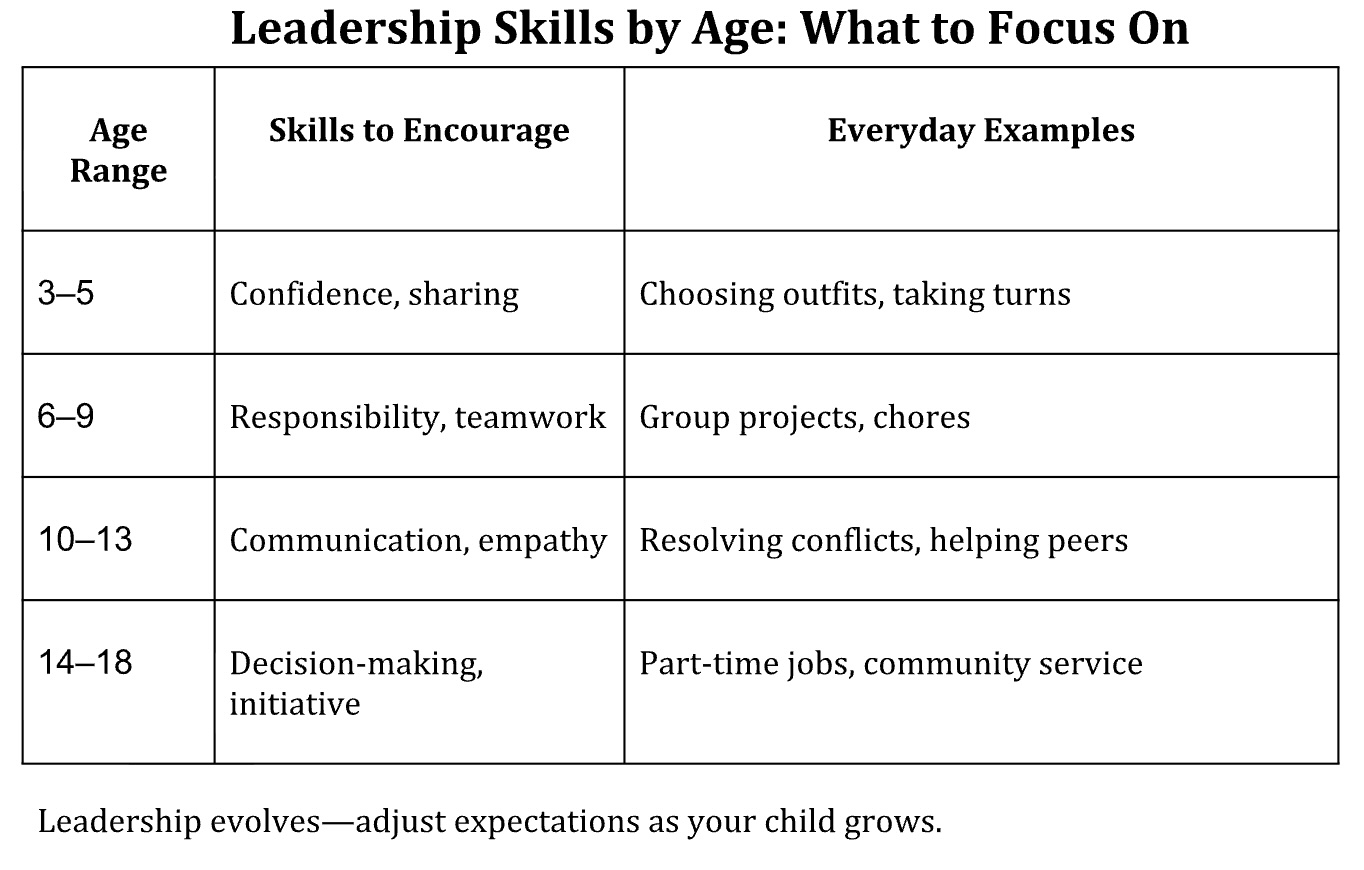
Parents play a defining role in shaping how children see themselves, others, and their
ability to influence the world. Leadership isn’t just about being in charge—it’s about
confidence, empathy, problem-solving, and responsibility. When parents intentionally
foster these traits early, children are more likely to grow into adults who can guide,
collaborate, and adapt in meaningful ways.

A Quick Snapshot for Busy Parents

Leadership skills grow through everyday moments, not formal titles. Children learn
leadership when they’re trusted with choices, encouraged to speak up, allowed to fail
safely, and shown what responsibility looks like in real life. Small, consistent actions at
home compound into lifelong skills.

Why Leadership Development Starts at Home

Children don’t learn leadership in a vacuum. The home environment sets expectations
around communication, accountability, and initiative. When parents invite kids into
conversations, routines, and decision-making, children begin to understand that their voice
matters—and that leadership involves listening as much as speaking.

Practical Ways Parents Encourage Leadership

Here are several approaches that work especially well when woven into daily life:
● Give age-appropriate responsibility. Chores, pet care, or planning a small family
activity teach ownership.
● Encourage independent thinking. Ask “What do you think?” before offering
solutions.
● Model emotional regulation. Calm responses during stress show children how
leaders handle pressure.
● Let kids solve problems. Resist the urge to fix everything immediately.
● Praise effort, not just outcomes. This reinforces resilience and growth.
These actions signal trust—and trust is the soil where leadership grows.

A Simple How-To: Building Leadership at Home

Follow this weekly rhythm to keep things natural and low-pressure:

1. Invite participation. Let your child help choose meals, weekend plans, or family
rules.
2. Rotate leadership moments. One child leads game night, another leads cleanup.
3. Reflect together. Ask what went well and what could improve.
4. Normalize mistakes. Share your own learning moments out loud.
5. Celebrate initiative. Notice when your child takes action without being asked.
Consistency matters more than intensity here.

Leading by Example Through Learning

Children absorb what parents do far more than what they say. When parents pursue
personal growth—especially education—it sends a powerful message about ambition,
discipline, and lifelong learning. Advancing your career by earning an online degree
demonstrates commitment and forward thinking, traits children associate with leadership.
For parents interested in making a meaningful difference, pursuing a healthcare-focused
path can be especially impactful, allowing you to contribute to the well-being of individuals
and families. Online education also offers flexibility, making it possible to balance work,
learning, and parenting without sacrificing family time. Parents exploring options like
health administration programs online often find that their dedication inspires similar
motivation and confidence in their children.

Graham

Common Questions Parents Ask

  • Isn’t leadership something kids are born with?
    Some children are naturally outspoken, but leadership skills can be learned and
    strengthened in every child.
  • What if my child is shy?
    Quiet children can be excellent leaders. Focus on listening skills, empathy, and confidence-building rather than dominance.
  • Can too much responsibility overwhelm kids?
    Yes—balance is key. Responsibilities should stretch, not stress.
  • Do extracurriculars matter?
    They help, but leadership can develop just as effectively through family life and everyday
    interactions.
  • A Helpful Parenting Resource Worth Exploring

    For parents looking to deepen their understanding of child development and leadership-
    related behaviors, the American Psychological Association offers evidence-based guidance
    on raising confident, resilient children. Their parenting resources provide practical insights
    grounded in research.
    Leadership isn’t taught through lectures—it’s lived through example, trust, and everyday
    choices. By creating space for responsibility, reflection, and growth, parents give children
    the tools to lead in their own way.

    Emily Graham

    Emily is the creator of MightyMoms.net. She believes being a mom is one of the hardest jobs around and wanted to create a support system for moms from all walks of life. On her site, she offers a wide range of info tailored for busy moms — from how to reduce stress to creative ways to spend time together as a family. You can email her at emilygraham@mightymoms.net. She lives in Arizona.

    Share this:
    Share this page via Email Share this page via Stumble Upon Share this page via Digg this Share this page via Facebook Share this page via Twitter Share this page via Google Plus

    Parents Can Nurture Leadership Skills from an Early Age Using These Strategies by Emily Graham

    Bard Does a Lesson Plan – If You Are Still Teaching, You Should Use This.

    Thursday, November 16th, 2023

    Bard
    I asked Google’s Bard to “Prepare a lesson plan to teach the quadratic equations at the high school level.” Below is what I got back. My conclusion is that if I were still teaching, I would always ask for Bard’s plan before I made my own. I might not use Bard’s plan, but I would look to it for ideas. I would certainly share the Additional Resources links with my students. If you are still teaching, why aren’t you doing this? This is probably more detailed than your real lesson plans and will impress your principal.

    Lesson Plan: Quadratic Equations

    Grade Level: High School

    Subject: Algebra II

    Time: 50 minutes

    Learning Objectives

    Students will be able to identify and define quadratic equations.
    Students will be able to graph quadratic equations.
    Students will be able to solve quadratic equations using factoring, completing the square, and the quadratic formula.
    Students will be able to apply quadratic equations to real-world problems.

    Materials

    Whiteboard or projector
    Markers or pens
    Graph paper
    Calculators (optional)
    Worksheets (optional)

    Procedure:

    Introduction (5 minutes)

    Begin by asking students what they know about quadratic equations.
    Elicit responses from students and provide a brief overview of the topic.
    Explain that quadratic equations are polynomial equations of the second degree, meaning they have a highest power of 2.

    Identifying Quadratic Equations (10 minutes)

    Display a variety of equations, some quadratic and some not.
    Ask students to identify which equations are quadratic and explain their reasoning.
    Provide examples of quadratic equations in various forms, including standard form, factored form, and vertex form.

    Graphing Quadratic Equations (10 minutes)

    Review the concept of graphing equations in general.
    Introduce the concept of the axis of symmetry for quadratic equations.
    Demonstrate how to graph quadratic equations using vertex form.
    Allow students to practice graphing quadratic equations on their own or in pairs.

    Solving Quadratic Equations (20 minutes)

    Introduce three methods for solving quadratic equations: factoring, completing the square, and the quadratic formula.
    Explain each method step by step, using examples to illustrate the process.
    Provide students with practice problems to solve using each method.

    Real-World Applications (5 minutes)

    Discuss real-world situations where quadratic equations can be used to model problems.
    Provide examples of such problems, such as calculating the height of an object launched into the air or determining the profit or loss of a business venture.
    Encourage students to think of their own examples of real-world applications of quadratic equations.

    Closure (5 minutes)

    Summarize the key points of the lesson.
    Review the different methods for solving quadratic equations.
    Encourage students to ask any remaining questions.

    Assessment

    Observe students’ participation in class discussions and activities.
    Collect and review worksheets or homework assignments.
    Administer a quiz or test to assess students’ understanding of the material.

    Differentiation

    For students who need more support, provide additional practice problems with worked-out solutions.
    For students who are ready for more challenging material, introduce the concept of complex numbers and solving quadratic equations with complex roots.

    Additional Resources

    Quadratic Equations
    Solving Quadratic Equations
    Real-World Applications of Quadratic Equations

    Share this:
    Share this page via Email Share this page via Stumble Upon Share this page via Digg this Share this page via Facebook Share this page via Twitter Share this page via Google Plus

    Dr. Doug Green’s Advice to Prospective Parents

    Monday, June 27th, 2022
    Parenting

    Dr. Doug Green’s Advice to Prospective Parents

    Twitter: @DrDougGreen

    Introduction

    • I was recently invited to a baby shower for my massage therapist. In addition to a card and some money, I included the following advice. It was very well received and appreciated so I thought I would share it with the readers of this blog who can pass it along to any expectant parents and parents of young children they know.

    Congratulations

    • Congratulations on almost being parents. While I’ve only raised one child my wife and I must have done something right given her success in the New York City art scene. I think the big idea is to always encourage, and never discourage.

    Don’t Stifle Artistic Interests

    • When my daughter told us she wanted to “make cartoons” when she was five it would have been easy to pooh pooh the idea and not support it as neither of us were artistic and we both had other ideas about our child’s career options. Our vision, however, was to do just the opposite.
    • We made sure that she always had lots of art supplies, took her to every museum possible, paid for some private art lessons, and sent her to a summer program at the Ringling School of Art and Design prior to her senior year in high school.
    • We then helped her with her application to Pratt Institute in Brooklyn, NY and dug deep to pay for it. After graduating with high honors she has been working nonstop since 2006 in a field she loves.
    • Like most non-starving artists she is working for a company and doing what the boss wants. (The Tampon Hall Show on ABC) While she likes her work, it isn’t exactly the work she would do if left to her own passion. This is what she does in her free time, which seems to be typical in the art community.

    What Else Did We Do?

    • Here are some other things we did. There was no TV in her bedroom. If she wanted to watch TV at least one of us was nearby. We made sure that she engaged in exercise including dance lessons.
    • When we went somewhere she almost always went with us and we never took a vacation without her. We engaged her in lots of conversations and asked a lot of questions. I read to her every night at bedtime until she could read just about anything herself.
    • We had high expectations of her performance in school and helped with homework when she asked for help. When necessary, we intervened with her teachers.
    • In one case when she earned a bad grade (35%) on her first algebra test we meet with the teacher who suggested that she drop out of advanced math. We politely told the teacher that was not a option and that we would help with her homework.
    • Nearly every day before dinner I sat with her and helped with her homework. I realize that many parents might not be able to do this, but do what you can and find help somewhere. At the end the year we were rewarded with a 100% on the New York State algebra regents.

    You Are Not too Young to Spill Paint or Break Eggs

    • I let her paint the basement floor when she was three. This made sense as there was no downside to spilling the paint. I let her crack eggs in the kitchen when she was five. It’s hard to miss when the goal is to break an egg and any five-year-old can fish pieces of shell out of cookie dough.
    • I let her mow our lawn with our gas-powered lawn mower when she was nine. It automatically shut off if you took your hands off of the handle so it seemed safe. Unfortunately for me, this chore only seemed like fun a few times so it wasn’t long before I had that job back.
    • She painted all of our woodwork when she was twelve. By then she could paint a strait line as least as well as I could so I just got out of the way. Unlike the lawn mower she stuck with this chore.
    • Prior to leaving for college she executed her own redesign of one of our bathrooms. This involved designing and making templates for patterns that were applied around the ceiling and on the walls. She also got a job painting her own designs on local clothing donation bins.

    You Don’t Learn Much Doing Unskilled Labor

    • We did not even mention the idea of getting an unskilled part-time job and she never mentioned it as it would take time away from her artistic endeavors.
    • As a result of the skills she had honed with our support, she earned a total of $36,000 in merit-based scholarship money from Pratt. This was far more than any unskilled part-time job would have brought in.

    Know Their Friends

    • We always knew who her friends were and got to know the friend’s parents. When she was invited to parties in high school I always took her and went inside to say high to the parents. If I didn’t like the atmosphere we both left.
    • In short, she was more of a friend than a child, but she knew who her parents were and that we were in charge.
    • I believe you will be great parents and I’m so glad that people like you are having children. Please consider using this money to start a savings account for your baby. Someone did that for my parents when I was born and it had a lot to do with making me a saver. Not having to worry about money is a real blessing.

    Good luck and God bless: Dr. Doug Green.

    Share this:
    Share this page via Email Share this page via Stumble Upon Share this page via Digg this Share this page via Facebook Share this page via Twitter Share this page via Google Plus

    Hello world!

    Monday, August 31st, 2009

    Welcome to my blog. The purpose of the blog is to provide free content that will serve as bite-sized staff development material for practicing school administrators, people who wish to be administrators some day, teachers, and parents. I also hope that it will generate some discussion that we can all share to help with your day jobs and life in general.

    Share this:
    Share this page via Email Share this page via Stumble Upon Share this page via Digg this Share this page via Facebook Share this page via Twitter Share this page via Google Plus

    Help Kids Choose a Major – Guest Post

    Thursday, December 6th, 2012

    How to Help Your Child Choose a Major
    College comes with so many different decisions, and quite a few of them involve the major that a student is going to pursue. Before they begin school, have an open and honest discussion with your children to aid them in selecting the best major for them. This sound advice also apply to teachers as they try to advice students regarding which path to follow. Here’s what you need to know.

    Share this:
    Share this page via Email Share this page via Stumble Upon Share this page via Digg this Share this page via Facebook Share this page via Twitter Share this page via Google Plus

    High-Stakes Standardized Testing in Schools: The Pros and Cons – Written by Google’s Bard

    Tuesday, September 12th, 2023

    Bard
    I decided is was time to try artificial intelligence for article writing so I took Google’s Bard for a spin. I gave it the prompt “Write a 1000 word article on the pluses and minuses of high-stakes standardized testing in schools” and a few seconds later it offered the article below. See what you think. Can you tell it was written by AI and not a human educator like myself? If I were working the education beat for most media outlets, I would be a bit nervous. I also asked for a “a short story in Swedish about a day at the beach.” What I got was a valuable lesson for someone like myself who has intermediate Swedish skills. Share with foreign language teachers you know. If you want to try it yourself just click here.

    High-Stakes Standardized Testing in Schools: The Pros and Cons by Google’s Bard, prompt by Dr. Doug Green

    Standardized testing has been a part of American education for over a century. In recent decades, however, the use of standardized tests has become increasingly widespread, with many states and school districts now using them to make high-stakes decisions about student promotion, teacher evaluation, and school funding.

    High-stakes standardized tests are those that have significant consequences for students, teachers, or schools. For example, a student who fails a high-stakes test may be held back a grade, a teacher whose students perform poorly on a high-stakes test may be fired, or a school that does not meet its performance goals on a high-stakes test may lose funding.

    There are both pros and cons to using high-stakes standardized testing in schools.

    Pros of High-Stakes Standardized Testing

    Accountability: High-stakes standardized tests can help to hold schools and teachers accountable for student learning. By requiring schools to demonstrate that their students are meeting certain standards, high-stakes tests can help to ensure that all students have access to a quality education.
    Data for improvement: High-stakes standardized tests can provide valuable data that can be used to improve instruction and student learning. For example, test scores can be used to identify areas where students are struggling and to target interventions.
    Fairness: High-stakes standardized tests can help to ensure that all students are treated fairly, regardless of their background or circumstances. By giving all students the same test, high-stakes tests can help to level the playing field.
    Motivation: High-stakes standardized tests can motivate students to work hard and achieve their goals. The prospect of failing a high-stakes test can be a powerful incentive for students to study and do their best.

    Cons of High-Stakes Standardized Testing

    Overemphasis on test scores: When high-stakes tests are used to make important decisions about students, teachers, or schools, there is a tendency to overemphasize test scores. This can lead to a narrowing of the curriculum and a focus on test preparation at the expense of other important learning goals.
    Inaccuracy: High-stakes standardized tests are not perfect measures of student learning. They can be affected by a variety of factors, such as test anxiety, fatigue, and socioeconomic status. As a result, high-stakes test scores can sometimes be inaccurate and misleading.
    Disadvantaged students: High-stakes standardized tests can disadvantage students from disadvantaged backgrounds. These students may have less access to resources and support, and they may be more likely to experience test anxiety. As a result, they may score lower on high-stakes tests than their more privileged peers.
    Stress and anxiety: High-stakes standardized tests can cause stress and anxiety for students, teachers, and parents. This stress can have a negative impact on learning and well-being.

    Conclusion

    The use of high-stakes standardized testing in schools is a complex issue with both pros and cons. There is no easy answer to the question of whether or not high-stakes testing is a good thing. Ultimately, the decision of whether or not to use high-stakes standardized testing is a political one that must be made by each state and school district.

    In recent years, there has been a growing movement to reduce the reliance on high-stakes standardized testing. Some states have eliminated high-stakes testing altogether, while others have moved to reduce the stakes associated with testing. This movement is based on the belief that high-stakes testing is not an effective way to improve education.

    The debate over high-stakes standardized testing is likely to continue for many years to come. There is no easy solution to this complex issue. However, it is important to have a thoughtful and informed discussion about the pros and cons of high-stakes testing so that we can make the best decisions for our students.

    Share this:
    Share this page via Email Share this page via Stumble Upon Share this page via Digg this Share this page via Facebook Share this page via Twitter Share this page via Google Plus

    How to Know When It’s Time to See a Chiropractor? by Dr. Brent Wells, D.C.

    Thursday, July 2nd, 2020
    Woman holding hed 2

    How to Know When It’s Time to See a Chiropractor?

    by Dr. Brent Wells, D.C. is a good place to start if you are having pain or issues with your back or other joints. I have gone to chiropractors for many years and they have “fixed” a number of nagging issues for me. They will want to see you on a regular basis, but if you can’t afford that they can at least offer relief in the short run.

    Introduction

    • It can be difficult to know when is the right time to see a chiropractor. While it might be easy to ignore or muster through pain and limited movements, this can drastically affect your lifestyle. If you’re not able to move or do the things you love it can prove to be very troublesome, both mentally and physically. Below are a few signs that you can use to tell when it might be time to make an appointment.

    The Benefits of Using Chiropractic Care

    • Using chiropractic care comes with a handful of health benefits. One of the most important is that it helps to decrease tension and improve flexibility. Regular treatments can also naturally treat degenerative joint and tissue problems, such as arthritis.
    • Chiropractors also use massage therapy to help with relieving pain and inflammation. If you’re a little nervous about having adjustments done, you could instead opt for a healing massage. In addition to this, physical rehab is usually offered. This can help with improving your range of motion while using hands-on techniques to train your body.

    How Often Should You Get a Chiropractic Adjustment?

    Man Holding Head

    Six Signs That You Need to See a Chiropractor

    • 1. You Have a Limited Range of Motion
      One of the most tell-tale signs that you need to see a chiropractor is that you have a limited range of motion. This indicates that your body has a joint problem that is limiting your mobility. Why this happens depends on various issues, but it’s mainly caused by arthritis or spine injuries. A chiropractor will help to realign your joints and muscles by doing different types of manipulations. They will feel around areas on your back, neck, and shoulders, to find places of tension. They might even ask you to do specific stretches so they can better see how your body moves. Once they identify problematic areas, they will expertly move your body in a way to help provide relief. This will also improve circulation in the area which can prevent future flexibility issues.
    • 2. You’re Suffering From Chronic Pain
      If you suffer from chronic pain, such as in your face, back, or neck, it might be time to stop by a chiropractic office. Chronic pain can be treated by a chiropractor with the use of spinal manipulations. Because your spine interacts with most areas of your body, these manipulations will help to treat inflammation and tension almost anywhere.
    • 3. You Have Intense or Frequent Headaches
      Headaches are caused by a variety of different things. This includes stress, tension, spending too much time on the computer, environmental stimuli, or an underlying medical condition, like extreme intracranial pressure or tumors. A chiropractor will adjust your neck in certain directions to help release tension. Known as cervical manipulation, this adjustment uses force to apply pressure to your neck’s joints. This helps to realign them while also reducing any pressure in surrounding muscles. Besides adjustments, your chiropractor will also recommend natural ways to prevent headaches, such as avoiding teeth clenching and drinking plenty of water. After a few treatments, you should find that your headaches will decrease in their pain and number.
    • 4. There’s Shooting Pain Down Your Legs
      Shooting pain down your legs shows that your body is having nerve problems, such as sciatica, or has a herniated disc.
      To help relieve this pain, a chiropractor will do spinal manipulations. These will stop muscle spasms while also releasing endorphins to help naturally relieve pain. A handful might also use a special device, such as an activator, that stimulates your nerves. Rather than using their hands, a chiropractor will move this device up and down your spine to apply short impulses to surrounding joints, muscles, and nerves.
    • 5. You Have Severe Sinus Congestion
      Some might be surprised to learn that chiropractors can help with healing sinus congestion. In fact, chiropractors often successfully treat this issue without you needing to take medications for it. By using manipulations on your upper spine, they’ll be able to release pressure around your main sinus passageway resulting in fluid drainage. They might also apply pressure to certain portions of your face near the nasal cavities to stimulate the nerves.
    • 6. You Tend to Sit Often
      If you have a job that requires you to sit for hours each day, you might want to stop by a chiropractic office. A sedentary life can put a lot of pressure on your spine, especially if you use a poor sitting position. Chiropractic care can improve your spine’s health and encourage you to use correct posture. (Doug: You should also look into getting a desk that lets you stand or sit.)
    • Knowing the right time to see a chiropractor can be tough. By keeping these tips in mind, you’ll know when your body requires this extra help. Check out the references below for more information.

    Dr. Brent Wells, D.C.

    • Dr. Brent Wells, D.C. is the creator of Better Health Chiropractic & Physical Rehab which has multiple locations throughout Alaska. He belongs to the American Academy of Spine Physicians (AASP) and the American Chiropractic Association. He founded Better Health Chiropractic & Physical Rehab and has been a chiropractor for over 20 years. His practice has treated thousands of patients from different health problems using services designed to help give long-lasting relief.
    • Dr. Wells is also the author of over 700 online health articles that have been featured on sites such as Dr. Axe, Organic Facts, and Thrive Global. He continues his education to remain active and updated in all studies related to neurology, physical rehab, biomechanics, spine conditions, brain injury trauma, and more.

    References

    Share this:
    Share this page via Email Share this page via Stumble Upon Share this page via Digg this Share this page via Facebook Share this page via Twitter Share this page via Google Plus