How To Understand Your Teens by Robert Lorris who writes about parenting, personal finance & more at Home Insurance Dot Org offers this guest post to help both parents and teens enjoy a more productive existence. The four main points of advice are good for both parents and teens to contemplate and follow. Thanks to Guest Post U at The University of Great Content for this sound advice.
Archive for the ‘Guest Posts’ Category
How To Understand Your Teens – Guest Post
Saturday, October 20th, 2012How Writing Can Boost Your Creativity and Help You Inspire Others by Samantha Anderson
Friday, June 23rd, 2017
How Writing Can Boost Your Creativity and Help You Inspire Others by Samantha Anderson offers some specific ideas to help budding writers be more creative and inspire others.
Introduction
- Everyone is a writer. The only difference between genuine writers and people who self-proclaim to be writers is that the former boost their creativity and inspire others through their writing. History has a lot of examples that show how writers can be a source of inspiration to others – friends, family, and neighbors. However, this thought is largely substituted by viral stories and news that are shared across social media by individuals.
- The significance of “writing” has either been forgotten or lost in the vast sea of information exchange. Today, everyone – from college students to working professionals, teachers to intelligent readers, thought leaders to managers – see writing as a monotonous activity and one that is a mere requisite to explain oneself in this world. Only when this thought changes and when one considers writing as an art can they achieve the unsung benefits of good old writing.
Benefits of Writing
- While there are tons of benefits of writing – some of which are obvious – the following are the ones that focus on creativity, inspiration, and enlightenment.
- Boosts Creativity: All writers have this marvelous trait of not being perfect. One can ask established writers and figure out that they have left the idea (or the myth) of perfectionism far behind. They instead focus on being prolific. According to Creative Blog, a writer is better off writing ten sentences than trying to perfect one sentence. What this does is create a projection in the writer’s mind about the possibilities. Instead of focusing on a single stream of thought, the writer is creating more streams while writing nine more sentences.
- This is exactly what creativity looks like. Being prolific is just one trait. There are many more factors that help one boost one’s creativity, such as:
* Brainstorming and thinking of new ideas
* Using new words, improving one’s vocabulary
* Creating stories - Writing does not necessarily have to be about paper or essay writing. By using Write My Paper Today, for example, a graduate student looking to complete her generic mid-term essay can outsource the work and instead focus on writing a short story. (Doug: these sites that write essays will also give feedback on student writing. This strikes me as a better way to use them.) When a person starts thinking and writing about a topic or theme that he/she is interested in, more thoughts pour in – thus boosting creativity.
Inspires Others to Act
- What do journalists do? They make their audience react through the power of words and some hard journalism. That is basically it when one talks about inspiration from writing. In schools and colleges, writing groups motivate their fellow members and friends to start writing so that they can jot down their thoughts. It not only helps in de-stressing but also acts as an instrument for introspecting. Individuals looking to shape their career as a writer can seek writing help from their more established peers. This way they can not only learn directly from the masters but also improve their own writing.
Get Enlightened
- As mentioned in the previous point, one can seek enlightenment from writing. Studies show that when a person writes down thoughts on a piece of paper (over typing on an electronic device), the writer makes those thoughts a bit stronger. One’s mind remembers these thoughts and tries to sample them whenever a similar topic comes to the fore.
- The biggest weapon of a good writer is the power to retain what one reads and thinks. And the first step to retaining more of what one reads is to write down everything that comes to the mind. It is true that majority of what is written down may not be helpful, but if one can take advantage of even a small part of this information, it can aid in carving their personality as a writer. These three are the primary benefits of writing. People should not look at writing as a mode of communication but instead as something that helps them live a better life by boosting creativity, inspiring others, and gaining enlightenment.
Samantha Anderson
- Samantha is Educator from the sunny California. She’s keen in blogging and enjoys an active way of life. She loves open-minded people and find pleasure in chatting with them.
I Want To Live/Study in Canada. What Are My Options? by Danielle Ward
Thursday, August 24th, 2017
I Want To Live/Study in Canada. What Are My Options? by Danielle Ward explains why you might want to consider heading North for your college education. Most Americans will find Canada an easy place to adapt to and an enjoyable environment to live in.
I Want To Live/Study in Canada. What Are My Options?
- Gone are the days when high-school graduates had limited options and courses to pursue in college. Today, freshmen can apply for foreign universities and courses in almost every field of study ranging from engineering and medical sciences to literature and management. Over the years, Canada has become an increasingly popular destination for international students owing to its liberal policies and prestigious universities.
Why Study in Canada?
- Canada has yet again claimed the number one spot for being the “the best place to study/live” in three consecutive years attracting students from all corners of the world to apply in one of the top 98 universities there. Harboring one of the longest coastlines, vast wild forests and world-class cities, the country is known for its tolerant and diverse environment that promotes education and investment. Here you get a wide range of courses and programs to choose from. Be it a bachelor’s course or masters and Ph.D. program, you can get it all here.
Top Colleges and Institutes in Canada
- With so many international courses and affordable college programs, it is only natural that the country would attract students from around the globe. The powerful post-secondary education system offers lucrative graduate, post-graduate and doctorate programs for aspiring candidates. Students can have their pick from over 10,000 undergraduate and graduate courses from 98 universities and 175 community colleges. Some of the top universities here include the McMaster University, University of Alberta, Queen’s University, University de Montreal, University of British Columbia, University of Toronto, University of Calgary, University of Western Ontario, and York University. In 2009, some institutions also designed a Student Partner’s Program or SPP where Canadian colleges collaborated with other universities fostering foreign students who wanted to pursue a degree-course there.
Some Useful Tips For Foreign Students Who Want to Apply
- International students applying for Canadian universities should keep in mind these tips for boosting their chances of getting accepted successfully in their dream institution
1) Look for colleges that offer SPP programs as they allow international students to temporarily stay in Canada and complete their course.
2) The students selected under the SPP programs also have a relatively easy visa approval process and don’t require much documentation as well.
3) Apply for a student permit at the visa office for smooth immigration.
4) Apply for scholarships and request for concessions in order to reduce the burden of handling the expenses all by yourself.
5) You can even apply for student loans and funding options that have a lower interest and repayment rate than regular loans.
6) Aim for a higher score in the entrance tests such as IELTS, GMAT, SAT, and GRE as it really enhances your chances of getting in.
7) International students can even check out colleges that have affiliations with language schools to improve their English.
Cost of Living in Canada
- (Currently 1 Canadian dollar costs 80 cents US.) Canada is a lot cheaper than most other places in America. The courses and programs there cost about half as much as what they would charge in the US. Even the annual living expenses are pretty affordable ranging from CAD 7,000 -14,000. Students who have opted for inclusive accommodation have to spend even less, roughly CAD 4,000 to CAD 9,000 per year. Students can even apply for part-time jobs Work from home or event management jobs like experiential marketing. and paid internships that would lessen their burden. Even the food and transport is inexpensive here compared to the other places in America.
Accommodation Options
- International students can either opt for the inclusive accommodation facilities i.e. stay within the university grounds in dorm rooms and hostels or rent an apartment. There are many housing options to choose from depending on the facilities and budgetary limitations. The student residences cost roughly CAD 250 – 600 per month while the university home-stays are priced somewhere between CAD 400 – 800 per month. Students moving into rented apartments and studios have to pay extra for the basic utilities and internet connection.
Canada’s Stay-Back Options
- International students who have completed their course and graduated from Canadian universities can stay back to take up the various employment options as well. Students graduating from SPP affiliated colleges also get the added benefit of faster work permit processing. The post-graduation work permit allows the candidate to stay back for three years depending on the duration of the program. Also, having a permanent residence in the country guarantees social and economic perks to students.
The Bottom Line
- Canada is a thriving and safe country that runs on liberal ideals of tolerance and secularism unlike other countries in America where students are more likely to have to deal with hostility and violence. It doesn’t have a central education system; each university is under the jurisdiction of the specific province it falls under. This decentralization of power and control only improves the quality of education provided making Canada one of the best international destinations to study in.
Danielle Ward
- Danielle is a Blogger by profession and loves sharing my thoughts over wealth and wellness blogs so that people can live a healthy life with a handsome income. She is based out in the UK but planning to move to Malta soon.
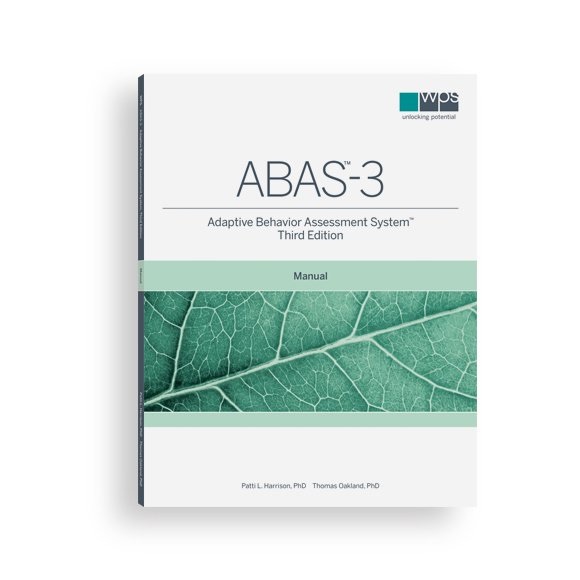
Illustrating the Flexibility of ABAS-3 to Diagnose Individuals with Adaptive Skills Limitations by Patti Harrison, PhD and Thomas Oakland, PhD
Tuesday, May 22nd, 2018

Illustrating the Flexibility of ABAS-3 to Diagnose Individuals with Adaptive Skills Limitations by Patti Harrison, PhD and Thomas Oakland, PhD provides a complete assessment of adaptive skills across the lifespan from birth to 89 years. Please share this with the people at your skill who are responsible for doing this type of assessment. Parents who homeschool thier children should also take a look at this important product.
Introduction
- By nature, humans have skills that enable them to adapt to their environment. However, because of learning disabilities, developmental delays, or other environmental factors, some people struggle to develop their adaptive skills and need intervention.
- The ABAS-3, or the Adaptive Behavior Assessment System, enables professionals to identify these limitations and create intervention programs that assist children and adults with developing the adaptive skills necessary to function in their everyday environments.
- The ABAS-3 can help increase an individual’s independence and improve social behaviors. Assessing a person’s ability to function independently enhances their quality of life and enables them to continue into adulthood with the skills they need to perform at work, school, and home.
Diagnosing Adaptive Skills Limitations
- Clinicians, school psychologists, and other mental health professionals use the ABAS-3 to diagnose many different disorders. Included are cerebral palsy, emotional disturbance, autism spectrum disorder and intellectual disabilities.
- The ABAS-3 uses tests to measure IQ, visual-spatial processing, knowledge, working memory, and fluid reasoning. From these scores, professionals can measure an individual’s achievement in specific areas and establish helpful interventions.
- The ABAS-3 can identify strengths and weaknesses, document progress over time, determine eligibility for services like disability benefits, or evaluate the person’s ability to live and work independently. From this information, a clinician can make a diagnosis and establish a treatment plan.
The Flexibility of ABAS-3 to Diagnose
- The ABAS-3 has the ability to help evaluate people with a wide range of disorders, and because it’s so versatile, it has a lot of flexibility to identify adaptive skills limitations. For instance, school psychologists can use the ABAS-3 to recognize and assess significant developmental delays in children who are not meeting developmental milestones. This enables psychologists to identify limitations and recommend treatment plans or interventions.
- The ABAS-3 can also be used as an adaptive behavior assessment to plan and coordinate homeschool programs for children with special needs. With resources like the ABAS-3 at their disposal, parents who homeschool special needs children, along with a skilled professional, can now develop and follow programs benefiting their children’s development.
Other instances of the flexibility of the ABAS-3 and benefactors of intervention treatment plans include:
- Dealing with emotional disturbances
- Social and self-direction problems at home
- Children with visual impairment who need home interventions
- Problems with daily behaviors and practical skills
- Monitoring the transition from school to work environments
- Comprehensive assessments for people with ADHD who have diminished self-direction and self-care
- Rehabilitation after traumatic injuries
- Evaluating Alzheimer’s patients and improving functional behaviors
- Assessing the effects of mental health on daily functioning
- Monitoring change in daily routines due to medication
- The list goes on. The flexibility of the ABAS-3 to help diagnose individuals with adaptive skills limitations is proven in how school psychologists, clinicians, and other mental health professionals use the tests to evaluate their subjects.
WPS Publishing
- You can find more about the (ABAS-3) Adaptive Behavior Assessment System, Third Edition at WPS Publish.WPSPublish.Com, which provides materials and resources to help professionals unlock the potential of their patients.
It’s a Technological World, Are Your Teachers Up to Par? by Ken Myers
Saturday, March 15th, 2014It’s a Technological World, Are Your Teachers Up to Par? by Ken Myers is aimed at helping education leaders with their vision in regard to modern technology and its use by teachers. Since just about any decent job today requires technical skills, we can no longer abide teachers who aren’t interested in making the most of their school’s technical resources.
Ken Myers
- Ken Myers is a father of three and passionate about great childcare. He’s always looking for ways to help families find the support they need to live fuller, richer lives. He is the owner of GoNannies, a nationally known nanny recruiting website. He strives to provide parents and caregivers with quality and up-to-date content. Find out more about expert childcare by checking out @go_nannies on Twitter.
It’s a Technological World, Are Your Teachers Up to Par?
- As we live in the digital age, technology is abundant no matter where you turn. Our pockets are full of gadgets and gizmos that make life more efficient on a professional and private level. With every innovation, education has been impacted by the same technology as well. However, many teachers are simply not using the tools to their fullest potential. Statistical analysis and device capabilities look good on paper, but they don’t live up to expectations of educators if they’re not used correctly.
Keeping Your Personal Information Safe While You’re Online by Craig Middleton
Monday, June 28th, 2021
Keeping Your Personal Information Safe While You’re Online by Craig Middleton offers sound and easy advice for online users of all ages and experiences. By now you have no doubt heard about high-profile cyber attacks, but cybercriminals are happy to go after ordinary people in addition to governmental agencies and large corporations. Thanks, Craig.
Introduction
- If you’re a college student, your two best friends may be your laptop and the internet. Much of what you do in higher learning is online, from researching various sites to get info for a paper you’re writing, to accessing the school’s and each teacher’s online learning platforms. With all the demands of life you need to pay attention to, staying secure on the internet is probably one of the last things on your mind. Unfortunately, cybercriminals are counting on your lack of attention to this very important detail. Next time you’re putting your nose to the grindstone with your schoolwork, consider these four easy steps to keep your information safe while online.
Use Free Wi-Fi Carefully
- Most college students don’t think twice about using the free wi-fi in the school’s library or a coffee shop to fit in a little studying during a break between classes. The library is a great place to get ahead in an environment of peace and quiet, but this study choice has one caveat you must be aware of: the school’s internet is on a public network. Spending time online while on a public network makes you vulnerable to a cyberattack.
- So, What is a cyber attack, you might ask? A cyber attack is an unlawful effort to compromise a computer or computer network. Usually, this is done with the aim of sharing, destroying, or stealing digital information. Using free wi-fi offered on public networks makes you a prime target for someone wishing to compromise your computer. All they need is a basic software tool to access your information.
- There are many ways to keep your information safe while using the internet at school, but the following three steps are a good start. First, make sure you don’t use the same password for all of your log-ins. Secondly, ensure that you are on the public network that belongs to your school. Finally, disable file sharing while you are on the public network. This will go a long way in securing your personal information while using the internet at school.
Visit Secure Sites
- Studying and researching for your classes takes you to a wide variety of sites, including some you may not be very familiar with. Making sure to only visit secure sites is a vital way to protect your information while online. The good news is that a secure site is easy to distinguish from a harmful one. If the online address has a lock symbol before it and begins with HTTPS, you can rest assured you are safe to visit that site. (Doug: Note that my site’s address is https:DrDougGreen.Com)
Beware of Unusual Links and Attachments
- A common way that your information is compromised online is by clicking on harmful links and attachments, often sent to you through email. What might look like an email from a trusted company or organization could be a virus or malware attack in disguise. The easiest way to tell if a link or attachment is harmful is by checking to see if there are spelling errors or if the email is coming from an address other than the one you would expect from a company. If either of these things are amiss, you are probably dealing with a cybercriminal and you should steer clear. (Doug: For example, if you got an email from Verizon, be sure that the address of the sender ends in Verison.Com. Also, if you get an email from a bank where you don’t have an account it’s probably spam. Update: Today I received an email from Sprectrum saying “Action Required.” When I checked the address of the sender it said mmecomn@carolina.rr.com>. This clearly is not from Spectrum so I erased it.)
Use Strong Passwords
- Using strong passwords is one of the simplest ways to protect your information online. With all of the online accounts you have to juggle, it can be very tempting to use the exact same password every time to make remembering them easier, but this is one of the cyber criminal’s favorite weaknesses. If one account becomes compromised, then they will all fall victim. Be sure to use a different password every time you create an online account. As a college student, you have enough to worry about as it is. Don’t add the security of your online information to that list. Follow these four simple steps and you won’t have to think twice about it.
Craig Middleton
- Craig is a New York City-based retired business consultant, who is an expert in education and cultural trends. He has a Masters of Business Administration and a Masters in Education from St. Johns and loves sharing his knowledge on the side through his writing. If you have any questions or comments you can direct them to Craig at craigmiddleton18@gmail.com.
Making the Wait for a Donor Heart Bearable by Steve Suto – Part 3
Saturday, August 29th, 2020
Making the Wait for a Donor Heart Bearable by Steve Suto tells the story of waiting six months in the hospital for a heart transplant. He talks about how support from staff, family, friends, and fellow transplant candidates helped him stay strong and make it to the big day. If you have suffered setbacks you will appreciate this even if you are not a transplant candidate. Here are the links to part 1 Reflections of a Heart Transplant Survivor and part 2 How to Qualify for a Heart Transplant.
Making Your Grateful List and Checking It Twice
Here is a checklist of what I was grateful for when I started my wait in the hospital for my donor heart. If you or a loved one are waiting I hope your list is at least this long.
First: I had a strong support group. (Thanks for your part Dr. Doug.)
Second: I had great insurance.
Third: I had the best hospital, or at least I thought it was the best.
Fourth: My wife Carol had a local bed that was actually cheaper than commuting 90 miles one way and paying for tolls and parking.
Fifth: I have faith in the United Network of Organ Sharing (UNOS). Nationally, UNOS prioritizes and objectively allocates donated organs by need and wait time.
Sixth: I’m sociable and I would try to encourage and support the others like me who were waiting for a donor.
Seventh: Carol kept her infectious sense of humor and knew where it was needed.
In my life, I’m sure I’ve spent over eight months in different hospitals for various procedures; which includes the six and a half months I waited for and my subsequent recovery from my heart transplant. Before this I had two hip replacements, with one hip restructure follow up, arthroscopic knee and elbow surgery, reattachment of an Achilles tendon, hernia surgery, and two pacemakers installed and removed. I also had various overnight and day procedures, heart tests, and an overnight observation from a reaction to an allergy shot. Also, after recovering in hospitals, I spent even more recovery time in nursing homes.
Room Service
My best advice from all of this experience is that there is no greater luxury nor substitute for a private hospital room. I also learned that nurses are in the nursing profession for the right reasons. In the case of the University of Rochester (U of R), their nursing staff had a number of people who chose nursing after careers as doctors, news editors, police officers, shop foremen, nurse assistants, and more.
The most profound thing any nurse told me was that their job was to help me to get my life back. Additionally, they are giving a gift with no other conditions except that you return to the life you led. This attitude has done more than I can say when it comes to any survivor’s guilt when you overthink the reality that you know someone must die for you to live on. Going on with your own life fulfills your part in this deal.
If you are thinking about becoming an organ donor (Visit DMY.org to sign up.) I can not overemphasize that you need to make your wishes known to your family. Even though you have made known your intention of being an organ donor, your family can still object and override your intentions. Please make it clear to your family and your doctors you want to be an organ donor. In my previous references to my gratitude for donors, I also expressed my gratitude to the donor families. I hope that I am doing this one more time here.
After waiting in the hospital for over a month I started to figure some things out. We had options of private and double-occupancy rooms. If you had a private room for your wait, you could lose it if another heart patient had a greater need for the room. The term semi-private is a misnomer when your roommate is waiting for or recovering from an LVad (Left Ventricle Assist Device) because you are on such different schedules and treatments and you will constantly be disturbing each other.
After I had about a dozen roommates getting LVADs I started to forget names. I made an agreement with another patient who was also waiting for his donor that we would be roommates until one of us had a new heart. That way our treatments and schedules were not conflicting or disturbing each other.
Being social, one of the first questions your fellow patient’s ask each other is their blood type. Whether a donor’s heart is acceptable to you depends on your blood type. Positive or negative’s not a factor. Type O blood can only receive type O organs but everyone else can accept a type O organ. A accepts A and O, B accepts B and O, and AB accepts any A, B, AB, or O blood types. Therefore, type O patients generally have longer waits.
The Pole People
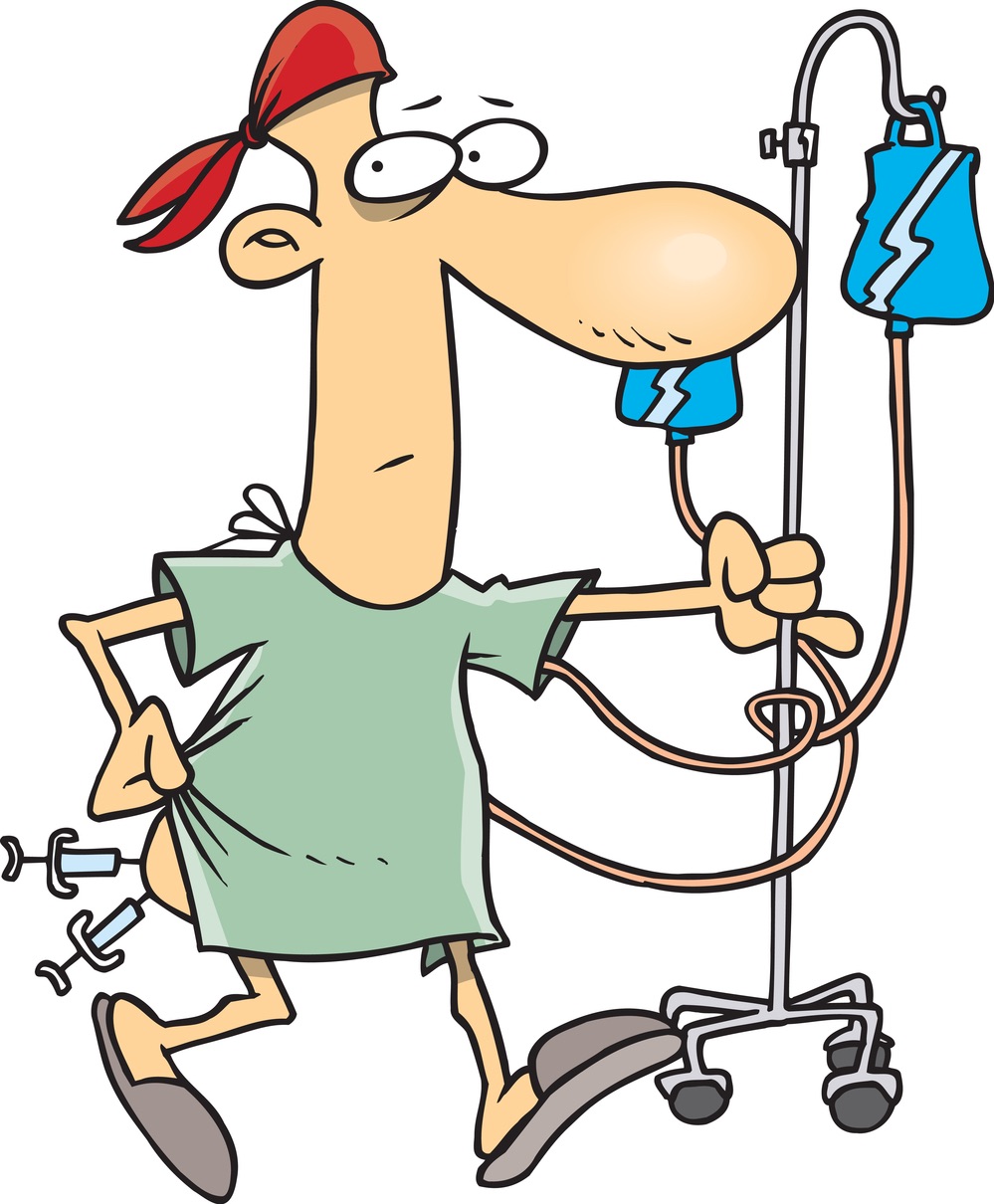
Those of us who were waiting for transplants were known as “The Pole People”. We were mobile, although restricted to the transplant floor area. We needed to be constantly monitored by various machines, and we needed to have our medication intravenous injection pumps hooked up and mounted on poles with wheels. Everyone had their permanent and seasonal decorations for their poles. No matter how good I thought I was getting at moving with my pole, my big toe kept getting in the way when I tried to move fast.
If a nurse asks you if you need one of these machines on your pole not hooked up and you are not using it; do not fake pain when they disconnect the machine. One particular nurse was a former police officer and told me about a perfect crime where disappearing ink disappears at room temperature and most patients can’t tell if Do Not Resuscitate (DNR) is stenciled on their forehead in disappearing ink. I was scared straight. I’m assuming justifiable homicide is still on the books.
The transplant ward had a waiting room with a Macintosh computer, exercycle, and a treadmill. Someone lost the treadmill key but I knew a magnetic hook would work in its place so I walked every day on the treadmill and watched old TV programs on Youtube. I could walk a mile in less time than a Muppet Show episode took. I was also walking without having to push that *#@!pole. My hands could swing freely and my big toe could relax for a while. We also had the areas on the floor where we could move around in measured distances for putting in measured milage. Former marathoners like my friend Fred put in more miles than I did.
The computer introduced me to Youtube music videos. Youtube is the closest thing I know of to a time machine. When you get on Youtube, all of a sudden it’s two hours into the future. Through following my curiosities I found out that the closest thing to my record collection is covered pretty much by Outlaw Country. Getting back to the Grateful Dead, I followed the continuing efforts of their former singer Joan Osborne (2003 tour) and found her singing with The Funk Brothers, (Motown’s house band) on a revival of the temptation’s “What Becomes of The Broken Hearted.” I had now found my go-to emotional support song for my unsure future waiting for a donor.
Everyone Needs a Support Group
As a mutual support group, a core of six of us “A” candidates started planned nights where we would get together and watch movie DVDs or play board games. Fred, who had type O blood and knew he was in this for a long wait, acquired a large locking cabinet and stocked it with donated books for our floor’s patients and persuaded the local library outreach to give a library card to those of us who were waiting. Fred’s father was a minister and he and his wife were teachers. They even held book discussions and recommended so many great novels and stories of people who endured hardships and survived like “Unbroken” and “The Book Thief.” Fred became a heart transplant candidate after the side effects of his cancer treatment ruined his heart. Today he’s doing well and doing some limited running.
Carol, who was now a retired teacher, had a friend and co-teacher who helped start me on reading. This teacher might not know how great the gift of a book snowballed. I did not know I was going to learn to like reading as my newest passion. In the past, Carol helped me overcome my learning problems and I went from a C undergrad science-education student to an A-minus student in Accounting. In the past, I took and passed college courses without buying the books because I had problems reading them. Before this hospital wait, there is no way I would have predicted I would read over 50 books while waiting.
We had heart transplant survivors (who lived close enough to the hospital) who would stop by and help us with favors and emotional support. One of these guys was a former professional hockey player who brought a stethoscope when he met the family of his donor. I wasn’t surprised to see him on the Donate Life Float in The Tournament of Roses Parade. Another one of these good people told a story about how he told his wife that if he got his heart he would give his wife anything she wanted. He gave her a puppy. Carol heard this and said, “I want a pony with about 300 of them under the hood of my Mustang convertible.” Incidentally, I was good to my word. It will finally be paid for by this October.

The Dry Run and Bigger Setbacks
One of the disappointing emotional setbacks we all faced was called a dry run. This is when UNOS tells the hospital they found a match for a patient, the hospital sends a representative to inspect, stop, and restart the donor heart, and ultimately transport this donor heart back to the hospital. You are being prepped for the operation when the hospital representative is away vetting this donor organ. Any time during your prep, you might find out that this potential donor organ did not pass inspection. I was one of many who endured a dry run. A nurse told me not to despair as they will just find me a better heart.
On November 24th, 2013 another potential donor’s heart was located. A Nurse Practitioner told Carol she was returning on the hospital’s Lear Jet in two hours with this better heart. The Chinese born anesthesiologist knew the words to Pink Floyd’s “comfortably numb” as we sang together before I went to sleep. The nurses who took offense to my pole decorations, (the Pole Dancers I cut out of the Target underwear adds) had this pole cleaned off before I was out for the count.
I was luckier than so many of those who waited with me. Some of us had their ICD’s defib them with a painful shock keeping their hearts beating long enough to finally get their new heart. Some had to wait more than the six months I waited. Some were hooked up to a mechanical heart about the size of a shopping cart and some of these patients were never were matched to a donor. Some picked up infections that disqualified them so a donor organ went to someone else. Some waited and never were matched to a donor. I’m not equipped to handle this kind of heartache yet when I visit the transplant ward I see so many mutually happy and familiar faces still working there. Some of these faces were the faces of pallbearers in funeral processions of those who did not get their hearts or people who died of unforeseen complications post-op.
Life Isn’t Fair, But You Already Knew That
Before I started my wait you could have quoted me more than once when I said “if life was fair; I’d be shorter, poorer, and have had fewer opportunities for an education.” In bad times I have learned to count my blessings. Hospital food is never a profit center. The food service staff may exaggerate. Do not take their food quality, choices, or nutritional info seriously or personally. People do their best with the resources they have. Appreciate and enjoy the efforts of the good people who work hard in real restaurants. I offer a special thank you to the nurses who purchased refrigerators with their own money for each of the patients waiting for their donor organs. Leftovers from home trump hospital food every day except Tuesday, which every week featured a prime rib dinner. It was more of a bummer when you had a dry run on a Tuesday.
I offer one more special thank you to the nurse who went to Wegman’s and purchased my annual tradition of White Roses for Carol on our anniversary in October. The Florist sent the wrong flowers on a Friday and could not correct this until it was too late. This nurse wouldn’t take reimbursement nor take the wrong flowers home. Also, If you’re making Christmas decorations using cut out hand patterns on green paper to make pine leaves and branches, make time allowances for surgeons who will make several models of “their hands” before their final contributions to your artsy crafts projects.
The Psychologist will see through your BS when for Halloween you dress up in a bedsheet toga as John Belluci in “Animal House” and you tell him you’re dressed up as Hypocrites. Doctors will, however, let their sense of humor show upon occasions.

No Atheists in Foxholes or Transplant Wards
Finally, there is no place for atheism in my life. I wasn’t raised Catholic but thank You Saint Rita and Saint Maryann Cope. Thank you for grace, forgiveness, and redemption. Another who showed me support during my wait was NASCAR star driver and champion, Brad Koslowski, who sent me a signed poster. I worked at one time for a sponsor of his race car.
In my own way, I had support from my deceased father through his letters from WWII when he fought in the South Pacific. They told of his wait to get back to civilization. He described hardships and loneliness like not seeing an American woman for years. Dad considered it impolite if he sent a letter that was less than three pages. Next to him, I wasn’t going through anything close to his ordeal when he might face total defeat or victory away from friends and family. Today sending a Tweet or sending a text doesn’t appeal to my sense of decency after reading these thoughtful and sometimes funny, and always personal letters.
Next Saturday in my final installment, I pick up from being sedated on the operating table and take it home.

Managing Stress as a Student by Marie Miguel
Tuesday, January 7th, 2020
Managing Stress as a Student by Marie Miguel offers sound advice for students of all ages about how to better manage and avoid stress. In addition to tips that anyone can follow on their own, she also lets you know that seeking professional help can be the right thing to do. There are links here where you can find some first-rate counseling near where you live.
Students Are Stressed Out Sometimes
- It’s natural to experience stress when you’re in an academic setting, whether that’s high school, college, or graduate school. Some of the stressors you may experience are having short deadlines or deadlines in general, challenges in organization, and balancing your social life with studying. You may procrastinate and wait until the last minute to finish a paper and then feel the stress of having to complete things quickly. Here are some tips to help you manage your stress levels and complete your coursework.
Combat Procrastination
- People might tell you, “stop procrastinating,” but that’s not a helpful statement for those who engage in procrastination. You need to figure out the source of why you’re procrastinating and fight against it. Some people procrastinate because they’re scared that the end product won’t be perfect. If you’re delaying your work due to perfectionism, remember that not every paper or project needs to be the best thing ever. It would help if you started, and all you can do is your best. If you’re in college or graduate school, you got into this school for a reason, and you can complete this goal. Remember that all you need to do is start, and once you start, things will be easier to achieve than you think. One of the hardest parts of beating procrastination is opening your laptop or computer and getting things going. Once you’ve done that, it can become a whole lot easier.
Managing Time
- One of the things that stress people out in school is time management. Something that you can do to help yourself is to figure out how much time something takes to complete. You may have an inaccurate perception of people; people with ADHD, for example, sometimes can’t gauge how long something will take. Setting a timer when completing homework can be an incredibly useful action for you. Once you know that it takes you three hours to write a paper, for example, you can set aside that block of time to start writing. It’s important to remember that almost any task can be broken up into smaller tasks. Knowing this makes things much less overwhelming for a lot of people, so next time you get an assignment, manage your time by deciding what piece of an assignment you’ll do at what date and time. Maybe, you’ll write the outline of a paper the night that you get the assignment, and the next day, you’ll start a draft. Make sure that you’ll have a realistic sense of how long something will take so that you don’t put the unnecessary pressure on yourself to complete things in a time crunch.
Student Loans
- The idea that we have to pay back a massive amount of student debt stresses a lot of people out. Some people pay loans back while they’re in school, and others wait until they graduate. If you’re paying off loans, remember that having a budget can help. Organization is a big part of this. If you need help creating a budget that’s okay. Maybe you aren’t the kind of person that manages finances efficiently; it’s okay to ask for help. You can find it from someone on campus or an individual in your life that understands the process of paying back loans and can give you advice on how to manage money as you pay back your loans. Having the ability to manage finances is a vital life skill that’ll help you pay off your student debt, whether you choose to do it during or after school.
Leaving Work Until the Last Minute
- Leaving things for the last minute goes along with procrastination, but sometimes, people wait until there’s not a lot of time left for a particular reason. Some students say that they thrive off of the adrenaline of leaving an assignment until right before it’s due, but remember that this kind of behavior is a pattern and that it fuels itself. Eventually, you’ll get burnt out from leaving things until the last minute. Learn to get your adrenaline elsewhere, like through sports or engaging in social activities like playing games with friends. Planning is crucial when it comes to academics.
Managing Stress is Possible in Therapy
- If you’re feeling stressed out, one place that you can talk about it is in therapy. You might see a counselor on campus, or you might search “counseling near me” online to find someone in your local area. Whether you see someone online or in person, a mental health professional will be able to help you manage life stressors both inside and outside of school. If you’re struggling to cope with stress and feel like you’re breaking underneath it, it’s essential to ask for help. There are solutions to this issue, and managing stress as a student is possible. It may take some time, but seeing a therapist or counselor can help you combat stress and develop coping strategies to use when you feel overwhelmed.
Marie Miguel
- Marie has been a writing and research expert for nearly a decade, covering a variety of health-related topics. Currently, she is contributing to the expansion and growth of a free online mental health resource with BetterHelp.com. With an interest and dedication to addressing stigmas associated with mental health, she continues to specifically target subjects related to anxiety and depression.
Playing to Learn: What to Look for in a Preschool Program by Amanda Winstead
Thursday, September 9th, 2021
Playing to Learn: What to Look for in a Preschool Program by Amanda Winstead offers great advice for parents of preschool children as they try to decide which school to choose. Even if your child is already in school, you can use this article to help evaluate the one you picked or the only one available. Thanks, Amanda.
Introduction
- Most children start preschool at ages 3-4, though there’s no “perfect” age to enroll them. If you think your child is ready, the most important thing is to find a preschool that fits their needs and a place you feel comfortable with. At such a young age, your child needs to strike a healthy balance between learning and play. A good preschool will focus on both, and encourage learning through natural experiences and exploration.
- If you’re considering preschool for your child, you don’t have to stress over choosing the perfect place. When you know what to look for, you can do more thorough research on a handful of places, rather than scrambling through every location in your area. With that, let’s dive deeper into what you should look for in a preschool program, including varied learning styles and how a specific program can best benefit your little one.
Different Learning Methods
- Children learn differently. Even at a young age, your child will start to show signs of their preferred learning style. The seven standard styles of learning are: Visual, Kinesthetic, Aural, Social, Solitary, Verbal, and Logical.
- Preschool-aged children tend to be more hands-on no matter what style they prefer. Play is something that comes naturally to them. Balanced preschools will take a balanced approach to play-based learning and academic learning. What’s the difference? Play-based learning programs focus on: integrating academics into the things your child is already interested in, collaboration and social development, and Exploration and choices.
- In a play-based environment, students are typically observed by the teacher, and their progress is monitored. In more academic preschools, students might have more structured learning time, and they might even have homework at the end of the day.
You Know Your Child Best
- You know your child better than anyone. Observe what seems to come naturally to them at home. Do they tend to do better with unstructured playtime, or do they thrive with discipline and like to be focused on one task? Knowing their preferences will help you to make a better decision about the type of learning a particular preschool does.
Getting Outside the Classroom
- Both academic and play-based preschools should make an effort to change up the scenery from time to time. Young children need more than just learning time in the classroom. Getting outside should be a fairly big priority when you’re looking for a preschool program.
- Spending time outside has multiple health benefits for people of all ages. For kids, it’s a great way to learn and explore things that might not grab their attention in class. Nature is a wonderful prescription for better physical and mental health, too. About 13.4% of children ages 2-5 are considered obese. Allowing them to spend time outside can boost their physical activity and help them to maintain a healthy weight. (Doug: Don’t forget that diet is more important when it comes to weight control.)
- Nature also has positive mental health effects. It can boost energy levels, improve focus, and put you in a better mood – yes, even little ones. While preschool-aged children might not typically struggle with anxiety or depression, being outside can help with those things. For young children, it can contribute to feelings of happiness and help them to calm down. Finding a preschool that takes pride in spending time outdoors in nature play spaces is important. Outdoor learning and playing are just as beneficial as time inside the classroom. A preschool program should have a balance of both.
Inclusion and Accessibility
- We live in a diverse world. Children from all different backgrounds and children with different abilities should be able to come together in a classroom without judgment or question. That’s why inclusion and accessibility should be two key factors in your preschool decision. Maybe your child has trouble focusing or they’ve been diagnosed with ADHD. Maybe they have a disability. Or, maybe you just want them to be a part of a program that embraces diversity and accessibility.
- Whatever the case, there are more benefits to inclusion in the classroom than most people realize. Some of those notable benefits include: it tailors the teaching methods to all types of learners, it provides additional support to students, and Differences between people seem more normal, so kids can grow up embracing them.
- Everyone is entitled to their own opinion about accessibility and inclusion. But, the more parents who value such things, the better and brighter the future will be. If a preschool takes the time to let parents know they welcome everyone, you can be more confident in their efforts. Your child will learn so much simply by being around different types of children, and those are the lessons they’ll take with them for the rest of their lives.
In Conclusion
- Choosing a preschool program is a big decision, but it doesn’t have to be difficult. By keeping these things in mind and understanding your child’s needs, you can make that decision easier on yourself and feel confident in your final decision.
Amanda Winstead
- Amanda is a freelance writer out of Portland focusing on many topics including educational technology. Along with writing she enjoys traveling, reading, working out, and going to concerts. If you want to follow her writing journey, or even just say hi you can find her on Twitter.
Safe Science Crafts for Children by Ashley Hardway
Monday, April 14th, 2014Safe Science Crafts for Children by Ashley Hardway offers four safe scientific experiments you and your children can do at home. Once you get started with these activities, your children may not want to stop. Once you open the doors to scientific experimentation, your children just might never want to stop.
Intro
- Science can be an entertaining way to expose children to how the universe works. Through various crafts and experiments, you can open doors to a world that the child may never have realized. Each example here can lead to additional questions that need answers. However, you want to ensure your child’s safety when exploring the many facets of science. Here are some sample projects can you do at the home that won’t turn your child different colors or catch your kitchen on fire.
1. Understanding Xylem
- By using white flowers such as daisies, you can teach children how the xylem of a plant will transport water to buds and petals. This can be seen by using non-toxic food coloring such as those you would use in cake frosting. The xylem provides water and nutrients to the petals – including the dye itself. Over time, the daisies will actually begin to take on the color of the dye. This shows that even a cut flower can still reserve the ability to stay alive – for a short time. Do a Google search on “xylem diagram” to see how this works.