Author Archive
Tuesday, March 16th, 2021
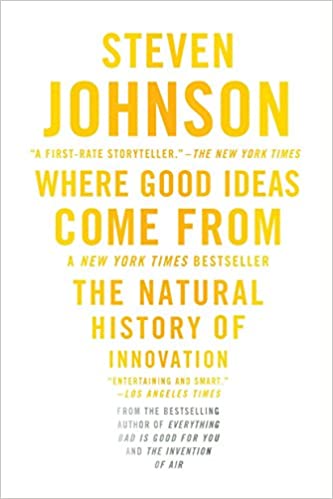
Where Good Ideas Come From: The Natural History of Innovation by Steven Johnson tracks the innovation process through history and shows what ingredients promote a creative climate. From Darwin to the World-Wide-Web we see how individuals, networks, markets, and open-source projects have forged our modern world. Anyone interested in history and/or science should add this to their bookshelf. Every school and professional development library should too.
Introduction: Reef, City, Web
- We start with Darwin discovering that coral reefs can harbor uncountable numbers of species compared to the fewer life forms found in surrounding waters. Then we visit Kleiber’s law which states that the number of heartbeats per lifetime tends to be stable from species to species. Bigger animals just take longer to use up their quota and therefore live longer. When Geoffrey West investigated whether Kleiber’s law and applied it to cities he found that as cities get bigger, creativity per capita increases. Using data like R&D budgets and patents he found that a city ten times larger than its neighbor was seventeen times more innovative and a city fifty times bigger was 130 times more innovative. This is also true for the biological diversity of coral reefs.
- Here we meet the 10/10 rule which states that it takes about ten years for a new innovation to be developed and ten more years for it to be widely accepted. Innovations like color TV, HDTV, AM radio, Video Tape players, CD and DVD players, and GPS navigation all followed that rough time lime. The same was true for the graphical user interface on computers and most software like word processors and spreadsheets. Running counter to the 10/10 rule was Youtube. It went from idea to mass market in two years creating the 1/1 rule. Like YouTube, good ideas want to connect, combine, and cross conceptual borders. They want to complete each other as much as they want to compete.
1. The Adjacent Possible
- The idea for the original baby incubator happened when someone saw how baby chicks were kept warm at a zoo. When modern incubators costing $40,000 were sent to developing counties, however, they soon broke and no one knew how to fix them. An MIT professor named Timothy Prestero got the idea of building incubators using local technology and parts. Since locals in most developing countries could repair cars, he used spare auto parts and his invention was a great success. In many ways, our good ideas are constrained by the parts and skills that surround them.
- The concept of the adjacent possible states that in a given environment there are only so many new things that can be created. In Earth’s early atmosphere, for example, the simple molecules could only create so many more complex molecules, but as they did so further expansion became possible. This fairly describes how evolution works. It also explains why big cities and reefs are more innovative as there are more adjacent possibles. Throughout history, major inventions have happened in multiple places. This is because they couldn’t happen until the parts were available. The trick to having good ideas is to get more parts on the table.
2. Liquid Networks
- A good idea is a network of novel nerve connections and they wouldn’t happen if the nerve connections in our brain weren’t plastic and capable to changing. The new idea also has to be part of the adjacent possible. Since all you have to generate ideas are your genes and your environment, this explains why some environments generate more good ideas than others.
- After explaining why life is based on the connections of the carbon atom and the necessity of water, Steven extends the ideas of why cities produce innovations. A graphic shows the key innovations that occurred prior to the rise of cities and after and there is no contest even though cities haven’t been around that long compared to humans. The Italian Renaissance is an example of how cities and trade promote innovation. The excess wealth they created also promoted the arts.
- The studies of Kevin Dunbar in the early 1990s showed that ideas are more likely to emerge during meetings than in isolation. The results of one person’s reasoning out loud can become the inputs for another person’s reasoning. When people realized this they started designing buildings that would promote more interaction between people. Total open environments don’t seem to work as people don’t like them. The current idea is to have flexible environments where people can get together (conference rooms) and where people run into each other (water coolers). It’s also good to have multiple disciplines in the same building as innovations often happen at disciplinary boundaries.
Posted in Book Summaries, Business Books, Education Books, Leadership Books | Comments Off on Where Good Ideas Come From: The Natural History of Innovation by Steven Johnson
Friday, March 5th, 2021
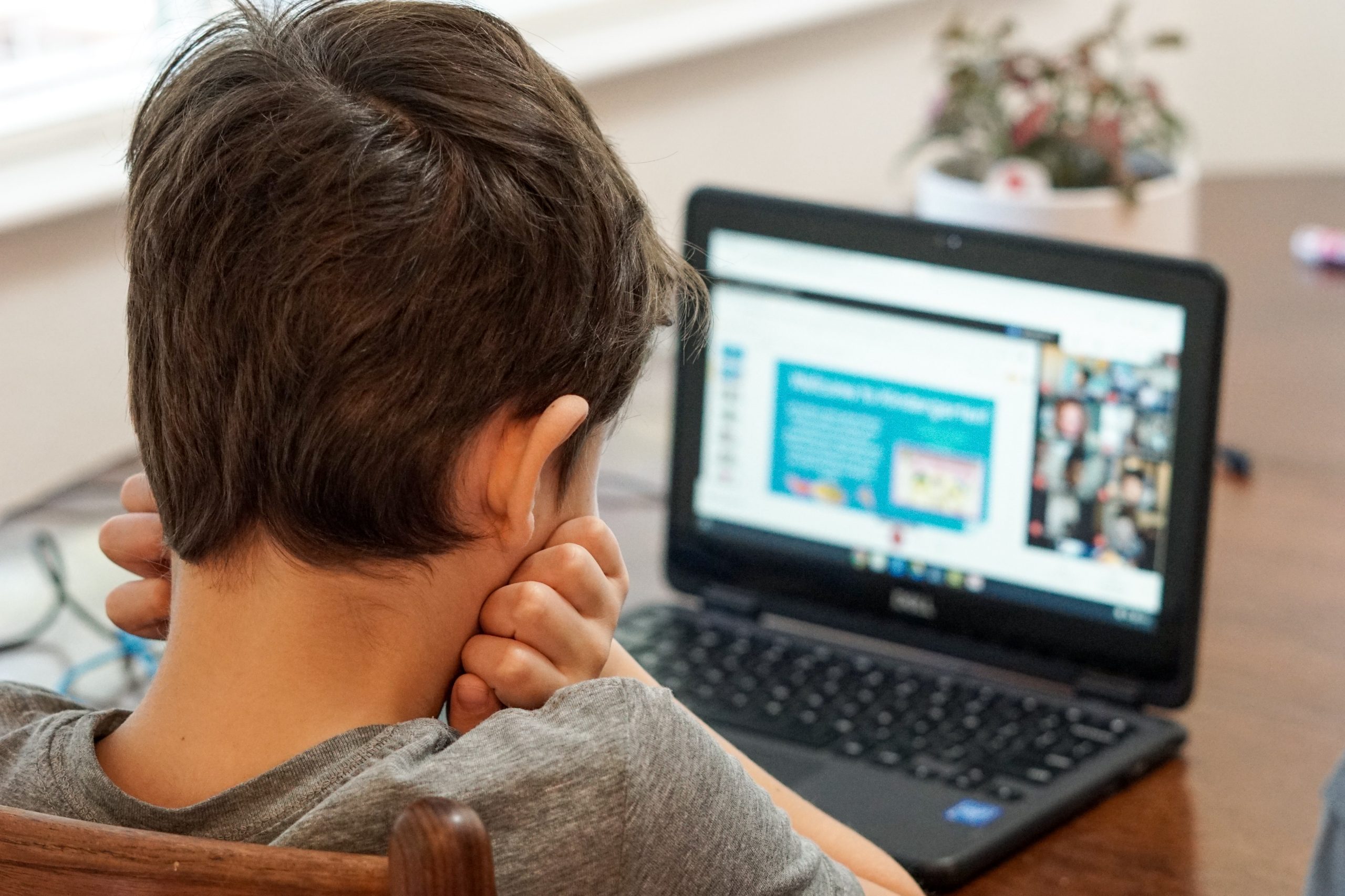
How To Keep Your Children Engaged in Online Learning by Craig Middleton offers important advice for parents dealing with homebound children engaged in remote learning. By following his advice you can make remote learning more effective and enjoyable. Good luck.
Inroduction
-
Many schools have had to move to online-only or hybrid instruction as a matter of necessity over the past year. There have been some troubling stories about how this model has affected students, showing that they have suffered because of a lack of socializing with their friends. Some have reported a decrease in motivation.
-
On the other hand, some young people thrive in an online learning environment, even preferring it to in-person instruction. This may be based on many different factors, such as the child’s temperament or relationships with peers. However, it does offer hope that online learning can be more successful and less stressful even for those who struggle with it. Researchers have been looking for ways to help keep children engaged in an online classroom. Here are some of the ideas they’ve come up with.
Connect Learning to Something Concrete
-
Try to connect what your child is learning to something concrete and relatable whenever possible. For example, if you’re learning about different energy sources, tell your child about the top solar companies in the US and explain how they put what your child is learning to good use. If your child can see that what he or she is learning has practical, real-life applications, it is more likely to keep his or her interest. Children hate the feeling that they are wasting time learning something that is not useful to them.

Keep in Touch With Your Child’s Teachers
-
With online learning, you may bear more of the responsibility for your child’s education than when your child receives in-person instruction. However, no matter what learning model you use, your child’s education is always a partnership between you and his or her instructors. When instruction takes place at home, keeping in close contact with your child’s teachers is more important than ever before.
Provide Positive Feedback
-
It is always important to acknowledge a child’s academic accomplishments”. It is even more vital to encourage those that happen in a setting in which the child may not be comfortable. Whenever your child completes an assignment through distance learning, provide some positive feedback. This can be something intangible, such as a few words of praise, or something more concrete, such as a sticker. It doesn’t have to be something elaborate or expensive, just something that communicates to your child, “I know this isn’t easy for you, and I appreciate the hard work you’re putting into it.”
Encourage Activity
-
Elementary kids get recess several times a day, while older kids get gym class. Your child’s online learning day should include some time for him or her to get up, move around, maybe even go outside if the weather permits it. When you schedule this depends a lot on your child’s learning style and preferences, but many kids settle down to concentrate better after some activity. If you find that a change of position helps your child concentrate better, you should encourage this, within reason. Standing up helps some kids to concentrate better, but you should not allow your child to adopt a habit of poor ergonomics because this could cause problems later in life.

Make Learning Fun
-
Schoolwork doesn’t have to be endless drudgery. There are many ways to make learning fun. If you’re having difficulty coming up with ideas on your own, the internet gives you access to thousands of them. Online games from educational sources are designed to teach a wide range of important concepts in an entertaining way. You may be able to take a virtual field trip to many educational places, such as aquariums, botanical gardens, museums, and zoos. Don’t limit yourself to local places; these tours are available from all over the world.
Set Your Own Schedule
-
Part of the reason that some children thrive in distance learning is that the schedule can be tailored to fit their needs. If your child is having difficulty understanding, you can slow down the pace. If your child is frustrated, you can take a break. If your child is very engaged, you can skip or postpone a break to keep up the momentum. Above all, be patient with your child and with yourself. Adjusting to distance learning takes time.
Craig Middleton
- Craig is a New York City-based retired business consultant, who is an expert in education and cultural trends. He has a Masters of Business Administration and a Masters in Education from St. Johns and loves sharing his knowledge on the side through his writing. If you have any questions or comments you can direct them to Craig at craigmiddleton18@gmail.com.
Posted in Guest Posts | Comments Off on How To Keep Your Children Engaged in Online Learning by Craig Middleton
Thursday, February 25th, 2021

Six Creative Homeschool Lessons For Your Pre-Teen by Craig Middleton may even work for your teenagers. Keeping kids engaged and ready to learn at home can be a challenge. You’ll need to make sure that you keep your child’s attention by mixing it up and involving some creative lessons. Here are six lessons to try in your homeschool curriculum to keep your kids excited while they learn.
1. Build A Solar Oven
-
Learning about energy and about how the sun can power things like solar panels gives your child an inside look at renewable energy sources. You can make a solar oven easily out of a leftover pizza box and a few other supplies you probably have on hand. While you’re building you can discuss with your children why certain materials are used. You’ll use some aluminum foil to reflect the sun’s rays toward the inside of your oven and how black construction paper on the bottom can hold in heat to begin warming your food. After your project is completed, you can use it to make a fun afternoon snack like s’mores.
2. Design A Building
-
If you want to teach a little bit about construction and engineering, have your kids design their own buildings. There are a variety of ways to do this sort of project. You could build with blocks or Legos, draw out a design, or even utilize a design program on your computer. Or you can make a day of it by combining all these elements from design to construction. Your student will learn about the process of design as well as about problem-solving while they try to bring their design to life.
3. Invent A Game
-
Get those creative juices flowing by leading your kids in inventing their own game. If you want to keep it quick and simple, help them come up with a new card game with their own rules. If you want to get fancier, take an old board game you don’t use anymore and completely reinvent it. Your students can cover the existing board with construction paper to design the playing board. Use some cardstock to create cards with instructions. Find some fun knick-knacks around the house to use as playing pieces.
4. Do Some Time-Lapse Photography
-
Time-lapse photography projects can be simple and short, or you can make it into an entire unit. Using an old webcam you can set up what you want to record and set the camera to take photos at pre-determined intervals. You could do something short-term such as recording leaves blowing on the trees in your yard for a few hours or longer-term like recording a daily photo of a plant sprouting. Once you have your photos you can help your kids put them together into a time-lapse video. This may even spark other photography-related projects like animation or a scrapbook.
5. Go On A Field Trip
-
A field trip is a great way to sneak in a lot of learning while you’re having fun. Research some possible locations in your area and reach out to them to see if they offer any special informational tours you can sign up for. If you don’t have time for an extended outing, you can make even a trip to the grocery store into a lesson. Teach your kids about math, budgeting, nutrition, and meal-planning while you shop for what you need.
6. Bake A Cake
-
Baking can teach your kids about math, measuring and chemical reactions while also teaching them valuable life skills. They’ll learn about following directions in a recipe to get the desired outcome. Once their sweet treat is baked and cooled they can get creative decorating it. Then at the end of the lesson, they can enjoy the fruits of their hard work by taste-testing their cake. Getting your kids active and involved is simple if you get a little innovative. Letting them get involved and engage in these hands-on projects will not only let them learn but also keep them entertained.
Craig Middleton
- Craig is a New York City-based retired business consultant, who is an expert in education and cultural trends. He has a Masters of Business Administration and a Masters in Education from St. Johns and loves sharing his knowledge on the side through his writing. If you have any questions or comments you can direct them to Craig at craigmiddleton18@gmail.com.
Posted in Guest Posts | Comments Off on Six Creative Homeschool Lessons For Your Pre-Teen by Craig Middleton
Monday, February 8th, 2021
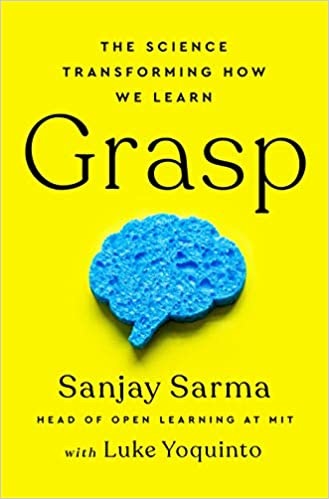
Grasp: The Science of Transforming How We Learn by Sanjay Sarma with Luke Yoquinto tells the story of teaching and learning during the last hundred plus years. They explain what works and what doesn’t. They make it clear that learning should be spaced rather than crammed at the last minute, that different concepts should be interleaved, and that the effort one uses to retrieve memories helps reinforce them. While we need to teach hard facts, we also need to let students use their hands to wield them. This book is a must-read for teachers and learners alike and would make a great textbook for any introduction to education course.
Introduction: The Adventure Begins
- The big metaphor used here is the educational winnower. From the beginning, education is designed to sort students into gifted programs and elite schools. We think we are testing aptitude when we are mainly testing a student’s environment and experiences. At the end of the trail is the opportunity to innovate, which mostly ends up in the hands of males from wealthy homes (patent-holding inventors). In addition to gender, the great winnowers include poverty, expectations, and environments that lack access to language and feature lots of stress. In our efforts to standardize education we have made it too damn hard. We need to shed the myth that serious learning must be difficult and use what we know about the brain to make it more user friendly so we can save more students from the winnowing process.
Part One: Learning Is Science and Science Is Learning
1. The Learning Divide
- Through the lens of a robotics course at MIT we learn that any education scheme worth its salt must not only deliver knowledge but do so in a way that is highly engaging. It must activate that knowledge so its owner can do real work in the world. Next Sanjoy plots the path that education took from the beginning of the twentieth century away from the holistic approach of John Dewey towards the reductionist path of Edward Thorndike. This lead to standardized education where repetition ruled based to an extent on behaviorism. IQ tests were used to sort students into tracks and if you weren’t sorted into the college track, you weren’t going to be prepared for college. Not only is this approach racist and classist, but it also conflicts with how people really learn.
2. Layer One: Slug Cells and School Bells
- It is well established that spacing out your study rather than cramming all a once leads to more retention. This is even true for invertebrates without brains. Here we encounter Eric Kandel’s work with the large neurons in sea slugs. This lead to a Nobel prize for describing the connection between memory and the action of individual neurons. Repetition creates more connections known as synaptic strength. The concept of interleaving suggests that while you are putting space between learning efforts on the same content, you should work on learning another subject. It seems that universities feature a few high-stakes tests each semester with no return to the content in subsequent semesters in many disciplines. This goes against what we know about the spacing effect. Corporations, however, seem to know better as they teach and test frequently. This is due to the fact that their employees must understand the key concepts.. It’s clear that frequent low-stakes quizzes that continually call back earlier material promote efficient learning.
Posted in Book Summaries, Education Books, Leadership Books | Comments Off on Grasp: The Science of Transforming How We Learn by Sanjay Sarma with Luke Yoquinto
Friday, February 5th, 2021

Introduction
- There’s an old saying that “knowledge is power,” and while that might seem cliché, it is true when it comes to internet crime. Hackers and cybercriminals are looking for information about you and your family. If they find the information they want, it gives them the power to steal from your bank accounts, destroy your credit, ruin your reputation, stalk your movements, and possibly even attack you physically. Fortunately, there are things you can do to keep information about yourself and your family safe. Here are some basic online safety tips.
1. Enable Two-factor Authentication
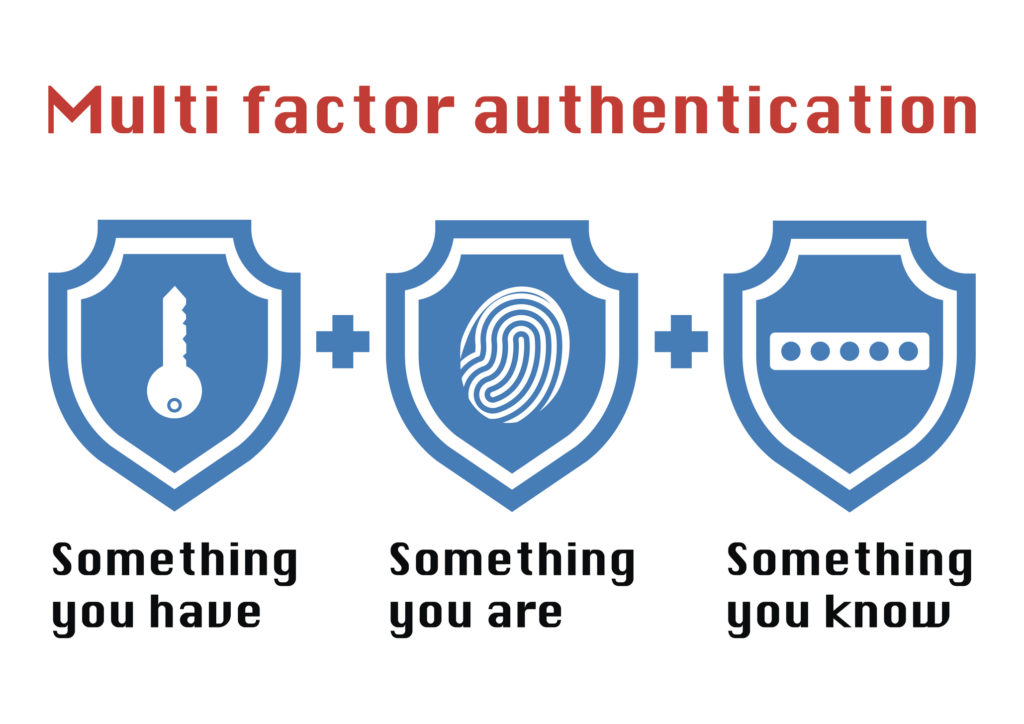
- Many online services give you the option of using two-factor authentication to access your accounts. In addition to your username and password, you also have to provide another piece of information. This prevents people from accessing your accounts even if they have obtained your password. It offers greater protection for your accounts, especially if the second factor is something entirely unique to you, such as your favorite vacation spot, recognition of your face, or a fingerprint. You don’t necessarily have to stop at two factors, though. Multi-factor authentication providers may be able to help you become even more secure.
2. Protect Your Passwords
- Protecting your passwords is vital to maintaining online security, especially where two-factor authentication is not available. You should never share your passwords with anyone, not even those you trust the most. You should also avoid “default” passwords, opting instead for those that are easy for you to remember but difficult for other people to guess. Strong passwords have a combination of lowercase and capital letters, numbers, and sometimes special characters. Special characters aren’t always permitted, though, so pay attention to the rules when creating a new password. Another way to protect your passwords is to use a unique one for every login. This way, even if someone obtains the password to one account, the others are still protected. Be sure to keep a list or you may let your computer keep them for you if you don’t share it.
3. Keep Antivirus Software Up to Date
- Antivirus is sort of a blanket term to describe software that protects against all types of malicious programming; not only viruses but Trojan horses, worms, etc. Not all antivirus programs include protection against ransomware, however, so this is something to pay attention to during purchase and installation. If your antivirus doesn’t have it, you may require extra protection.
- Unfortunately, it is not enough merely to have antivirus software installed. Hackers are relentless at developing new programs that take advantage of outdated protections by exploiting their weaknesses. Therefore, you need to update your antivirus frequently to be sure it is equipped to deal with the newest threats. In many cases, you can set up the antivirus software to update automatically. This way, you don’t have to remember to perform a manual update
4. Use a Virtual Private Network
- Chances are good that you do not only access the internet from your home. Free Wi-Fi is ubiquitous, and portable devices such as tablets and smartphones make it easier than ever to connect to the internet wherever you are. However, this convenience comes at a price. When you connect to an unsecured internet connection, it makes any data and files that you send via the network vulnerable to everyone else connected to it.
- More commonly known as a VPN, a virtual private network keeps your data secure even when you connect to public Wi-Fi. It does this by encrypting your data and disguising your IP address so no one can use it to identify you. To add a VPN to your browser, you first have to purchase the best option for you, or try a free trial
5. Clear Your Cache
- Many websites save information about you in the form of cookies. This saves your personalized settings for you on sites that you frequent, but it could also save personal information about you that you don’t want widely known. To protect yourself, you should clear your cache periodically. Most browsers will allow you to choose which sites you want to clear cookies from and which you want to save to keep your settings intact. If you want to clear all cache, you should be able to find the option in your browser settings under more tools → clear browsing data.
6. Read the Email Addresses and Subjects of Unsolicited Emails Carefully
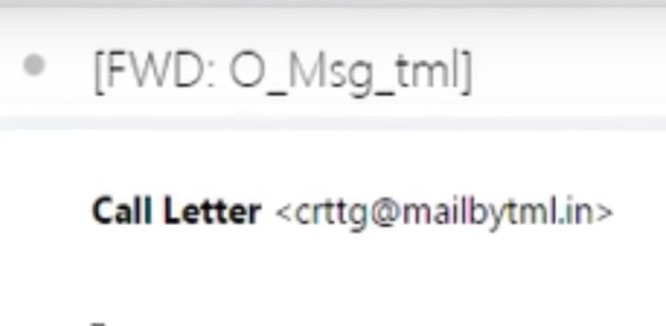
- Pay attention to where your emails are coming from. It may be easy to trust an email coming from a source you would generally trust such as your bank, phone support, or work. Scammers can make an email seem legit at first glance, but always look at the email address if you are unsure of the source. If it is an email you don’t recognize, block the sender. Use your judgment, common sense, and intuition to guide your online activities. If something doesn’t seem right, don’t click on it, swipe it, or otherwise engage with it at all. If you think it could be really dangerous to you or someone else, report it to the authorities. The image above shows a subject and an email address that are clearly bogus.
Craig Middleton
- Craig is a New York City-based retired business consultant, who is an expert in education and cultural trends. He has a Masters of Business Administration and a Masters in Education from St. Johns and loves sharing his knowledge on the side through his writing. If you have any questions or comments you can direct them to Craig at craigmiddleton18@gmail.com.
Posted in What can Dr. Doug do for you? | Comments Off on Six Basic Tips for Online Safety by Craig Middleton