Author Archive
Monday, July 15th, 2019
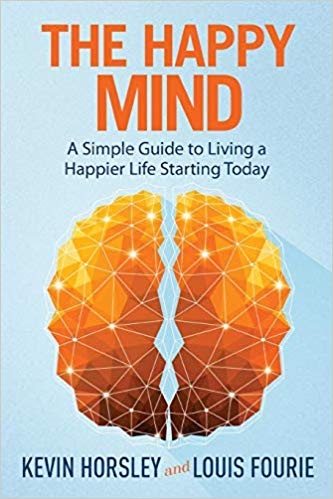
The Happy Mind: A Simple Guide to Living a Happier Life Starting Today by Kevin Horsley and Louis Fourie offers a common-sense approach to living a happy life. As a very happy person, I find their advice right on the money. Please share this with people you know who aren’t happy enough. Also, share with young people so they can learn how to be happy for the rest of their lives. Here is
the link to the book and
the link to their website.
1. The Search For Happiness
- Start by taking some time to write down your definition of happiness. This is something you will come back to later in the book to adjust as you gain perspective. Since happiness is so subjective there is no one definition that applies to everyone. None the less, everyone agrees that it is important to be happy.
- Next we look at different ways that people approach happiness. For some wealth is the driving factor even though it doesn’t guarantee happiness. These folks usually also seek status to make them happy. Some people think they will be happy only if they can change their location. Many seek happiness as they strive to improve their physical appearance. This may seem vain, but there is nothing wrong with caring for yourself. Many people see happiness sometime in the future or even the afterlife while others fondly recall the good old days. Happiness can also result from social activity and may rely to a great extent on a life partner. Social dynamics in the workplace bring happiness to some. All of these happiness influencers are external.
2. Happiness Is
- 1. Thinking In a Different Way — Happiness exists in your mind so it is important how you think. If your thoughts aren’t making you happy you need to think differently.
- 2. Assuming Full Accountability for Your Circumstances — You have to own your life and be responsible for what happens. That means you have to manage circumstances and not just let them happen to you. Your attitude is a choice and it can support or obstruct you.
- 3. Enjoying Simple Things More — Small joys are endless as long as you look for them. Nature’s beauty can make you happier if you take the time to enjoy it. You also need to have gratitude for all the little things that make you happy as you push anger, arrogance, desire, indifference, regret, resentment, and guilt away.
- 4. Owning Your Own Future — You need to own the situations you are in and don’t settle for helplessness. Adjust to new conditions and change the things you can change. Planning must be a priority if you want to accomplish your goals.
- 5. Being Engaged In What You Do for a Living
— A job you love or at least enjoy most of is vital to a happy life. You should also look to make changes so that you like it even more.
- 6. Invest in Your Overall Wellness — Taking care of yourself involves a healthy diet and exercise. Surround yourself with constructive people and reflect on good things. Stay curious and learn something new each day. Pay attention to your finances and spend less than you make. Be sure not to make any enemies.
- 7. Having Constructive Relationships — Happy people get along with others. They also enjoy their own company as being alone isn’t being lonely. Carefully select the people you develop relationships with.
- 8. Having an Optimistic World View — Optimistic people are happier. Leave the past behind and be quick to forgive others. Carrying grudges and being judgmental won’t make you happy. Try to see the funny side of life and be sure to laugh at yourself.
- 9. A Day-to-Day Effort — Happiness is work. It’s easier to be miserable. You need to be committed and make a constant effort. (Doug: After a while, it will become second nature.)
3. The Origin Of Unhappiness
- If you do the opposite of what is discussed in the previous chapter you are bound to be unhappy. Unhappy people freeze when they face challenging situations. They look for culprits rather than solutions. They don’t take responsibility for their fate and constantly blame others. They neglect their health and their finances and fail to build solid relationships. They focus on what they don’t have and haven’t done.
- At the heart of this is the failure to use the thinking brain also known as the neocortex. Instead, they are likely to rely on the primitive part of the brain that makes knee jerk decisions and reactions. For more on this see my summary of Thinking Fast and Slow: How the Brain Thinks by Daniel Kahneman.
4. Practical Guideline, Thoughts, Suggestions & Reminders in the Interest of Happiness
- Happiness is work, at least for a while until it becomes second nature. It should also be personal as you strive to find just what makes you happy. So make your plan and review and modify it from time to time. Learn to appreciate what you have along with the small things. Be sure to look for ways to spice up your plan and take advantage of situations that aren’t planned for. Keep it simple and travel light. A mindset of modest expectations fuels calmness.
- The only life you can direct is your own. You can try to change others, but don’t count on it. (Doug: Don’t marry someone thinking you can fix the characteristics you don’t like after you are married.) Make sure the information you take in is nutritious. Try to focus on one thing at a time as multitasking is inefficient and leads to more errors. Be serious about your job and proud of what you do. Above all keep looking until you find a job you enjoy. Forgive quickly as you do so for your own happiness, not the happiness of those you forgive, and don’t carry grudges. Judging others can result in endless mental effort.
- Sleep is when the brain repairs itself. Try to get seven or more hours and sleep the same hours every day. Be good to people in need. Performing an unexpected act of kindness and make you happier. Be cheerful and make time for laughter. The present is the only real tense. What you do and think now is what matters. It’s hard to be happy if your diet is bad for your body. Everyone wants to live in a neatly organized space so be responsible for yours. Craft loving relationships starting with your immediate circle. Take time enjoying being with just yourself. Try to make small daily shifts in the directions described in this book. Be frugal with your finances and decide that you are going to be happy.
5. A Few Last Words
- Learn from hurtful events and you will probably have fewer of them. Workaround your weaknesses and optimize your strengths. Enjoy your own company and look after your body. Keep your word and know when to say no. Never blame, even yourself. Live every day as if it’s your last as one day it will be. Laugh a lot more than you cry and remember, you don’t have to be happy for the rest of your life, only now.
Kevin Horsley and Louis Fourie
- Kevin is a lifelong student in the field of neuroscience. He is a World Memory Championship medalist and a two-time World Record holder for The Everest of Memory Tests. He is an international speaker, trainer, and consultant who helps organizations improve their thinking, creativity, motivation, and learning
- Louis started as an economist in the South African financial industry and was one of the first winners of South Africa’s Economist of the Year award. He founded a leading South African wealth management business and acted a chairman for twelve years. He then founded The Logic Filter a consultancy group that mentors young professionals and advises emerging business leaders.
Posted in Book Summaries, Business Books, Education Books, Leadership Books | Comments Off on The Happy Mind: A Simple Guide to Living a Happier Life Starting Today by Kevin Horsley and Louis Fourie
Wednesday, May 29th, 2019
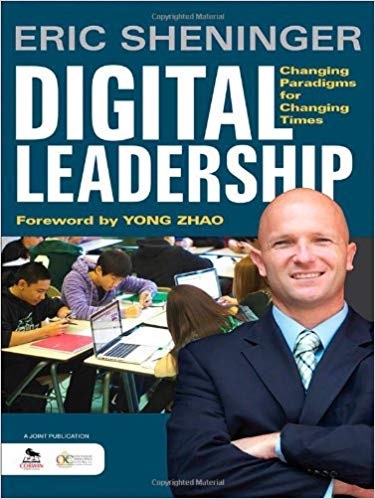
Digital Leadership: Changing Paradigms for Changing Times by Eric Sheninger explains how digital leadership is a strategic mindset and set of behaviors that leverage modern technology resources to improve a school’s culture. It will help educational leaders use social media and Web 2.0 tools to engage students, communicate with the community, and improve professional development at no marginal cost.
The Evolving Landscape
- Eric starts with a warning that if schools don’t adapt to take advantage of the technology students are growing up with, they run the risk of becoming meaningless and irrelevant. He provides a description of what each of these technologies are along with how they can be used to promote learning. He also notes today’s digital learners have many preferences that are at odds with those of the more traditional teachers many still face. They expect to access information quickly, work on several things at once, network and collaborate frequently, they often prefer other media to text, and they want learning to be relevant, active, useful, and fun. Eric also notes that technologies have been overhyped in the past and often look like solutions in search of problems. He challenges the readers to work with him to find the best ways to use the new technologies that our students live with outside of the classroom.
Why Change?
- Everything has changed except schools. Most schools still operate the way they did when they were invented to produce factory workers. Teachers do most of the talking and expect students to memorize what they see as important, and draw on material from a set-in-stone curriculum. Recent reforms are driven by the public and political sectors that feature one-size-fits-all testing just makes things worse. Even the addition of technology has not produced the needed change in pedagogy.
- What is needed are more lessons that require critical thinking, problem-solving, and the demonstration of learning through the creation and analysis of media. This will allow students to put their work on a blog for others to see. This change process can be messy and requires that teachers give up some control. Feedback from students is important here. Schools should add online courses, online field trips, independent study, credit for learning experiences outside of school, and internships. Leaders need to model technology use, support risk-takers, and make sure the staff has access. You can start the change process by having the staff read the free report Expanding Approaches for Learning in a Digital World.
Leading Sustainable Change
- Dr. Spike Cook, an elementary principal, modeled the use of technology for learning and communication for his staff. He rewarded teachers who took risks to follow his lead. As time went by he noticed increased technology use during his observations as many teachers joined him in the social media world.
- Eric summarizes Michael Fullan’s Six Secrets of Change. They include loving your employees, connecting peers, building capacity, and making learning central to all work and interactions. He then warns about the many roadblocks to sustaining transformative change. They include change is hard, lack of time, Lack of collaboration, too much top-down direction, lack of support, negative attitudes, fear, and poor professional development.
How New Milford High Changed
- Here Eric tells the story of how his high school went from ordinary to award-winning. The first change was his own philosophical enlightenment regarding the difference Web 2.0 tools and social media could make. He proceeded to educate himself and his staff. Encouragement, support, flexibility, and modeling were his key efforts. Next, he turned his students loose to help transform the culture. They were granted access to the school’s wireless network with their own devices. Such BYOD programs require a sense of trust that they will use their devices as learning tools. Finally, as innovative practices increased, he felt it was important to share what was taking place within and beyond the walls.
Posted in Book Summaries, Education Books, Leadership Books | Comments Off on Digital Leadership: Changing Paradigms for Changing Times by Eric Sheninger
Monday, May 20th, 2019
The Wisdom and Wit of Diane Ravitch – This collection of 97 short essays from 2010 to 2018 offers a look at how her thinking evolved from the test and punish approach of No Child Left Behind to her understanding of how these federal policies pushed by corporate leaders like Bill Gates have had a very negative impact on public schools and students. Here are some of the high points. Be sure to grab a copy for your school’s professional development library. The chapters tend to repeat themselves a bit, but her points are sound.
2010 – Why She Changed Her Mind
- She kicks off this book with the story of how she changed her mind on NCLB’s standardized testing regime and charter schools. The program was utopian and destined to show that all schools were failing. It gave no incentive to teach anything except basic language arts and math. It produced graduates who are drilled endlessly on basic skills and ignorant of almost everything else. Ironically there were no real gains on the tested subjects since it was implemented in 2002.
- As for charter schools she saw that on the whole they did no better than public schools and they were able to exclude most of the students who were hardest to teach. Since the best predictor of low academic performance is poverty, it makes no sense to punish low performing schools. Reasons like these are why she changed her mind.
- She notes that the reforms of the Obama administration are built on the shaky foundation of NCLB. The idea is that if students don’t get higher scores someone must be punished. This pointless strategy solves no problems. It’s ironic that Obama’s plan represents a wish list for the Republican Party with its push for more testing and charter schools.
- Obama’s “Race to the Top” pushed states like New York to adopt the Common Core Objectives, test students in all subjects and grade levels, make schools use independent observers, and fire teachers who fail to produce good test scores. These bad ideas all came from the corporate sector where they had already failed. They also drive out work on skills business want like creativity, collaboration, problem-solving, and critical thinking.
- While Americans are overwhelmingly dissatisfied with public schools, 77% give their child’s school a grade of A or B. Reformers think that teachers are the most important factor in determining achievement when in fact their efforts are far outweighed by students’ backgrounds, families, and other non-school factors. This may be why charters, on the whole, fail to outperform public schools.
- Ravitch traveled to Finland to see why their schools do so well. Their reforms are just the opposite of those in the US. There is no focus on academics prior to age seven, the only tests are those teachers give to inform their practice, all schools are public, and access to teacher preparation is highly selective. Their focus is on teacher preparation rather than testing and punishing.
Posted in Book Summaries, Education Books, Leadership Books | Comments Off on The Wisdom and Wit of Diane Ravitch
Sunday, May 19th, 2019
The Best Remedies for Heart Disease Among Women by Jennifer Smith
According to a 2018 report by the U.S. Department of Health & Human Services on the leading causes of deaths among women, one in every four deaths is heart-related. This report was instrumental in painting the harsh reality in the medical world, especially concerning women and heart disease. Since then, different experts have come up with many remedies—all aimed at reducing the number of deaths among women. This article discusses some of the best remedies for heart diseases among women.
Keep track of your heart condition
- Keeping a record of your heart condition is one of the best ways of maintaining a healthy heart. Unlike other organs, detecting heart diseases in early stages is impossible, especially when someone does not have specialized equipment. Fortunately, EKG machines have revolutionized this medical space in the following ways.
- Thanks to the best EKG machine, it is possible for a doctor to keep track of your heart rate and rhythms. Inconsistency in heart rate and rhythms can signify a bigger heart problem. However, it is hard to detect if your heart rhythm and heart rate are inconsistent without a specialized machine, such as an EKG machine. Thanks to advances in this niche of EKG machines, it is now possible to detect enlargement of the heart and, more importantly, detect other complications such as myocardial infarction and hypertension.
Choose a regular exercise routine and get enough sleep every day
- Finding an enjoyable hobby is easy, but being consistent in an exercise routine is hard for most women. The U.S. Department of Health & Human Services points out that being part of regular exercise is not only good for metabolism but also strong and healthy hearts. According to this department, paying for a gym membership is great, but being inconsistent is not suitable for your heart. Instead, pundits point out that daily exercise, such as using stairs, is unmatched when it comes to your health.
- On the other hand, a night of good sleep is essential, especially for women aged 30 and above. Although the optimal hours of sleep are still one of the most discussed items in the medical cycles, the minimum number of hours recommended for women is six. In a study by an independent firm in 2018, people who sleep less than six hours a day have higher chances of getting cardiovascular disease.
Manage stress through changing life perceptions and reducing alcohol intake and smoking
- Stress is without a doubt the highest cause of heart diseases in the world. Although it is hard to live a stress-free life, having a unique approach to stress management is critical. One of the best ways of reducing stress in life is having a mental shift of success and failures in life. Humans have high expectations about themselves and others. If the expectations are unmet, stress is inevitable. However, having a change in life perception is not only a key to happiness and satisfied life but also ideal for your heart wellness.
- On the other hand, smoking and alcohol have a tremendous effect on your nervous system and other vital organs. However, the two affects stress management of women and makes her vulnerable to heart diseases. Although deciding to stop drinking alcohol and smoking is advisable, reducing the intake of the two is also great for your heart.
Change your diet and eat healthier
- According to pundits, we are what we eat! This medical reality also applies to heart health. One of the greatest threats to your heart are unhealthy fats. Although there are many types of fats, trans-fat poses a risk to your body. According to statistics, consumption of trans-fats and over-consumption of fats increases your chances of heart diseases by over 34%. In order to be healthy, reduce fat consumption.
- It is also critical to reduce salt intake, especially added salt. Recent studies have shown a lot of connection between excessive salt intake and heart disease among women. Salt has a negative effect on your heart as well as other organs in your body. Instead of adding salt to your food, experts recommend that you try out alternatives such as different healthy seasonings.
- Finally, eating a balanced diet may sound cliché to the modern population, but it is the gateway to better health, especially to a healthy heart. In the last two decades, most people are becoming keen on what they eat. One of the trends is a vegan’s approach to diet. Although it has its own downfalls, the lifestyle provides some insights on the importance of fruits and vegetables in our diets. It’s also a good idea to avoid added sugar and sugar-laden drinks.
Posted in Guest Posts | Comments Off on The Best Remedies for Heart Disease Among Women by Jennifer Smith
Monday, April 8th, 2019
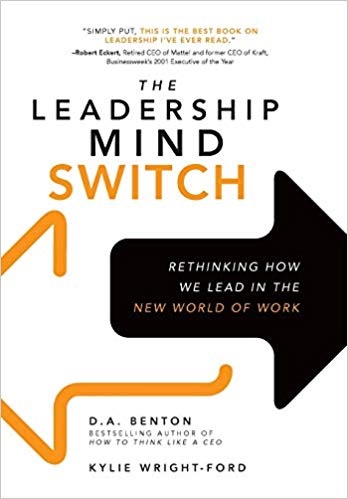
The Leadership Mind Switch: Rethinking How We Lead In the New World of Work by D. A. Benton and Kylie Wright-Ford makes an excellent textbook for any modern course on leadership, including educational leadership. It deals with how our modern culture impacts how leaders need to think and operate and it also deals with leadership qualities that never change. Get a copy for any aspiring leader you know.
Introduction
- The leadership game has changed over time and continues to do so. The book’s premise is that a mind switch is needed now to be ready for the future that will be vastly different. This book offers tools and information that you will likely need to lead in the future. You will need skills to understand and relate to people of all kinds. The more human aspect of leading is emphasized here. Leadership is everything in business and schools and since someone is going to lead it might as well be you.
Part One: Leading Today and Tomorrow 1. The Changing World of Leadership
- We know that information is rapidly expanding and that there will be welcome and unwelcome consequences. Technology is ever expanding and robots may soon join your staff. Telecommuting is on the increase so you need to be able to communicate with others from almost anywhere in the world. Office spaces and hours are changing and some people, even leaders, don’t have desks. Leadership today is about character and communication. They will have more daily contact with everyone and must be able to connect with all types of people.
- Leaders will have to understand and use technology and decide how it will be used. Leaders must decide the rolls that things like virtual reality, augmented reality, artificial intelligence, and the Internet of things will have. Worker turnover has increased so it’s up to leaders to be the kind of people who can persuade workers to stay. The workplace will be more diverse so the leader needs to be able to relate to everyone. They must understand who they are speaking to, tell stories, and know that feelings count. They also must avoid generation gap issues. A description of the generations is included here.
2. Rethinking Our Leadership Qualities
- Leadership is ever evolving. After setting a course (vision) a leader needs to develop a team that collaborates, cooperates, and enjoys each other. They need to be informed, curious, stable, positive, and accountable. They need to be able to relate to all generations and with people from all cultures. The one thing all followers want is trust and loyalty. Without them, nothing else matters. You must be accessible and not play loose with the facts. Speak frankly but be discreet.
- Keep in mind that older workers are more likely to be cynical. Clear the air when you slip up with something you said, done, or implied. Do it privately on the phone or in person, not via email or text. Project confidence, which is a combination of courage and curiosity. Show that you are continuously learning and willing to try new things. Know your limitations and ask for help.
- Know when it’s time to change course rather than being stubborn. When it comes to technology lean towards early adoption. As a leader, you need to have a wide range of interests. This is where being curious helps. Be open-minded and nonjudgemental. Learn to ask good questions and listen well to the answers. The concept of grit is covered here. See my summary of Angela Duckworth’s book Grit: The Power of Passion and Perseverance.
3. Developing Our Leadership Behaviors
- You need to be consistent and set an example every day. Don’t be moody. Everything you say and do communicates a message. In addition to words, things like posture, clothes, tone of voice, body language, facial expression (smile), and energy level communicate. When you do talk, don’t talk too fast. With younger people, you may find yourself texting more. Tell staff to only send emails that they would put on the wall for everyone to see and not to read between the lines. Some people are comfortable with physical contact, but not everyone.
- Stories are important and powerful. You need to set the scene, explain what happened, and wrap it up with a moral or key takeaway. Keep current and interesting, which will make you dynamic. Dynamic leaders introduce new ideas, are creative, bring energy and focus, change with the times, consider all situations, and model confident behavior. They enable change they don’t just manage it. They adapt to new technology, make course corrections when needed, and model the right attitude. They make work fun, interject humor, and accept and embrace all team members. They constantly recognize the actions they want to see.
Posted in Book Summaries, Business Books, Leadership Books | Comments Off on The Leadership Mind Switch: Rethinking How We Lead In the New World of Work by D. A. Benton and Kylie Wright-Ford