Author Archive

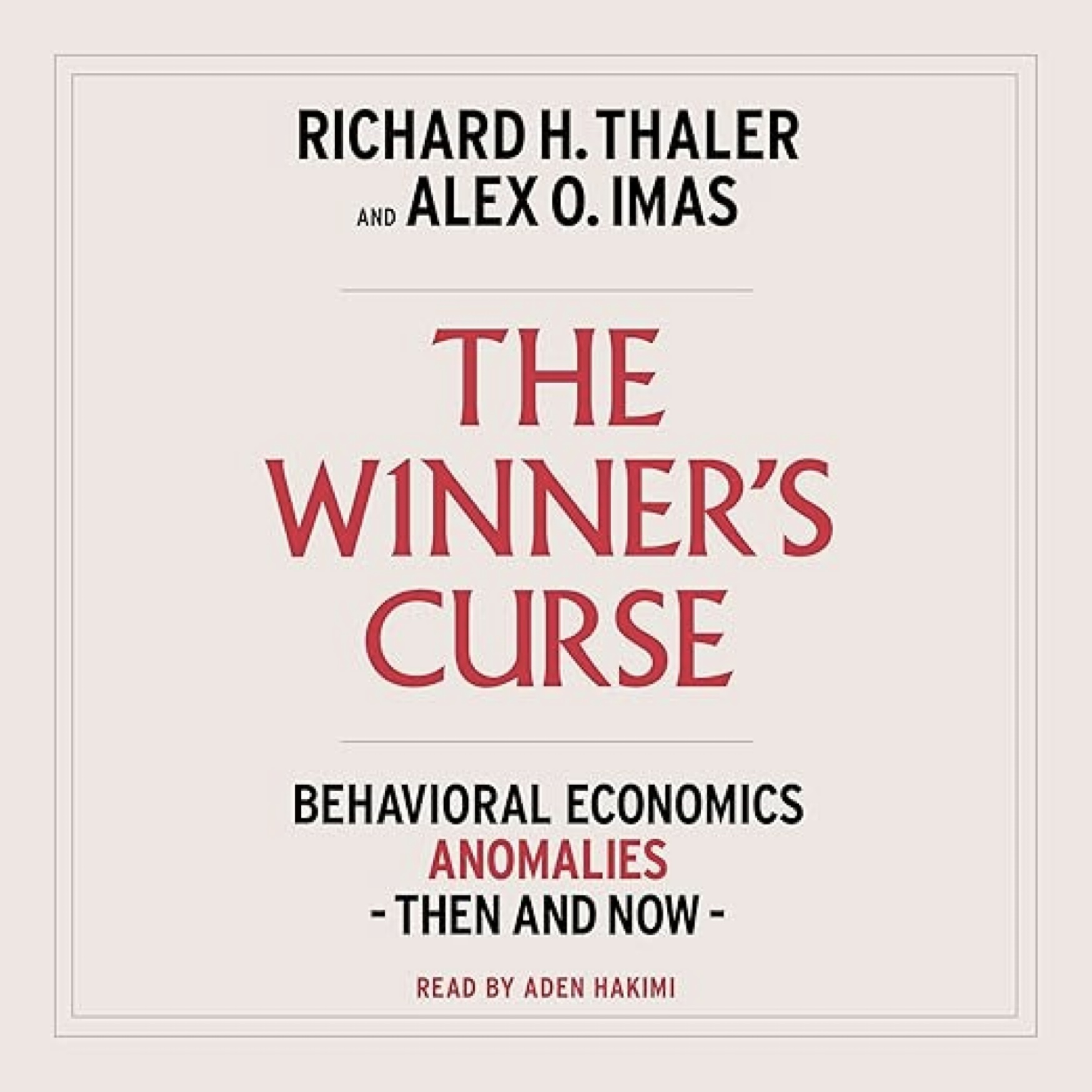
The Winner’s Curse: Behavioral Economics Anomalies – Then and Now by Richard Thaler and Alex Imas

Wednesday, March 4th, 2026

book

The Winner’s Curse: Behavioral Economics Anomalies – Then and Now by Richard Thaler and Alex Imas

is a revision of Thaler’s original work from 1992. Here you will learn about the many anomalies in human thinking that have personal economic impact. By understanding these anomalies, you can better maximize your wealth.

Preface

  • The book builds on the work Richard has done since the original “The Winner’s Curse” was published in 1992. He gives Alex no credit for the original work as Alex was in grade school at the time. Together, they have rewritten the original work and added anomalies that have been discovered and reproduced since 1992. To avoid making the book too long, they left out some anomalies they felt had lesser broad interest. You can, however, read the papers on those subjects at thewinnerscurse.org.

1. The Winner’s Curse

  • The origin of The Winner’s Curse came when oil companies participating in auctions to drill on federal lands found that the winner found less oil than expected. The winner of the auction was a loser in financial terms. This idea extends to any auction where there are lots of bidders as someone will almost always bid too high. The lesson is to become more conservative as the size of the group you are bidding against increases.
  • This concept also applies to Major League Baseball where the team that pays the most for a free agent usually finds that he underperforms. Successful buyers of smaller companies usually find little or no gain for the buyer. Early picks in the NFL draft are often bad deals as the teams who pick top choices have to pay them more, while teams with lower picks often find hidden gems. Tom Brady, for example, was taken with the 199th pick.
  • Each chapter ends with a “conclusion so far,” and “an update” from the original work. There is also a bottom line summary.

2. Cooperation

  • We should be happy that cooperation in general is common in our country. Factors sited are that most people voluntarily return lost wallets, pick up after their dog, and make charitable contributions. Many people do nice things for others without expecting anything in return because it makes them feel good. (Doug: I’m one of those. Try it if you haven’t.) There is a tit-for-tat aspect to cooperation in that when cooperation isn’t returned, the person who was initially cooperating is likely to stop.
  • One of the key pieces for research sited in this chapter uses the prisoner’s dilemma. Click here to find out what it is.

3. The Ultimate Game

  • The big idea is that people are willing to sacrifice some of their own money to punish actions that they think are unfair. No one likes free riders and everyone likes to be treated fairly. Those who violate these social norms may be punished. Try being nice; it will make you feel good about yourself and might even increase your monetary rewards. The authors, and many other researchers, refer to The Ultimatum Game as a basis for the research that produced these findings.

4. The Endowment Effect, Loss Aversion, and Status Quo Bias

  • If you demand more to sell an object than you are willing to pay for it, you are experiencing the endowment effect. This qualifies as and anomaly as you value something more if you have it than you do if you do not have it. Hanging on to something that you could sell at a profit is the status quo bias. Dealers who are used to buying and selling don’t seem to be impacted by either.
  • Finely, there is loss aversion. This is where losses hurt more than equivalent gains feel good. Even though they are experienced, professional golfers try harder to make par putts than birdie putts. They seem to feel that losing out on making par hurts more than making a birdie feels good.
Share this:
Share this page via Email Share this page via Stumble Upon Share this page via Digg this Share this page via Facebook Share this page via Twitter Share this page via Google Plus

Primal Intelligence: You Are Smarter Than You Know by Angus Fletcher

Saturday, February 14th, 2026

Book
Primal Intelligence: You Are Smarter Than You Know by Angus Fletcher tells the story of the training that Project Narrative and Army Special Ops created. The training is simple, not easy. It is a different way of using your brain. It will activate intuition, imagination, emotion, and commonsense, awakening the powers of van Gogh, Tesla, Jobs, and the rest. It will let you use the know how you forget you knew. This book is very cool. Be sure to get a copy.

Introduction: Your Lost Nature

  • In the early 2000s, The US Army Special Operations saw trouble coming as recruits were underperforming at decision-making, strategic planning, and leadership. In 2021 they brought in Angus to help design a new training system. Students were doing well on standardized tests, but had difficulty with real-world tasks. Traditional class activity caused declines in independence, adaptability, and resilience. The new training focused on volatility, uncertainty, complexity, and ambiguity.
  • They discovered four primal powers. 1. Intuition that perceives the world’s hidden rules. 2. Imagination that makes the future. 3. Emotion that knows the path of personal growth. 4. Commonsense that decides wisely in uncertainty. Drilling students to think like computers will not help them improve the natural cleverness that AI can’t replicate. The human brain is real-life smart because it thinks in story.

Part I: Primal Activation – 1. Intuition: Spot the Exception Like Vincent van Gogh and Marie Curie

  • Intuition means to know without consciously thinking. It arrives as a flash of insight. Its source is exceptional information that results from an extraordinary event. Identifying exceptional information requires initiative. It detects a rupture in a standard narrative and runs ahead of data. The potential reward for acting on the information can be enormous. No human environment ever stays the same. The better we get at detecting the exceptional, the more our brain can intuit the possibilities.
  • There are stories here about Vincent van Gogh, Marie Currie, Steve Wozniak, and Steve Jobs that illustrate the power of exceptional information. If you can’t see what’s exceptional, then treat everything as exceptional. Unfortunately, our brain’s default tends to be assume that you’ve seen everything before when it should be assume that everything you see is special. Try to immerse your brain in a totally new environment. That will jump-start your child way of thinking. Try to turn off logic and turn on imagination. Ask who, what, where, when, and how, but try not to ask why, which involves judgement. Focus on surprises that catch your eye.

2. Imagination: Go Low Data Like Ludwig van Beethoven and the Special Operators

  • Imagination means “to see things that the eyes don’t see.” We do it constantly and it can be accurate. It comes from the part of our mind that produces mental images. Stories are the source of imagination. We are born to understand stories. In order to convince early juries, lawyers wove facts into stories and they have been doing it ever since. Children naturally think in stories and that doesn’t stop as they become adults.
  • While logic computes what is probable, stories create what is possible. Story performs better than logic when it comes to life problems. The way to train imagination is planning, as planning is its main use. Plans often fail because they don’t consider enough possibilities. A good plan has one long-term goal (strategy), and many possible paths (tactics). Don’t try to climb two mountains at once. Your life story is your plan for life.

3. Emotion: Self-Assess Like Antigone and the Singletons

  • Emotional intelligence lets you identify your emotions in other people. This is empathy. It relies on biology rather than logic. Fear is an ancient emotion. It’s smart enough to let you know that you have no plan. It represents our brain’s backup plan. If you clarify your strategic objective, it will help you take the next step to help your plan get better.
  • Fear can help push you towards your primary purpose. Fear’s ancient partner is anger. Anger can fuel you in critical situations. Too much can elevate stress, which is bad for your health. Treat it as a signal to pause and develop flexibility. Reflect on when you made new plans under pressure and tell yourself you can do it again. This is an emotional reset. Two basic stories are the world is good and I am good. When one breaks down, lean on the other. Beware of grief and shame as they can weaken your forward momentum. Emotion should tell you when things are wrong and point you towards a fix.
Share this:
Share this page via Email Share this page via Stumble Upon Share this page via Digg this Share this page via Facebook Share this page via Twitter Share this page via Google Plus

Parents Can Nurture Leadership Skills from an Early Age Using These Strategies by Emily Graham

Saturday, February 7th, 2026

Graham

Parents play a defining role in shaping how children see themselves, others, and their
ability to influence the world. Leadership isn’t just about being in charge—it’s about
confidence, empathy, problem-solving, and responsibility. When parents intentionally
foster these traits early, children are more likely to grow into adults who can guide,
collaborate, and adapt in meaningful ways.

A Quick Snapshot for Busy Parents

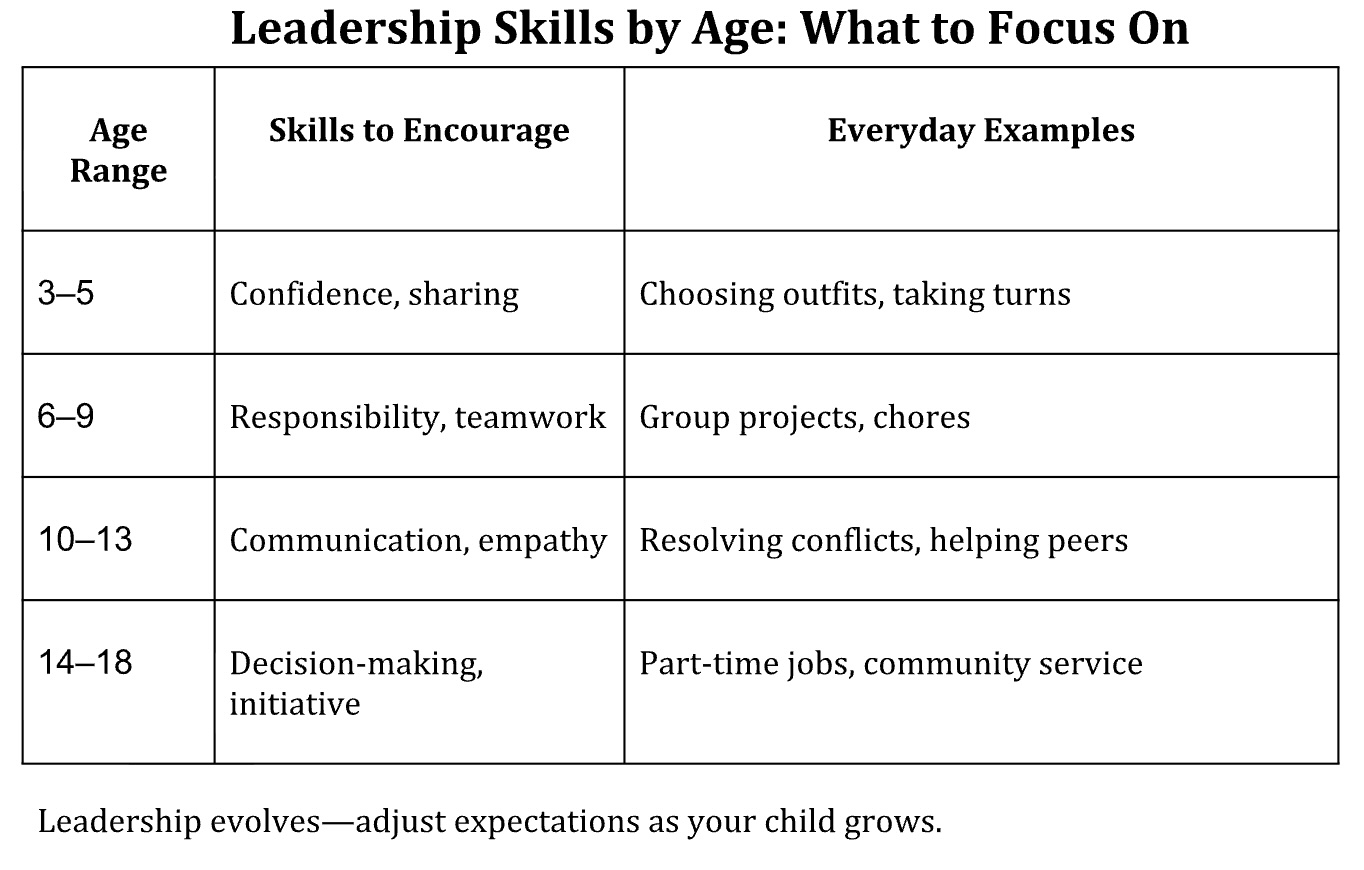
Leadership skills grow through everyday moments, not formal titles. Children learn
leadership when they’re trusted with choices, encouraged to speak up, allowed to fail
safely, and shown what responsibility looks like in real life. Small, consistent actions at
home compound into lifelong skills.

Why Leadership Development Starts at Home

Children don’t learn leadership in a vacuum. The home environment sets expectations
around communication, accountability, and initiative. When parents invite kids into
conversations, routines, and decision-making, children begin to understand that their voice
matters—and that leadership involves listening as much as speaking.

Practical Ways Parents Encourage Leadership

Here are several approaches that work especially well when woven into daily life:
● Give age-appropriate responsibility. Chores, pet care, or planning a small family
activity teach ownership.
● Encourage independent thinking. Ask “What do you think?” before offering
solutions.
● Model emotional regulation. Calm responses during stress show children how
leaders handle pressure.
● Let kids solve problems. Resist the urge to fix everything immediately.
● Praise effort, not just outcomes. This reinforces resilience and growth.
These actions signal trust—and trust is the soil where leadership grows.

A Simple How-To: Building Leadership at Home

Follow this weekly rhythm to keep things natural and low-pressure:

1. Invite participation. Let your child help choose meals, weekend plans, or family
rules.
2. Rotate leadership moments. One child leads game night, another leads cleanup.
3. Reflect together. Ask what went well and what could improve.
4. Normalize mistakes. Share your own learning moments out loud.
5. Celebrate initiative. Notice when your child takes action without being asked.
Consistency matters more than intensity here.

Leading by Example Through Learning

Children absorb what parents do far more than what they say. When parents pursue
personal growth—especially education—it sends a powerful message about ambition,
discipline, and lifelong learning. Advancing your career by earning an online degree
demonstrates commitment and forward thinking, traits children associate with leadership.
For parents interested in making a meaningful difference, pursuing a healthcare-focused
path can be especially impactful, allowing you to contribute to the well-being of individuals
and families. Online education also offers flexibility, making it possible to balance work,
learning, and parenting without sacrificing family time. Parents exploring options like
health administration programs online often find that their dedication inspires similar
motivation and confidence in their children.

Graham

Common Questions Parents Ask

  • Isn’t leadership something kids are born with?
    Some children are naturally outspoken, but leadership skills can be learned and
    strengthened in every child.
  • What if my child is shy?
    Quiet children can be excellent leaders. Focus on listening skills, empathy, and confidence-building rather than dominance.
  • Can too much responsibility overwhelm kids?
    Yes—balance is key. Responsibilities should stretch, not stress.
  • Do extracurriculars matter?
    They help, but leadership can develop just as effectively through family life and everyday
    interactions.
  • A Helpful Parenting Resource Worth Exploring

    For parents looking to deepen their understanding of child development and leadership-
    related behaviors, the American Psychological Association offers evidence-based guidance
    on raising confident, resilient children. Their parenting resources provide practical insights
    grounded in research.
    Leadership isn’t taught through lectures—it’s lived through example, trust, and everyday
    choices. By creating space for responsibility, reflection, and growth, parents give children
    the tools to lead in their own way.

    Emily Graham

    Emily is the creator of MightyMoms.net. She believes being a mom is one of the hardest jobs around and wanted to create a support system for moms from all walks of life. On her site, she offers a wide range of info tailored for busy moms — from how to reduce stress to creative ways to spend time together as a family. You can email her at emilygraham@mightymoms.net. She lives in Arizona.

    Share this:
    Share this page via Email Share this page via Stumble Upon Share this page via Digg this Share this page via Facebook Share this page via Twitter Share this page via Google Plus

    Parents Can Nurture Leadership Skills from an Early Age Using These Strategies by Emily Graham

    How to Stay Organized as a New Teacher: A Practical Guide to Calm and Control by Emily Graham

    Friday, January 30th, 2026

    How to Stay Organized as a New Teacher: A Practical Guide to Calm and Control by Emily Graham

    Graam
    The first year of teaching can feel like a marathon run at sprint speed. Between lesson prep, paperwork, and classroom chaos, organization becomes the only way to keep your energy and clarity intact. The key is to treat organization not as perfection, but as a rhythm that adapts as you grow.

    Quick Insights

  • Set up repeatable routines early; they’ll save you when energy runs low.
  • Keep your physical, digital, and emotional spaces equally tidy.
  • Use tech tools only if they actually simplify your workflow.
  • Expect breakdowns; recovery habits matter more than flawless systems.
  • Review and refine every few weeks; organization is iterative.
  • Phase 1: Set Up Your Foundation (Before the Year Starts)

    This stage is about making your classroom and time management predictable.
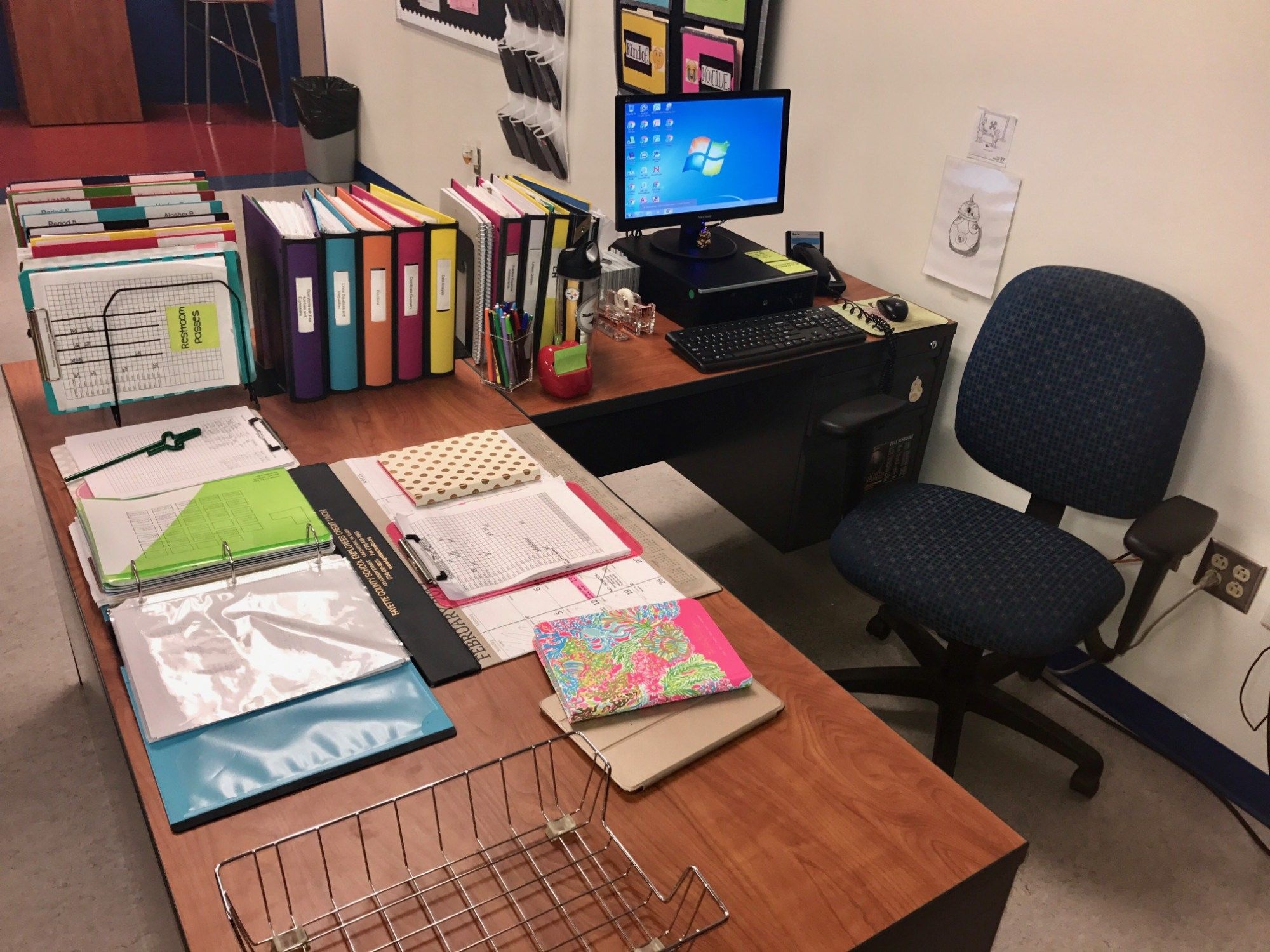
    Think less about decoration, more about logistics. You’re designing a cockpit, not a gallery.

  • Map your classroom traffic: where students move, turn in work, and find materials.
  • Label everything you’ll reuse: bins, folders, lesson binders.
  • Choose a single calendar (digital or paper) and stick to it all year.
  • Build one “command center” binder for lesson plans, rosters, and contact lists.
  • Write a short morning and end-of-day routine on a sticky note; practice it until it is automatic.
  • A clear physical environment reduces cognitive load and prevents small chaos from snowballing.
  • Phase 2: Managing the Day-to-Day (During the Semester)

    Once routines are running, your focus shifts to time orchestration. This phase is where energy management beats color-coded perfection.
    Here’s one reliable approach many new teachers use:

  • Begin each day with a five-minute preview of lessons.
  • Group tasks into blocks: plan, teach, communicate, grade.
  • Protect one “quiet slot” daily to reset and think.
  • End every Friday by clearing your desk and drafting Monday’s to-do list.
  • Graham
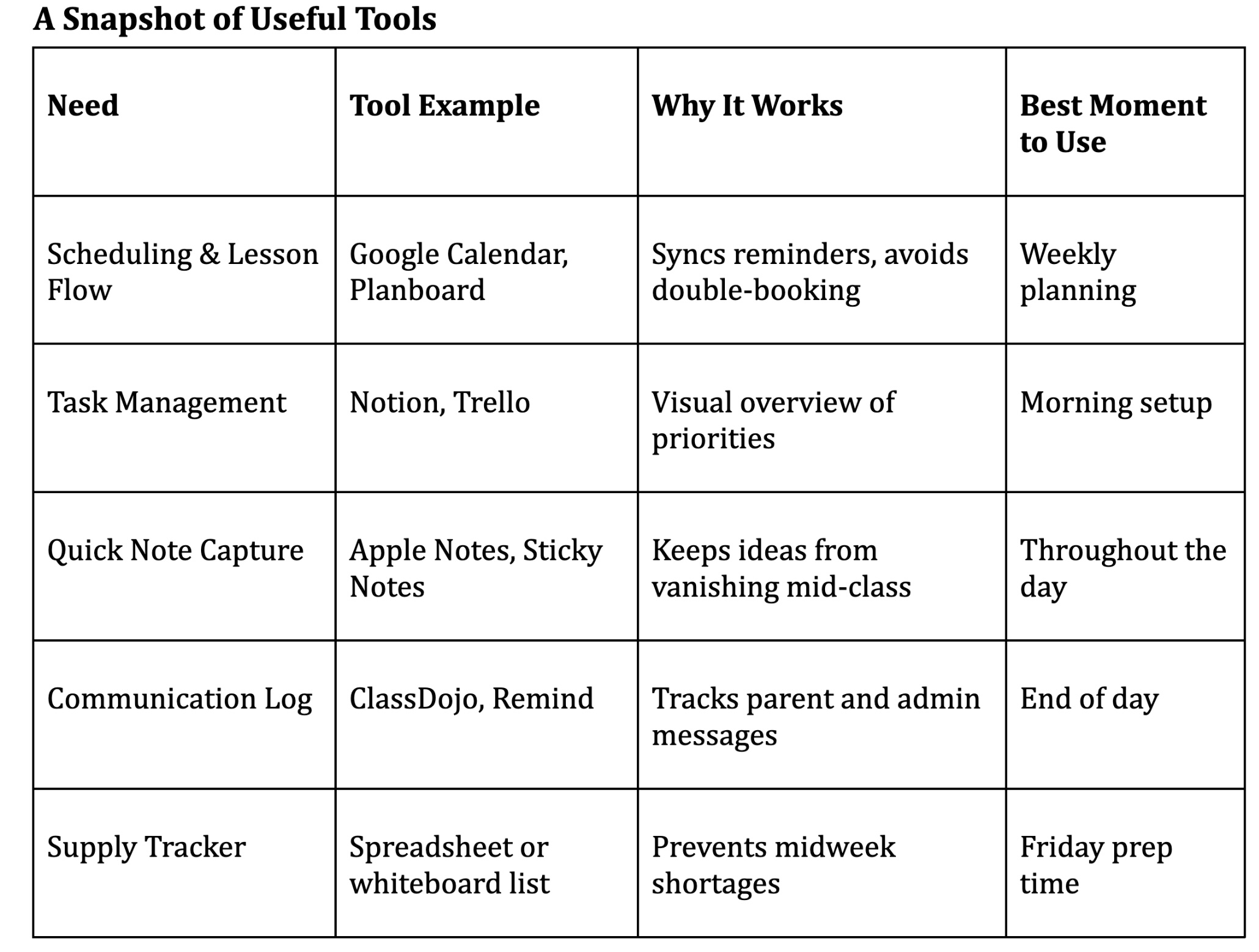
    Each tool should solve one pain point, not add another dashboard to babysit.

    Phase 3: Maintaining the Digital Layer (Weekly Reset)

    Digital clutter drains focus as much as paper piles. Every weekend, dedicate one short block of time to file, rename, and back up your week’s work.

    Scanning and digitizing older lesson plans turns them into living templates for future reuse. Save all documents as PDFs to preserve formatting across systems; and when you need to tweak one, PDF editing capabilities let you adjust without converting the file.
    This small ritual builds a searchable memory of your teaching life instead of a stack of mystery folders.

    Phase 4: When Systems Break (Midyear Reality Check)

    Even with the best plans, every teacher hits the wall: progress reports, testing weeks, surprise meetings. Organization isn’t about preventing breakdowns; it’s about recovering faster when they happen.

    One sentence to remember: “Reset small, not all.” Don’t try to overhaul everything at once. Instead:

  • Clear one surface—your desk or desktop.
  • Identify the one area causing most stress (grading? communication?).
  • Spend 20 minutes creating order there and ignore the rest for now. This micro-reset rebuilds momentum and restores control without burnout.
  • Phase 5: Reinforce Growth and Efficiency (End of Month)

    Reflection turns scattered effort into sustainable improvement. Schedule a short monthly review to check what worked and what didn’t.

    Here’s a simple structure:

  • Note which routines saved you the most time.
  • Archive outdated files and student records.
  • Refresh classroom zones that collect clutter.
  • Ask: “If I had to train someone to use my system, would they understand it?”
  • This step closes the loop; your organization matures alongside your teaching skill.

    FAQ

    1. How do I stay on top of grading without losing weekends?

    Batch similar assignments and use rubrics to speed evaluation. Set a time cap for each grading session—when it’s over, stop. Digital tools like Google Classroom’s comment bank can automate repetitive feedback. Protect one full day each week with no grading at all to recover mental space.

    2. My inbox is out of control. Any fix?

    Use the “touch once” rule: open, act, and archive. Create folders by urgency: today, this week, later. Set aside one email window per day rather than checking constantly. That alone can save an hour daily.

    3. I can’t find balance between planning and teaching.

    Reserve Mondays for long-range planning and midweek for quick adjustments. Keep next week’s materials ready by Friday. Predictable rhythms reduce last-minute scrambling and keep lessons aligned.

    4. What should I do when I feel disorganized and behind?

    Acknowledge it, then start with one visible win. Clear your desktop or file the top ten papers. Order returns through visible progress, not guilt. Momentum is more important than catching up instantly.

    5. How can I keep from reinventing the wheel each semester?

    Create a digital “gold folder” with lesson plans, slides, and resources that worked well. Tag each file by grade and topic. Over time, it becomes your personal library; organized experience ready to reuse.

    Conclusion: Structure Creates Freedom

    Organization isn’t a personality trait; it’s a form of professional kindness to yourself. Every label, folder, and routine you build today buys you future calm. You’ll still face unpredictable days, but they won’t undo you. Over time, your systems will hum quietly in the background, freeing you to do what drew you to teaching in the first place: helping students grow with focus, patience, and presence.

    Emily Graham

    Emily is the creator of MightyMoms.net. She believes being a mom is one of the hardest jobs around and wanted to create a support system for moms from all walks of life. On her site, she offers a wide range of info tailored for busy moms — from how to reduce stress to creative ways to spend time together as a family. You can email her at emilygraham@mightymoms.net. She lives in Arizona.

    Share this:
    Share this page via Email Share this page via Stumble Upon Share this page via Digg this Share this page via Facebook Share this page via Twitter Share this page via Google Plus

    Zlibrary and the Evolution of Reading as a Daily Practice by Sharie Magnano

    Thursday, January 15th, 2026

    REading

    Zlibrary and the Evolution of Reading as a Daily Practice

    • The habit of reading shifts with each generation yet its pulse remains steady. An e library now sits at the center of this steady beat and helps readers follow stories knowledge and ideas with ease. Screens glow where lamps once stood though the spirit of quiet discovery feels the same.
    • As this shift settles in z-library continues to inspire curiosity and lifelong reading habits. Readers drift through vast shelves of thought without hurry and with a sense of freedom that mirrors long afternoons spent in a favorite nook. This gentle flow turns reading into a calm ritual that fits into any moment.

    The Rise of Accessible Reading

    • E reading has grown into a simple routine for many people. Books that once filled backpacks or bedside tables now live in small pockets of light. This shift makes reading feel natural like tapping a shoulder of an old friend. Each book builds a bridge to deeper thought and each session brings a spark that carries into daily life.
    • This wider reach also supports different styles of reading. Some people settle into long novels while others move between short essays or poems. Both paths create steady growth. Both keep minds awake. A library that sits in one digital doorway opens these paths with no fuss and no pressure.
    • Now the flow of stories and ideas leads toward a rich mix of experience:

    Echoes of Community

    • Shared moments form when a reader finds a story that speaks to lived experience or sparks a new idea. These echoes may travel through conversations or journals or quiet reflection. Each one adds weight to daily reading and turns it into a personal anchor.

    Growth Through Variety

    • A shift in genres often shapes the inner voice. A mystery beside a history text or a poem next to a science book can stretch thought and soften old boundaries. This variety becomes a gentle teacher that guides readers without feeling like work.

    Quiet Strength in Routine

    • A steady practice of reading can ground a busy day. It feels like breathing fresh air after hours indoors. The mind settles and the heart steadies through small moments spent with trusted books.
    • This blend of shared echoes bright variety and quiet strength enriches the rhythm of reading and encourages a return each day.

    Expanding Horizons Through E Libraries

    • Modern reading tools now provide a home for deep study and playful wandering. A single tap can pick up a paused page of a novel or jump into a section of a reference book. Switching between fields encourages new connections and sparks ideas that might stay hidden on printed shelves. The path may twist yet it stays warm and inviting.
    • Growth also appears when readers look for fresh voices. Stories carry the weight of culture memory and imagination. In this search a reader may drift toward a helpful source such as z lib.pub which adds another doorway into wide and varied shelves.

    A Living Practice That Keeps Evolving

    • Reading keeps its place in daily life because it welcomes every stage of growth. It adapts to short breaks long nights and wandering thoughts. It shapes memory and fuels dreams. Each page holds a mirror a map or a gentle lantern. In this light reading becomes more than habit. It becomes a steady companion that walks with each curious mind.

    Sharie Magnano

    • Shelly works as a freelance copywriter specializing in content and editorial projects. I’m based in USA and collaborate with clients worldwide
    Share this:
    Share this page via Email Share this page via Stumble Upon Share this page via Digg this Share this page via Facebook Share this page via Twitter Share this page via Google Plus