In the final part of Steve Suto’s heart transplant saga, he shares his feelings about living with a new heart and how he is trying to be worthy of his donor’s gift. Share his new reality and join me in experiencing the inspiration it offers even for people like me who are likely to never have to face what he did. If you missed the rest of the story, here are the links to part 1 Reflections of a Heart Transplant Survivor, part 2 How to Qualify for a Heart Transplant, and part 3 Making the Wait for a Donor Heart Bearable.
Waking Up With a New Heart
I want to chronicle a hopefully finite time within “the course of human events” when transplants started during my lifetime and when someone can take a patient’s DNA and grow a transplant organ. This new organ will adequately replace the failed organ and not be rejected. Until there is no need for organ donation, transplant patients will be dependent on the humanity of organ donors and the amazing skill of transplant surgeons.
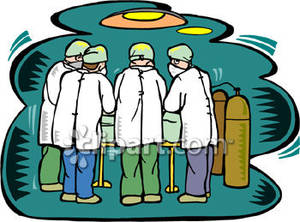
At the end of part three, I was sedated on the operating table and the transplant team at Strong Memorial in Rochester, NY was in the process of transplanting its 168th heart. When I knew I was finally going to have my transplant operation, I had total confidence in my transplant team.
My thoughts about transplants and how transplants have been portrayed during my life have crystallized into this confidence. Up to my being a candidate for a transplant, most of what I thought about transplants came from fuzzy memories of TV dramas and newspaper stories. Organ rejection was the theme of most of these dramas. I remember more than one of those stories featured people having no chance to survive without reconciling with a long lost identical twin who might donate a kidney. I remember Dr. Christian Bernard’s organ transplant team’s attempt that ended in organ rejection and Barney Clark’s artificial heart.
These developments were front-page news. That was cutting edge. (pun intended) Now transplants are still complex team efforts but they are common. The most progress has been made regarding the post-op issues of infection and organ rejection.
Tests, Tests, and More Tests
With my new heart, I was regularly tested for organ rejection and my blood was monitored for levels of meds that were adjusted as needed. I believe that monitoring and making adjustments to my individual reactions to my post-op medications takes skills equal to and equally important as anyone on the operating team.
The efficient transplant operation team took less time for my operation than the average heart transplant. During my heart transplant operation, I spent less time on the operating table than I spent on the table during either of my hip replacement operations.
Rejection is an ever-present concern for every new day in my life, but rejection is not common with people who take their anti-rejection meds as prescribed every day. Now my doctors need to deal with me as an individual and prescribe a level of anti-rejection meds that allow me to accept a foreign organ. I also need to be able to have enough natural immunity to fight off life’s other infections like the flu.
It’s funny how soon you can forget your last dream. I don’t remember dreaming during any of the times when I was sedated for an operation. A dream about a future time when not having the uncertain wait for a donor organ became a reality. It’s probably as good as any dream I forgot.
Pestering the Nurse-Heros
I woke up in the ICU about ten hours after the transplant operation. Now I’m officially in my “Brave New World.” My surgeon had done over 150 of these transplants and sometimes they leave the chest open. In my case, they chose to immediately close me up. I was sedated as necessary but the effects of my body taking to this new heart like a duck takes to water overcame a lot of this. When the fog in my head lifted enough I was ready to walk and I even surprised my wife Carol with a phone call after the ICU nurse prepared her by saying the call was all good news.
Normally nurses in the ICU have stationery sleepy patients and they don’t have to deal with patients ready to walk around or constantly pestering them for ice chips or drinks. If it was up to the ICU nurses I would have been sent back to the transplant ward immediately but my doctor cautiously had me stay there and upset the normal routine for another day. Within 36 hours of waking up in the ICU, I walked the 200 yards back to the transplant section of the floor. I think I was the first one over 60 who walked this distance. I was happy to hear my unofficial record was later broken by another transplant patient.
Back in the heart transplant ward, I was recovering in a private room displacing my friend Fred who preferred a private room when there was one available. I don’t think he minded picking up and temporarily moving to a semi-private room under the circumstances.
Time for the Grateful Dead Reference
Now Carol was given the task of preparing our home for my upcoming isolation. She had a little over a week to have the house cleaned and free of mold and other hazards. Soon I would be at a point where I was statistically safer at home and away from a hospital environment.
Driving home we listened to Sirius radio’s Grateful Dead Chanel. Somebody was reading my mind when I had a notion that I wanted some kind of divine sign. I found it when we were turning onto my street and the radio started playing the Dead singing “Truckin, I’m a-going home, Woah Woah baby back where I belong. Back home, sit down and patch my bones. Then get back truckin on.” Can’t make that one up. It happened. Johnny Cash once said that the best part of any long journey was the last mile going home.
For the next four weeks, I was tested for rejection using heart biopsy samples. Then the next four tests came two weeks apart. The next four came a month apart. Today there are blood tests available that are as reliable as those biopsies. I’m now taking this blood test twice a year.
Ahead of the Mask Game
The first six months after the operation I had to wear a mask in public or when I had visitors in my home. Alternately, when my visitors wore masks I didn’t need one. That time came and went and now ironically, I have enough hand sanitizer and masks left over to get me through CoVid.
So far so good. Today they have greatly reduced my intake quantities of anti-rejection meds and I had enough resistance to survive the flu bug I picked up on the 2019 Outlaw Country Cruise cruise ship. This bug managed to slip by the flu shot I had the summer before.
As I convalesced from the transplant I had to deal with the notion in my mind that I was now destined to be an instrument in divine intervention. I thought I was more than lucky and I was going through something extra special, and by some providence that I was spared to accomplish something of an extra special purpose that will be revealed in time.
Fortunately, I’m dealing with enough issues while recovering without dealing with being delusional. The idea of being spared for a divine purpose is used to describe a saint. Keeping it real, no way am I going to try to set out to be one of those. I’m still just an individual who has in the past tried hard and I even done reasonably well. Am I now expected to be more?
I’m dealing with my feelings that there has to be a way I can repay this whole thing. How can I come up with a scheme I can pull off as an appropriate reciprocating gesture. Finally, I face the reality that I can’t. So I need to stop obsessing about this debt.
There Is no Payback When It Comes to Transplants
By thinking there’s a need to pay somebody back in full, I’m changing the rules of the game. The deal was I should go back to my life. This notion that I owe something more was not the original transaction between me, my donor, and my medical team. Going back to my life was worthy enough. The only thing I can pledge to do is to try to grow and become a better version of myself.
I believe that because a heart is donated many of those characteristic synonyms for the expression “heart” like courage, persistence, loyalty, guts, and love are built into a donated heart because this particular heart is a donation without conditions. The vetting continues when a transplant hospital inspects the heart that the United Network of Organ Sharing (UNOS) found for you.
I believe that history is not just a listing of dates and events. History is my opinion the prevailing consciousness of people that dictate events. Examples include The Dark Ages, The Renaissance, The Age of Exploration, Imperialism, The Age of Reason, The American and French Revolutions, The industrial Revolution, The Space Race, and the Digital Age. These were all driven by new attitudes that spurred new science. Also, history is written from the perspective of the survivors and the winners. I don’t want my story told by an archeologist discovering and assembling clues that are fossilized.
Science’s trial and error and the experimentation throughout medical history have given us the transplant era in human history. Science might soon end this era. When organ donation is not necessary, it will end so much heartache but we will be missing the humanity of a gift without conditions. I pray humanity will come up with another worthy outlet for this expression of humanity when organ donation will not be necessary.
The Bonus Round and the Transplant Games
I’m now living in the bonus round with this new persistently beating heart. I lived long enough to be there for Carol when she had emergency life-saving procedures. She was always there for me. I lived long enough to meet more of my heroes who lived up to expectations. I lived to be on this planet when I could witness events and repeatedly say I would not rather be anywhere on this planet than right here and right now.
Examples of these times and places were two years on the Outlaw Country Cruises. Also, I competed in the NYS Senior Track & Field Games, the Florida Senior Games, and The US Transplant Games in Salt Lake City. The US Transplant Games has two competing divisions, donors and recipients. There are competitions that range from trivia, darts, poker, golf, ballroom dancing, tennis, swimming, track & field, and just about anyone is capable of finding their level of competition celebrating what they are capable of doing. There was even one organ recipient who set an age-group world record for the International Masters Track & Field age-group competition.
At the transplant games in Salt Lake City 2019, we set a Guinness record for the world’s largest gathering of Transplant Recipients. In the future with the danger of CoVid behind us, I hope to live to break that record. At these games, I took home two silver medals in throwing events for my age group and I feel vindicated that I only lost to a former world transplant champion. I hope to someday qualify to compete in the World Transplant Games.
Before my transplant, I was pretty good in track & field and I was captain of my college track team. In my senior year, I qualified for the Division III National Championship meet and got thrashed by three athletes who would become Olympians. After I graduated I competed in masters track and I was more than once a gold medalist in my age group at the USA TAC Indoor Pentathlon Championships. Two ruptured Achilles tendons in one year ended that career.
After I had both hips replaced I missed being around Track & Field athletes so I made an attempt to compete in age group throwing events. A little more willpower might allow me to lose enough weight to try high jumping again. The three medals I won at the NYS Senior Games in 2017 were mounted on a plaque and given to the nurses at the Strong Heart Transplant Unit with the inscription “The nurses told me their wish was that I get back to my life. These medals prove to them that I did just that.” I did not sign the plaque because it was about the nurses, not myself. This was their trophy. I hope it is there for their inspiration when they encounter the inevitable setbacks in their lives.
The Donate Life Booth at the New York State Fair
I neglected to mention how Carol and I volunteer to work at the Donate Life booth at the Great New York State Fair in Syracuse. Our goal is to educate fairgoers and sign up anyone interested as a registered organ donor. For the record, New York State’s Organ Donor List is more inclusive than the Department of Motor Vehicle’s. Please go to one to sign up if you haven’t already.
This transplant process allowed my body to adapt and heal in so many ways. Can anyone practicing medicine do much more than put your body in a place where you can heal? Give credit where credit is due. Nurses come back every day and provide care and comfort to patients no matter what the result. Don’t confuse doing what you need to do to survive with real heroics. Additionally, I include Donors and their families with real heroes.
To everyone out there thank you for wearing a mask during the CoVid crisis. Every transplant recipient will be taking anti-rejection meds for the rest of their lives and exposing themselves to the world as immunologically compromised.
To everyone who has stayed with my story for whatever reason, I hope I have given you something interesting to read. I might have answered your questions about living through the transplant process. I hope I did not muddy the waters. Please remember that I’m alive today because of humanity. There are so many other stories like mine out there too. Every single survivor of a transplant gives testimony to our humanity.
There is no existing product on the market you can just buy and sell that can replace humanity. I know nothing about my donor pertaining to issues that divide us. I hope that my audience embraces the spirit of “live and let live” that this world needs today more than ever. If you agree, please fulfill this part of yourself and register as an organ donor.
Thanks again to Dr.Doug Green who I will give credit to spurring me to broaden my horizons and complete this project. Now I have much more confidence in writing prose so I’m ready to take on haiku that I will self publish at the next Chinese sit-down restaurant restroom the Governor allows to open. Here goes.
Here I sit forlorn
My last pay toilet yen spent
I only break wind
©2020 Steve Suto