Archive for the ‘Education Books’ Category
Wednesday, June 6th, 2012
The School Mission Statement: Values, Goals, & Identities in American Education by Steven E. Stemler and Damian J. Bebell (©2012, Eye On Education: Larchmont, NY) is a must-have resource for any school or district creating or reevaluating their mission statement. If you would like your educational outcomes to align with your statements of purpose, this is a great place to start. By understanding the themes and ideas within American education, you will be prepared to formulate your school’s mission statement. In addition to a smart discussion of 11 common themes schools use, you get 111 examples from a diverse range of k-12 schools. Click the Amazon icon below to order a copy for each member of your school leadership team.
Posted in Book Summaries, Education Books, Leadership Books | Comments Off on The School Mission Statement – My 70th Book Summary
Monday, April 13th, 2015
the smartest kids in the world: and how they got that way ©2013 by Amanda Ripley tells the stories of three American exchange students’ experiences in Finland, South Korea, and Poland. These countries were selected due to their high performance in the international PISA exams. While very different in many ways, all three countries feature highly prepared teachers, cultures where students are expected to develop higher-order thinking skills, and a high-stakes test for students at the end of high school. There are lessons here for the US. Be sure to pick up a copy for yourself and any policy makers you know.
Amanda Ripley
- Amanda is a literary journalist whose stories on human behavior and public policy have appeared in Time, The Atlantic, and Slate and helped Time win two National Magazine Awards. She has appeared on ABC, NBC, CNN, FOX News, and NPR. Her first book, Unthinkable: Who Survives When Disaster Strikes and Why, was published in fifteen countries and turned into a PBS documentary. Join her on Twitter at @amandaripley and follow her blog at AmandaRipley.Com.
The Mystery
- When Amanda looked at the results of the international test scores she noticed that many countries out performed the US. In an attempt to find out why she recruited three exchange students who spent the 2010-11 school year in Finland, South Korea, and Poland. These so-called field agents introduced her to other students, parents, and teachers who helped in her quest. Video interviews with her subject sources are available at AmandaRipley.Com.
Tags: Amanda Ripley, the smartest kids in the world
Posted in Book Summaries, Education Books, Leadership Books | Comments Off on the smartest kids in the world: and how they got that way by Amanda Ripley
Tuesday, April 8th, 2014
The Sports Gene: Inside the Science of Extraordinary Athletic Performance by David Epstein (© 2013, Penguin Group: New York, NY) may not sound like a book for general educators and parents, but it is as it explores the messy relationship between biological endowments and the impact of training. You don’t need to be a sports fan to appreciate this look at modern genetic research that should apply to any kind of human accomplishment. Be sure to click at the bottom of any page to purchase this captivating book.
David Epstien
- David is an award winning senior editor for Sports Illustrated where he covers sports science, medicine, and Olympic sports. He was a track start at Columbia University and has a master’s degree in environmental science.
Innate or Will to Train
- The book opens by wondering how much of an athlete’s success is based on innate genetic composition (nature), and how much is a function of the will to train and time spent doing so (nurture). The first story deals with how a top flight women softball pitcher can routinely strike out the top men baseball hitters. How is it possible that girls can hit this stuff while top men can’t.
- In addition to action sports, David looks at how chess masters can reconstruct a chess game in progress after a quick look. This is where chunking theory came from. It was discovered that what the chess masters remember were clusters of pieces rather than each individual piece. Others also discovered that elite players of action sports need less time and less visual information to know what will happen in the future. Top tennis players, for example, can discern from the minuscule pre-serve shifts of an opponent’s torso whether a shot was going to their forehand or their backhand. No one is born with such anticipatory skills. Such skills are analogous to software, while genes are analogous to hardware.
Posted in Book Summaries, Business Books, Education Books, Leadership Books | Comments Off on The Sports Gene: Inside the Science of Extraordinary Athletic Performance by David Epstein
Friday, June 9th, 2023
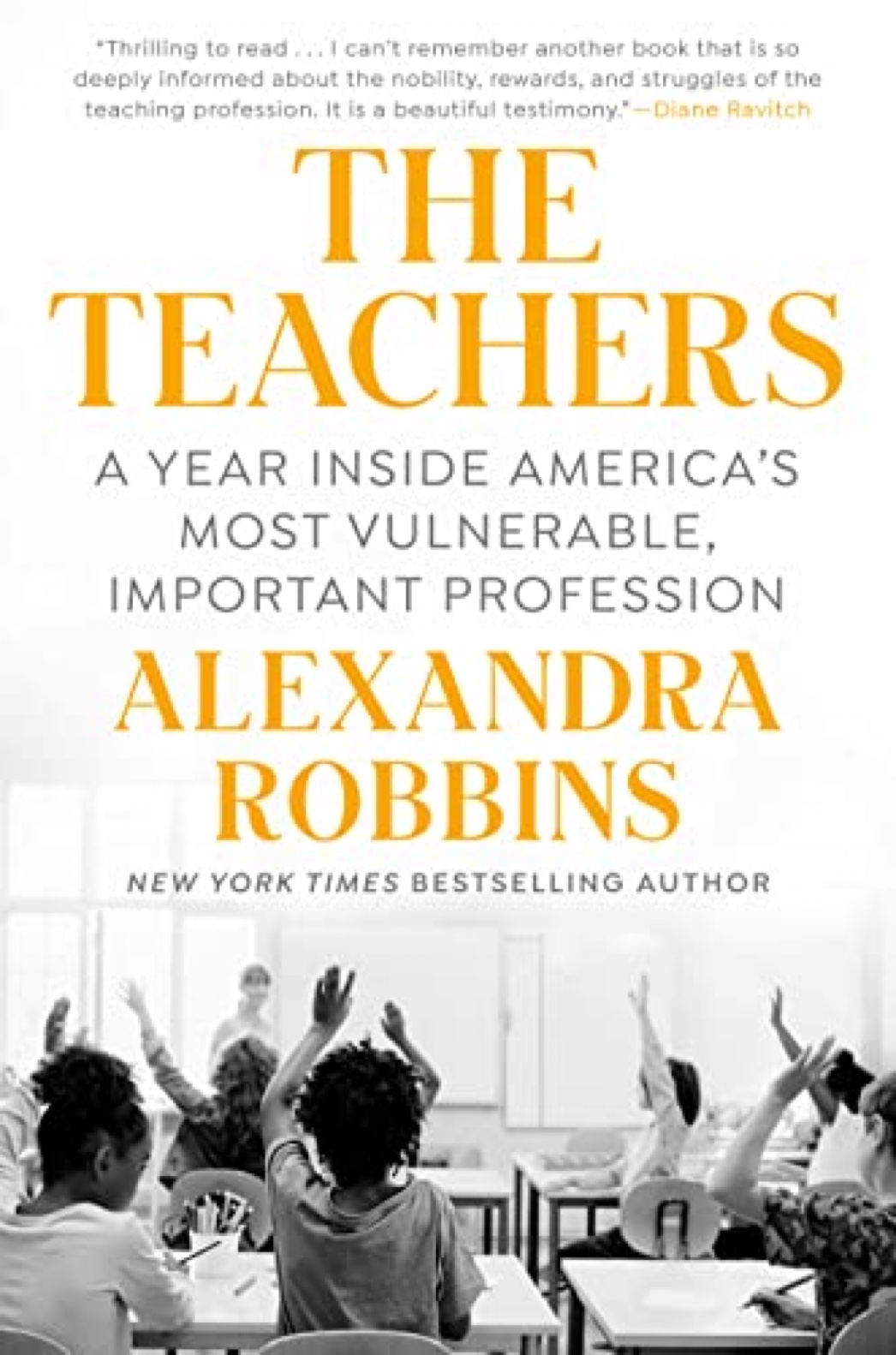
The Teachers: a Year Inside America’s Most Vulnerable, Important Profession by Alexandra Robbins is a fine piece of qualitative research that uses three year-long case studies and hundreds of interviews as data. It details the many difficulties that teachers may face. Even though we don’t know the percentage of teachers facing each difficulty, we do know that they the are somewhat common. (Doug: I’ve seen them all.) This should gain more respect for the profession. I only wish every journalist, pundit, and parent could read it. Get your copy today.
Prologue
- To gain the expertise necessary to write this book, Alexandra conducted case studies of three teachers over an entire school year. She conducted hundreds of interviews with other teachers. She also did some substitute teaching and a semester of long-term substitute work. Each chapter contains stories from the three teachers she studied for a year including aspects of their private lives. They all appear to be outstanding teachers. Penny teaches 4th Grade, Rebecca teaches 6th grade math, and Miguel is a middle school special education teacher. The final section of each chapter contains anecdotes and generalizations from the remainder of her research.
1. August: Introduction: “It Makes My Soul Happy”: What Teachers Endure and Why They Stay
- Here we meet the three teachers Alexandra studies along with some of their issues. While many think that teachers have the summer off, they are often required to attend professional development sessions that vary widely in quality and effectiveness. Funding is often short for supplies so they often purchase what they need themselves. Leaders are often a source of frustration as they can’t reliably find the money for supplies or substitutes and require teachers to cover additional classes.
- Teacher salaries seem to be the biggest problem today as they haven’t kept up with inflation. (Doug: My starting salary of $8,500 in 1971 would be over $63,000 today.) Nationally they make 23% less than the average professional with comparable training, and up to 30% less in some states. The real reason for teacher shortages is mostly poor compensation. By some estimates 70% of teachers work a second job during the school year and most get summer jobs. They are vital, but not generally highly respected.
2. September: “STOP TOUCHING MY CAR”: Parent Aggression and the Culture of Teacher Blaming
- This book focuses on anecdotes that make for a great series of case studies, but do not feature much quantitative data to support generalizations. The main theme is that parents often blame the teacher for the shortcomings and misbehavior of their children. They often send emails when grades are an issue and expect teachers to change them. Administrators aren’t always supportive of their teachers. There are many anecdotes here that seem believable to me.
- Another theme deals with how teachers have to contend with special ed students and gifted students in the same class. Special education students in general education classes often get sent back to the room of their special education teacher. Ironically, this may seem like a reward. There are good tips here for how to deal with situations where teachers overreact to student behavior.
3. October: “I Would Have Done It for Any Child”: Teachers Are Heroes – but They Shouldn’t Have to Be
- Here we learn that Penny the 6th grade math teacher left an abusive husband and was mostly shunned by a teacher clique where she taught. (Doug: I’ve seen such cliques.) The middle school special education teacher Miguel suffers from bad administrators who want to mainstream all special ed students without planning, training, or support staff. Mismanagement has impacted his health.
- Rebecca the fourth grade teacher teaches students about mindsets. (Doug: See my summary of Mindset by Carol Dweck.) She wishes that she could differentiate (individualize) learning more as a one-size-fits-all lesson plans only work well for the kids in the middle. Like many, the amount of paperwork leaves little time for her own life.
- Alexandra finds that most teachers will do anything they can for students in need. She cites one teacher who adopted a student and another who donated a kidney. Most teachers (94%) spend their own money on supplies and personal times for students and families. While 44% leave by five years, districts with strong mentoring programs do much better. While cliques are an issue, teachers do a lot to support each other in their buildings and beyond via conferences and online resources (Doug: Like this blog for example.)
Posted in Book Summaries, Education Books, Leadership Books | Comments Off on The Teachers: a Year Inside America’s Most Vulnerable, Important Profession by Alexandra Robbins
Wednesday, April 20th, 2016
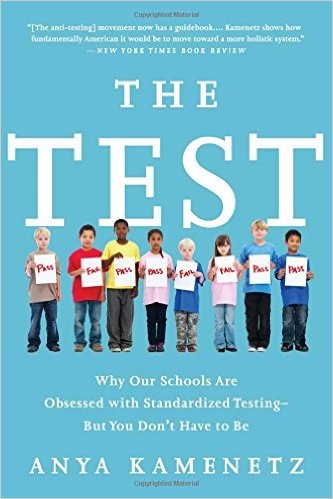
The Test: Why Our Schools Are Obsessed with Standardized Testing – But You Don’t Have to Be by Anya Kamenetz explains in some detail the ten things wrong with state tests along with some history and politics. She goes on to tell educators and parents what they should do to help kids survive the madness. Anyone who dislikes state test should get this book.
Introduction
- Anya starts with the premise that high-stakes tests are stunting children’s spirits, adding stress to family life, demoralizing teachers, undermining schools, paralyzing the education debate, and gutting our country’s future competitiveness. She also cites Campbell’s law which can be stated as “when a measure becomes a target, it ceases to be a good measure.” You give people a number and they will work towards it to the detriment of all other measures of success. They also harm the poor, minority, and English language learners they were designed to help as people with means look to purchase homes that are served by schools with high test scores. This book starts by defining the problem and ends with solutions as to what we need do of fix it.
1. Ten Arguments Against Testing
- 1. We are testing the wrong things. They mostly test the application of memorized routines to familiar problems in only two subjects. Novel situations that require thinking aren’t covered. There are lots of important things they don’t test.
- 2. Tests waste time and money. The tests along with test prep, practice tests, and field tests eat up tons of time. This doesn’t count testing imposed by school districts and tests given by teachers for grades and to direct instruction. Kids who struggle usually get more of this in addition to extra time to take the tests. The costs add up.
- 3. They are making kids hate school and turning parents into preppers. The process is boring and putting teachers’ and principals’ jobs on the line adds to needless stress. For some, the anxiety depresses performance. Rich parents pay for prep test classes and home quality time is sacrificed for parent-directed test prep.
- 4. They are making teachers hate teaching. Outside authorities have the final say on how teachers do their job. For many states, teacher evaluations and tenure depend on test scores. Research shows that ratings for individual teachers are highly unstable, varying from year to year and one test to another. Retirement and attrition rates have increased and job satisfaction has plummeted.
- 5. They penalize diversity. Poor and minority kids fail more and their schools are often punished or closed. Schools with higher rates of students with disabilities are in the same boat. To increase percent proficient scores, some teachers focus attention on students near the proficiency line. It’s clear that standardization is the enemy of diversity.
- 6. They cause teaching to the test. NCLB testing focuses on easily tested portions of reading and math skills. Therefore, teachers will arranges their teaching to place an undue focus on what can be tested. Studies indicate that as a result, teachers spend more time talking while students sit, listen, and don’t think much.
- 7. The High Stakes Temp Cheating. There is no doubt that a good deal of cheating has taken place since the tests were introduced, and schools more likely to cheat are schools with poor scores that tend to have poor and minority students. There are also reports of students cheating on SAT exams.
- 8. They Are Gamed By States Until They Become Meaningless. NCLB allowed every state to create its own assessment regime, cutoff scores, and progress measures. Since the states are the customers, testing companies give them what they want. Furthermore, it’s people working for the states that make the cutoff decisions. When political leaders set educational standards, they tend to act with political motivation. In short, there is no accountability.
- 9. They Are Full of Errors. There is no doubt that many state tests contain questions with ambiguous or wrong answers. This is probably due to the fact that people hired to write and grade tests are low paid ($15/hour) and not required to have relevant degrees or experience in education. They are also likely to be temporary workers. Even the SAT has made the essay portion optional as the scores didn’t predict grades or success in college.
- 10. The Next Generation of Tests Will Make Things Even Worse. With the introduction of the Common Core Standards comes tests with higher difficulty and fewer testing options. New tests will use computers for administration, which means the school’s computers will be tied up for long periods doing testing as opposed to supporting student projects. They will still test limited subjects in limited ways, be error prone, coachable, and likely to distort the curriculum.
Posted in Book Summaries, Education Books, Leadership Books | Comments Off on The Test: Why Our Schools Are Obsessed with Standardized Testing – But You Don’t Have to Be by Anya Kamenetz
Tuesday, January 2nd, 2018
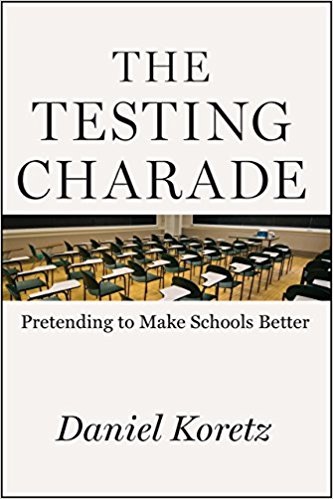
The Testing Charade: Pretending to Make Schools Better by Daniel Koretz covers the unintended negative consequences of the test-based school and teacher accountability system forced on schools by federal legislation. In addition to outright cheating, he also points out how test prep leads to bad teaching and how non tested subjects are given short shrift. As policymakers remain in denial about the failure of this system, it is works like this that give us hope.
1. Beyond All Reason
- Pressure to raise scores on achievement tests dominates American education today. In this book Daniel Koretz shows how it has lead to cheating, cutting corners with test prep that features bad instruction, and failure. Teacher evaluation is a mess with some teachers being judged by scores from students they didn’t teach. Test prep has lead to score inflation that is not echoed on NEAP tests. NCLB was a train wreck waiting to happen and it’s replacement, ESSA, is only a small step in the right direction. This book should help us all redouble our efforts to fight a system that has had a large negative impact on our national education system.
2. What Is a Test?
- Achievement tests are like political polls in that they only test a small portion of the domain represented by the course or grade level. Most of the domain remains untested. Tests focus on factual knowledge as it is easy to test. Some things like critical thinking and problem-solving can be assessed, but not by standardized tests. Sampling content to be tested has three consequences. First is the error or uncertainty of the resulting scores. This can result in scores varying wildly from year to year for a given teacher. Second is that the sample skills tested are not fully representative of the entire domain.
- The final and biggest consequence is that even the test makers warn that test scores should only supplement all of the other assessments teachers use. Unfortunately, such warnings are ignored by policymakers or never heard in the first place. This leads to many teachers only teaching the tested content while depriving students of other useful instruction.
3. The Evolution of Test-Based “Reform”
- In 1983 the National Commission on Excellence in Education published A Nation At Risk, that viewed our education system as containing a rising tide of mediocracy noting short school years, a weak teaching force, and undemanding curricula. This seems to have initiated the push toward state-mandated testing. This shifted the focus away from holding students accountable for scores to using students’ scores to hold educators accountable.
- In the 1990s the pay-and-punish approach became popular where schools were rewarded or punished as a result of test scores. In 2002 NCLB made this system national in scope. Schools were required to make Adequate Yearly Progress for all student groups of significant size. Obama’s administration made things worse by tying test scores to teacher evaluations. Due to gridlock in Washington, NCLB wasn’t updated until 2015 with the Every Student Succeeds Act (ESSA). This gives states more flexibility, which may make things better at least in some states. The focus on test scores will most likely remain.
- The system fails for three reasons. 1) It focuses on a narrow slice of practice and outcomes. 2) It is a very high-pressure system. 3) There is no room for human judgment. Teaching is far too complex a job to evaluate without any judgment, and many things we value in schools aren’t captured by tests. If expectations were too low prior to 1983, it’s clear that today expectations are unrealistic for many of the students the laws were designed to help.
Posted in Book Summaries, Education Books, Leadership Books | Comments Off on The Testing Charade: Pretending to Make Schools Better by Daniel Koretz
Tuesday, October 6th, 2009
This book by Malcolm Gladwell is still a best seller after 260 weeks. This summary explains how connectors, mavens, and salemen impact all phases of our lives and how these concepts can be used by educators. Also included are other interesting stories including how New York City reduced crime in the 1990’s.
Click here to download the summary of this book.
Posted in Education Books | Comments Off on The Tipping Point – Malcolm Gladwell
Wednesday, March 4th, 2026
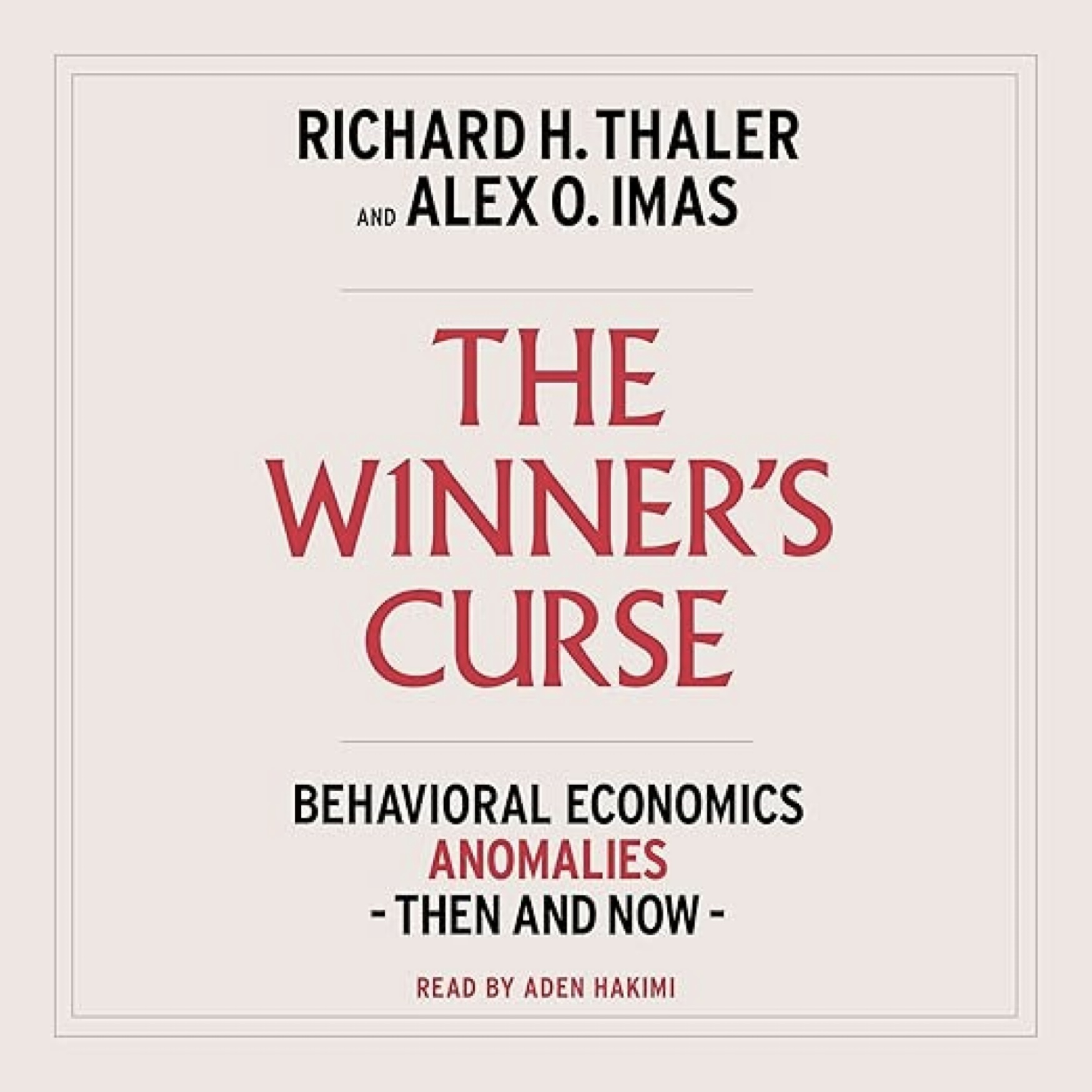
The Winner’s Curse: Behavioral Economics Anomalies – Then and Now by Richard Thaler and Alex Imas
is a revision of Thaler’s original work from 1992. Here you will learn about the many anomalies in human thinking that have personal economic impact. By understanding these anomalies, you can better maximize your wealth.
Preface
- The book builds on the work Richard has done since the original “The Winner’s Curse” was published in 1992. He gives Alex no credit for the original work as Alex was in grade school at the time. Together, they have rewritten the original work and added anomalies that have been discovered and reproduced since 1992. To avoid making the book too long, they left out some anomalies they felt had lesser broad interest. You can, however, read the papers on those subjects at thewinnerscurse.org.
1. The Winner’s Curse
- The origin of The Winner’s Curse came when oil companies participating in auctions to drill on federal lands found that the winner found less oil than expected. The winner of the auction was a loser in financial terms. This idea extends to any auction where there are lots of bidders as someone will almost always bid too high. The lesson is to become more conservative as the size of the group you are bidding against increases.
- This concept also applies to Major League Baseball where the team that pays the most for a free agent usually finds that he underperforms. Successful buyers of smaller companies usually find little or no gain for the buyer. Early picks in the NFL draft are often bad deals as the teams who pick top choices have to pay them more, while teams with lower picks often find hidden gems. Tom Brady, for example, was taken with the 199th pick.
- Each chapter ends with a “conclusion so far,” and “an update” from the original work. There is also a bottom line summary.
2. Cooperation
- We should be happy that cooperation in general is common in our country. Factors sited are that most people voluntarily return lost wallets, pick up after their dog, and make charitable contributions. Many people do nice things for others without expecting anything in return because it makes them feel good. (Doug: I’m one of those. Try it if you haven’t.) There is a tit-for-tat aspect to cooperation in that when cooperation isn’t returned, the person who was initially cooperating is likely to stop.
- One of the key pieces for research sited in this chapter uses the prisoner’s dilemma. Click here to find out what it is.
3. The Ultimate Game
- The big idea is that people are willing to sacrifice some of their own money to punish actions that they think are unfair. No one likes free riders and everyone likes to be treated fairly. Those who violate these social norms may be punished. Try being nice; it will make you feel good about yourself and might even increase your monetary rewards. The authors, and many other researchers, refer to The Ultimatum Game as a basis for the research that produced these findings.
4. The Endowment Effect, Loss Aversion, and Status Quo Bias
- If you demand more to sell an object than you are willing to pay for it, you are experiencing the endowment effect. This qualifies as and anomaly as you value something more if you have it than you do if you do not have it. Hanging on to something that you could sell at a profit is the status quo bias. Dealers who are used to buying and selling don’t seem to be impacted by either.
- Finely, there is loss aversion. This is where losses hurt more than equivalent gains feel good. Even though they are experienced, professional golfers try harder to make par putts than birdie putts. They seem to feel that losing out on making par hurts more than making a birdie feels good.
Posted in Book Summaries, Business Books, Education Books, Leadership Books | Comments Off on The Winner’s Curse: Behavioral Economics Anomalies – Then and Now by Richard Thaler and Alex Imas
Sunday, July 8th, 2012
If you haven’t read The World Is Flat: A Brief History of the 21st Century Release 3.0 by Thomas L. Friedman (© 2007, Farrar, Strauss, & Giroux: New York, NY) it is time. If you have read it, it’s time to review the ten forces that have converged to flatten the world as far as business, commerce, and education are concerned. It’s also time to review their impact on our world and Friedman’s prescient advice. It will help you better understand our world and the changes that are still happening as a result of the flatteners. This book is just as valuable as it was when first published in 2005 as Friedman has updated it twice. Look for the book icon as you read to purchase the book from Amazon.
Tags: The World Is Flat, Thomas Friedman
Posted in Book Summaries, Business Books, Education Books, Leadership Books | Comments Off on The World Is Flat Release 3.0 Summary
Wednesday, March 30th, 2011
The World Is Open: How Web Technology Is Revolutionizing Education by Curtis Bonk tells the story of the ten openers that allow the Internet to change the face of education. Bonk builds on the work of Thomas Friedman’s The World Is Flat to explain how anyone can learn anything, anytime, anywhere. He uses abundant stories and examples to make his point. As you read you will want to check out places on the Web he mentions. Any educator, parent, student, or citizen should be familiar with Bonk’s Ten Openers. © 2009, Jossey Bass: San Francisco, CA.
Tags: Curtis Bonk, The World Is Open
Posted in Book Summaries, Education Books, What can Dr. Doug do for you? | Comments Off on The World Is Open – Curtis Bonk